Aadhaar Enrollment Centre in Delhi

byPaytm Editorial TeamLast Updated: March 30, 2026
Aadhaar Card Enrollment Centres in Delhi
This guide simplifies navigating Aadhaar Enrolment Centres in Delhi for 2026, covering initial enrolment and crucial updates. Learn to locate authorised centres, understand processes, and prepare essential documents. By following official UIDAI guidelines and best practices, residents can ensure a smooth, secure experience, maintaining their Aadhaar as a valid identity proof for all essential services and financial products.

According to UIDAI (2026), over 1.4 billion Aadhaar numbers have been issued across India, highlighting its foundational role in identity verification for residents. Delhi, as a major metropolitan hub, processes a significant volume of these enrolments and updates daily, making access to centres crucial.

This article provides a comprehensive guide to understanding and utilising Aadhaar Enrollment Centres in Delhi, covering everything from the initial enrollment process to common mistakes and essential update services. You will learn how to locate authorised centres, prepare your necessary documents, and ensure a smooth experience.

Understanding Aadhaar Enrollment Centres in Delhi

An Aadhaar Enrollment Centre in Delhi serves as a crucial point for residents to obtain their unique 12-digit Aadhaar number. These centres collect both biometric and demographic information, which is essential for creating an individual’s unique identity record. The entire process is standardised by the Unique Identification Authority of India (UIDAI) to ensure accuracy and security.

Once the enrollment process is complete, applicants receive an acknowledgment slip containing an Enrollment ID (EID), which can be used to track the status of their Aadhaar card. The collected data is securely transmitted to UIDAI for processing and the eventual generation of the Aadhaar card. This robust system helps prevent identity fraud and ensures data integrity.

These centres are equipped with trained operators who guide you through each step, from filling forms to capturing your biometrics. Their expertise helps maintain the integrity of the Aadhaar database, which is vital for national identity infrastructure. Ensuring accurate data capture at this stage is paramount for future use of your Aadhaar.

For residents like Sudha, a nurse, understanding the local centre operations, even if not in her city of Coimbatore, is key for her family members residing in Delhi. The efficiency and accessibility of these centres directly impact how easily citizens can access government services and financial products. The government continues to expand the network of centres to cater to the growing population.

Quick Context: What is UIDAI?

UIDAI is the statutory authority established under the provisions of the Aadhaar Act 2016. It is responsible for issuing Aadhaar numbers to residents of India. UIDAI also manages the entire Aadhaar ecosystem.

The Enrollment Process at a Glance:

Step 1: This includes capturing fingerprints from all ten fingers and both iris scans. This ensures your unique biological identity is recorded accurately.

Step 2: Essential personal details like your name, address, date of birth, gender, mobile number, and email ID are captured. This forms the basis of your identity record.

Step 3: Your original Proof of Identity (PoI), Proof of Address (PoA), and Proof of Date of Birth (DoB) documents are verified against the provided information. This verification ensures the accuracy of the demographic information provided.

Step 4: After successful data capture and verification, an acknowledgment slip with a 14-digit Enrollment ID (EID) and date/time stamp is issued. This slip is crucial for tracking the status of your Aadhaar card.

Verification Steps
1
This includes capturing fingerprints
2
Essential personal details like
3
Your original Proof of
4
After successful data capture
1
Step 1: This includes capturing fingerprints

This includes capturing fingerprints from all ten fingers and both iris scans. This ensures your unique biological identity is recorded accurately.

Click a step · Hover to preview

Types of Aadhaar Enrollment and Update Centres

UIDAI operates dedicated Permanent Aadhaar Seva Kendras (ASKs) across Delhi, which are high-capacity, professional centres offering all Aadhaar-related services. These ASKs provide a streamlined experience, often with online appointment booking facilities. They are designed to handle a large volume of applications efficiently.

In addition to ASKs, various banks, post offices, and government offices also function as authorised Aadhaar enrollment and update centres. These diverse locations aim to make Aadhaar services accessible to a wider population, ensuring convenience for residents in different localities. Each centre adheres to strict UIDAI guidelines.

These centres are equipped with the necessary infrastructure and trained personnel to handle new enrolments, demographic updates, and biometric updates efficiently. Knowing the different types of centres available can help you choose the most convenient option for your specific Aadhaar needs. For instance, a local post office might be easier for some.

While all authorised centres follow the same UIDAI protocols, their operating hours and appointment systems might vary. It is always advisable to check the specific centre’s details before planning your visit. This preparation helps avoid unnecessary delays and ensures a productive trip.

Pro Tip: Verifying Centre Legitimacy

Always check the official UIDAI website or the mAadhaar app for a list of authorised Aadhaar enrollment centres. This step helps you avoid fraudulent operators and ensures your personal data is handled securely. Verifying legitimacy is crucial for protecting your identity.

Common Confusion: Aadhaar Enrollment Fees

It is commonly assumed that all Aadhaar services are free of charge. While initial Aadhaar enrollment is free, some update services carry a nominal fee as prescribed by UIDAI, such as Rs 50 for demographic updates or Rs 100 for biometric updates (as of 2026).

Locating Your Nearest Aadhaar Centre in Delhi

Finding the nearest and most convenient Aadhaar Enrollment Centre in Delhi is a straightforward process using the official UIDAI portal. This online tool provides up-to-date information on all authorised centres, including their addresses and services offered. Relying on the official portal ensures you visit a legitimate centre.

The UIDAI website offers multiple search options, allowing you to locate centres based on your location preferences. This flexibility helps you find a centre whether you know your exact PIN code or simply want to browse by state and district. Always cross-reference details to ensure accuracy before planning your visit.

For instance, Sudha’s relative living in South Delhi might use the PIN code search to quickly find a centre close to their residence. The portal also provides contact details for some centres, allowing you to confirm operating hours. This proactive approach saves time and effort.

It is crucial to avoid third-party websites or unofficial sources when searching for Aadhaar centres, as these might provide outdated or incorrect information. The official UIDAI portal is the only reliable source for this critical information. Ensure the website address starts with ‘uidai.gov.in’.

Quick Context: Online Appointment Booking

Many Permanent Aadhaar Seva Kendras (ASKs) allow you to book appointments online via the UIDAI portal. This feature can significantly reduce your waiting time at the centre. Booking ahead makes your visit more efficient.

Using the Official UIDAI Portal:

Step 1: Visit the official UIDAI website at uidai.gov.in on your web browser. This is the most reliable source for information regarding Aadhaar services.

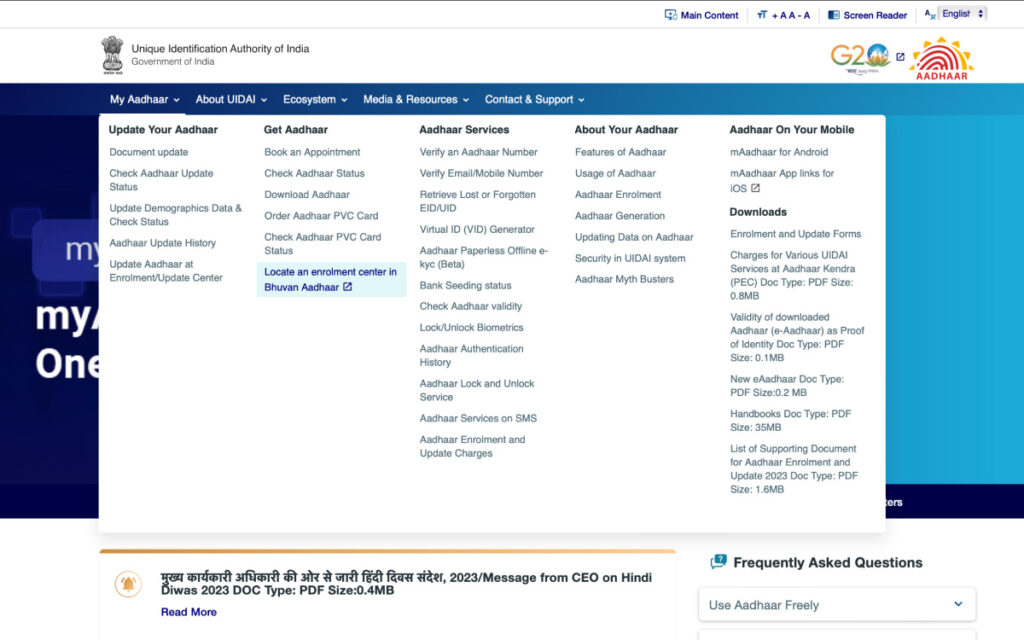
Step 2: Navigate to the ‘My Aadhaar’ section on the homepage and then select the ‘Locate an Enrollment Centre’ option. This will direct you to the centre search page.

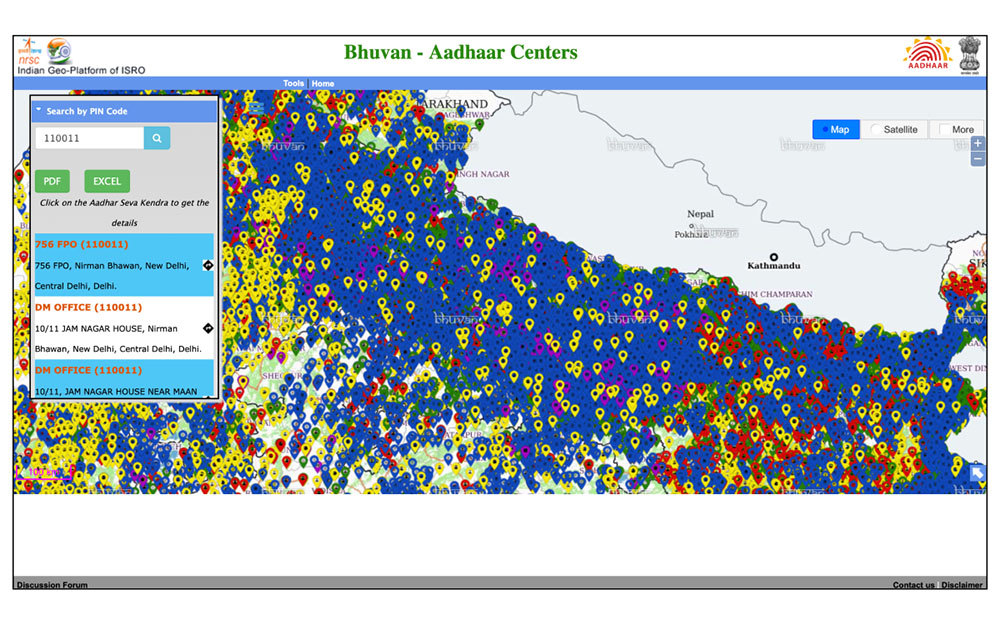
Step 3: Choose your preferred search method from the available options: ‘Search by State’, ‘Search by PIN Code’, or ‘Search Box’ (for centre name). Each method offers a different way to narrow down your search.

Step 4: If you select ‘Search by State’, enter your State (Delhi), District, Sub-district, and the desired Centre Type, then click ‘Search’. The system will display a list of relevant centres.

Step 5: For the ‘Search by PIN Code’ option, simply enter your 6-digit area PIN code and click ‘Search’ to view nearby centres. This is often the quickest way to find local centres.

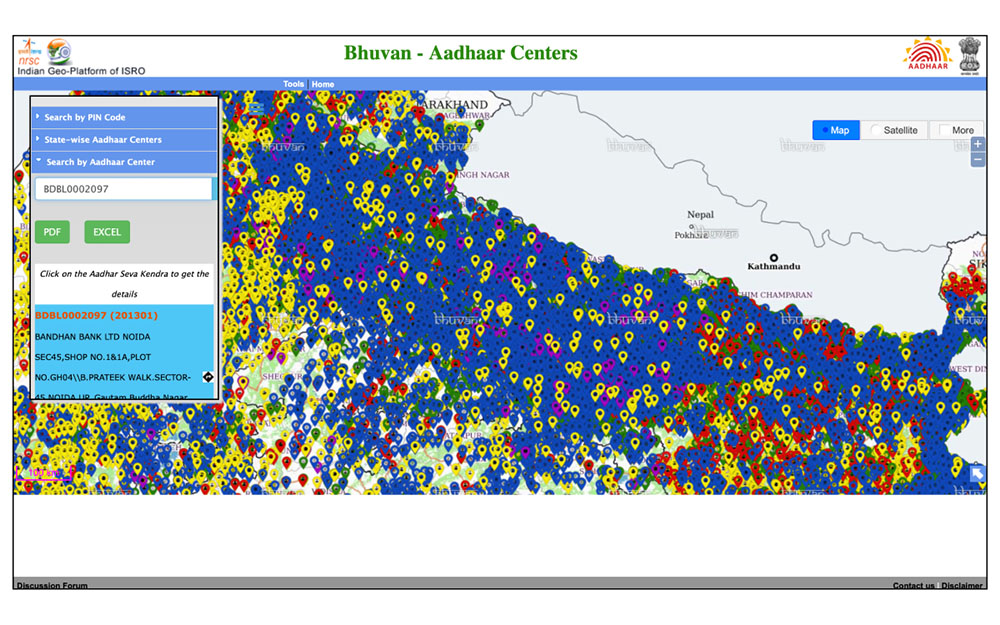
Step 6: If you know the name of a specific Aadhaar centre, use the ‘Search Box’ option to type in the centre’s name. The portal will then provide details for that particular centre.

How to Complete the Process
1
Visit the official UIDAI
2
Navigate to the ‘My
3
Choose your preferred search
4
If you select ‘Search
5
For the ‘Search by
6
If you know the
1
Step 1: Visit the official UIDAI

Visit the official UIDAI website at uidai.gov.in on your web browser. This is the most reliable source for information regarding Aadhaar services.

Click a step · Hover to preview

Pro Tip: Preparing for Your Visit

Once you locate a centre, consider calling ahead to confirm operating hours and current service availability. Also, inquire about any specific document requirements for your intended service. This preparation saves time and ensures a smooth visit.

Eligibility and Essential Documents for Aadhaar Enrollment

Understanding the eligibility criteria and having the correct documents is the first and most crucial step for Aadhaar enrollment. Aadhaar is available to any resident of India, regardless of age, provided they meet the residency requirement. Proper documentation ensures a smooth and successful enrollment process.

Failing to bring the necessary original documents is one of the most common reasons for delays or rejection of Aadhaar applications. Always ensure you have the correct Proof of Identity (PoI), Proof of Address (PoA), and Proof of Date of Birth (DoB) as per UIDAI guidelines. These documents are vital for verifying your details.

The UIDAI’s guidelines are designed to prevent identity fraud and ensure the uniqueness of each Aadhaar number. Therefore, presenting authentic and valid original documents for verification is non-negotiable. Photocopies are generally not accepted unless accompanied by the originals.

For example, if Sudha’s young niece in Delhi needs to enrol for Aadhaar, her birth certificate and a parent’s Aadhaar (as Proof of Relationship) would be essential. The process is streamlined but requires strict adherence to document requirements. This helps in linking the child’s identity securely.

Common Confusion: Aadhaar for Non-Residents

A widespread myth is that Aadhaar is only for Indian citizens. This is a common misunderstanding.

Aadhaar is for any individual, including children, who has resided in India for 182 days or more in the 12 months preceding the application date. This makes it a resident identity proof, not solely a citizenship proof.

Who Can Apply for Aadhaar?

  • Any individual, including a newborn child, who is a resident of India, is eligible to apply for an Aadhaar number. This ensures broad coverage for all who reside in the country.
  • The definition of a “resident” for Aadhaar purposes is someone who has resided in India for a total period of 182 days or more in the 12 months immediately preceding the date of application for enrollment. This residency criterion is strictly applied.
  • There are no age restrictions, as Aadhaar is issued to infants, children, and adults alike. This ensures comprehensive coverage for all residents, regardless of their age.

Essential Documents for Enrollment:

  • Proof of Identity (PoI): Documents like PAN card, Passport, Driving Licence, or a Voter ID card are accepted. These documents verify your name and photograph.
  • Proof of Address (PoA): Documents such as Passport, Bank Statement/Passbook, Ration Card, Voter ID, or Utility Bills (electricity, water, gas) not older than three months are valid. These confirm your residential address.
  • Proof of Date of Birth (DoB): Documents like Birth Certificate, SSLC Certificate, or Passport are accepted. These are crucial for establishing your correct date of birth.
  • Proof of Relationship (PoR): For children enrolling, documents like a Birth Certificate or Passport showing the relationship with a parent/guardian are needed. This links the child’s Aadhaar to a parent’s.

Quick Context: Document Originals

You must bring original documents for verification purposes. Photocopies alone are not accepted at Aadhaar enrollment centres, even though operators will scan your originals. Always carry your original proofs.

Common Mistakes and Best Practices During Aadhaar Enrollment

While the Aadhaar enrollment process is designed to be user-friendly, certain common mistakes can lead to delays or issues. Being aware of these pitfalls and adopting best practices can significantly streamline your enrollment experience. Proactive preparation is key to a successful application.

Many individuals overlook the importance of accurate data entry or fail to bring all required original documents. These seemingly minor errors can necessitate repeat visits to the centre, consuming valuable time and effort. Understanding the ‘why’ behind each requirement helps ensure compliance.

For example, Sudha’s colleague once forgot her original electricity bill for address proof, leading to a wasted trip to the centre. Always double-check the UIDAI’s list of acceptable documents before leaving home. This simple step can prevent significant inconvenience.

Ensure that the details on your application form exactly match those on your supporting documents. Even small discrepancies in spelling or date formats can cause your application to be put on hold. Accuracy is paramount for successful processing.

Pro Tip: Review Before Submission

Carefully review all demographic details on the enrollment form before your biometrics are captured. This step is crucial to prevent errors. Corrections later can involve additional steps and fees.

Avoiding Data Discrepancies and Other Pitfalls:

  • Providing Inaccurate Information: Entering incorrect spellings, dates, or addresses on the enrollment form can lead to mismatches with your official documents. This is a frequent error that can be easily avoided by careful checking.
  • Forgetting Original Documents: Only original documents are accepted for verification, even if an operator scans them. Arriving with just photocopies will result in your application being rejected.
  • Not Updating Biometrics Periodically: Biometrics for children change over time; mandatory updates are required at ages 5 and 15 to keep their Aadhaar valid. Adults might also need updates if their biometrics change due to age or injury.
  • Falling for Unofficial Agents: Some unauthorised individuals or centres may claim to offer Aadhaar services. Always use official UIDAI-authorised centres to protect your personal data and avoid fraud.
  • Ignoring Acknowledgment Slip: The acknowledgment slip with the EID is crucial for tracking your application status. Do not misplace it after your enrollment.

Common Confusion: Aadhaar and PAN

Aadhaar and PAN are interchangeable for all financial transactions. This is a common misconception.

PAN is mandatory for transactions above Rs 50,000 and for income tax filing. Aadhaar cannot substitute for PAN in these specific cases due to different regulatory requirements.

Aadhaar Update and Correction Services in Delhi

Aadhaar is a lifelong identity, and it is natural for personal details to change over time, such as your address or mobile number. UIDAI provides robust mechanisms for updating both demographic and biometric information to ensure your Aadhaar record remains current and accurate. These services are available at all authorised Aadhaar Enrollment Centres.

Regularly updating your Aadhaar details ensures that you can continue to access various government schemes and services without interruption. For example, a current mobile number linked to your Aadhaar is essential for receiving OTPs for online authentication, critical for many digital services. An outdated address could cause issues with postal deliveries of important documents.

For instance, if Sudha’s brother recently moved to a new apartment in Delhi, he would need to update his address on his Aadhaar to ensure he receives government communications correctly. Neglecting these updates can lead to significant inconvenience and service disruptions. The process is designed to be straightforward.

Both demographic and biometric updates play a vital role in maintaining the integrity and utility of your Aadhaar. Keeping your information current helps in seamless verification across various platforms, from banking to government welfare schemes. This proactive approach ensures your identity proof remains robust.

Types of Aadhaar Updates:

  • Demographic Updates: These include changes to your Name, Address, Date of Birth, Gender, Mobile Number, and Email ID. Many of these can be updated online through the UIDAI portal or at an Aadhaar centre.
  • Biometric Updates: This involves updating your Fingerprints, Iris scans, and Facial Photograph. These updates always require a visit to an Aadhaar Enrollment Centre to capture new biometric data.
  • Mandatory Biometric Updates for Children: Children reaching 5 and 15 years of age must undergo mandatory biometric updates to ensure their Aadhaar remains valid and their identity can be accurately verified.

Quick Context: Mandatory Biometric Updates

Children reaching 5 and 15 years of age must undergo mandatory biometric updates. This ensures their Aadhaar remains valid. It also guarantees their identity can be accurately verified over time.

The Update Process:

Step 1: Visit an authorised Aadhaar Enrollment Centre or use the online portal for specific demographic updates like address or mobile number changes. Ensure you have access to your registered mobile for OTP verification if updating online.

Step 2: Fill out the Aadhaar Update/Correction Form with the correct details that you wish to change. Clearly indicate the fields that require modification.

Step 3: Submit the required supporting documents (originals for verification) and pay the applicable fee, which varies depending on the type of update. The operator will scan your documents and return the originals.

Step 4: Your biometrics (if required) will be captured, and you will receive an Update Request Number (URN) on an acknowledgment slip. You can use this URN to track the status of your update request online.

FAQs

How can I locate an official Aadhaar enrollment centre in Delhi?

Yes, you can easily locate an official Aadhaar enrollment centre in Delhi using the UIDAI's official portal. Visit uidai.gov.in, navigate to 'My Aadhaar', and select 'Locate an Enrollment Centre'. You can search by State (Delhi), District, Sub-district, or directly by your 6-digit PIN code for nearby centres. This ensures you find legitimate centres and avoid unofficial sources. For example, if you live in South Delhi, searching by your PIN code will show the closest options. Always check the official website as third-party sites might provide outdated information.

Can I enrol for a new Aadhaar card without any charges in Delhi?

Yes, initial Aadhaar enrollment for residents in Delhi is entirely free of charge. This includes the collection of your biometric and demographic information, document verification, and the generation of your acknowledgment slip. However, it is important to note that while the first-time enrollment is free, certain update services, such as demographic changes (Rs 50) or biometric updates (Rs 100) as of 2026, do incur a nominal fee as prescribed by UIDAI. For instance, if you enrol your child for the first time, there will be no fee.

What specific documents are essential for a new Aadhaar enrollment application in Delhi?

To apply for a new Aadhaar enrollment in Delhi, you must present original Proof of Identity (PoI), Proof of Address (PoA), and Proof of Date of Birth (DoB) documents for verification. Examples of PoI include your PAN card or Passport, while PoA can be a Bank Statement or Utility Bill (not older than three months). For DoB, a Birth Certificate or Passport is accepted. For children, a Birth Certificate and a parent's Aadhaar as Proof of Relationship (PoR) are also required. Remember, only original documents are accepted, not photocopies alone.

Why is it crucial to regularly update my Aadhaar details, especially mandatory biometric updates for children?

It is crucial to regularly update your Aadhaar details to ensure your identity record remains current and functional for accessing various services. An outdated mobile number, for instance, can prevent you from receiving OTPs for online authentication, vital for banking or government portals. For children, mandatory biometric updates at ages 5 and 15 are essential because their biometrics (fingerprints, iris scans) change significantly as they grow. Neglecting these updates can invalidate their Aadhaar for verification purposes. For example, if a child's biometrics aren't updated, their identity might not be accurately verifiable later on.

What are the main differences between a Permanent Aadhaar Seva Kendra (ASK) and a Post Office Aadhaar Centre for updates?

Both Permanent Aadhaar Seva Kendras (ASKs) and Post Office Aadhaar Centres offer comprehensive Aadhaar services, including new enrolments and all types of updates. The main differences lie in their operational model and convenience. ASKs are dedicated, high-capacity centres run directly by UIDAI, often providing a streamlined experience with online appointment booking facilities. Post Office centres, while widespread and accessible in many localities, typically offer walk-in services and might have varying operating hours. For instance, an ASK might be faster if you book an appointment, whereas a local Post Office might be more convenient for a walk-in demographic update.

Is Aadhaar exclusively for Indian citizens, or can any resident of India apply for it?

No, Aadhaar is not exclusively for Indian citizens; any individual who is a resident of India is eligible to apply. The definition of a "resident" for Aadhaar purposes is someone who has resided in India for a total period of 182 days or more in the 12 months immediately preceding the application date. This means even foreign nationals residing in India for the stipulated period can apply. For example, a student from another country studying in Delhi for over 182 days in 2026 would be eligible. There are no age restrictions either, so infants can also enrol.

What should I do if I forget to bring original documents or find errors in my Aadhaar enrollment application after submission?

If you forget original documents, your application will likely be rejected, and you will need to revisit the centre with all required originals. For example, if you forget your original electricity bill for address proof, your application won't proceed. If you find errors in your demographic details (like name spelling or address) on the acknowledgment slip, you should initiate an Aadhaar update request. This will involve revisiting an authorised centre, filling an update form, submitting correct documents, and paying the applicable fee (Rs 50 for demographic updates as of 2026). Always review details carefully before biometrics are captured.

Which type of Aadhaar centre is generally more efficient for a quick biometric update in Delhi?

For a quick biometric update in Delhi, a Permanent Aadhaar Seva Kendra (ASK) is generally more efficient. ASKs are dedicated, high-capacity centres designed for streamlined processing and often offer online appointment booking via the UIDAI portal. This allows you to pre-schedule your visit, significantly reducing waiting times compared to walk-in centres like some Post Office or Bank-run facilities. For example, if you need to update your fingerprints due to an injury, booking an online slot at an ASK can ensure a faster experience. Always confirm operating hours and appointment availability online before your visit.
something

You May Also Like