In today’s world, whether you run a small local shop or an online business, knowing how to accept payments is incredibly important. It’s not just about taking money; it’s about making things easy for your customers and keeping their information safe. You might have heard terms like “Payment Gateway” and “POS System,” but what do they actually mean, and how do they help your business? Let’s explore these two essential tools so you can understand which one, or perhaps both, might be right for you.
Understanding How You Take Payments
Every business needs a way to collect money for the products or services it provides. Imagine a customer wanting to buy something from you – how do they pay? Do they use a card machine in your shop, or do they type their card details into a website? The way you handle these payments makes a big difference to how smoothly your business runs and how happy your customers are.
Why Knowing the Difference Matters to You
Knowing the difference between a Payment Gateway and a POS System is like knowing the difference between an online shop and a physical one. Each has its own best uses and benefits. If you choose the right tools, you can process payments efficiently, keep your customers’ details secure, and manage your business much more effectively. It helps you serve your customers better, whether they are right in front of you or browsing your website from miles away.
What is a Payment Gateway?
Your Online Cashier for Digital Transactions
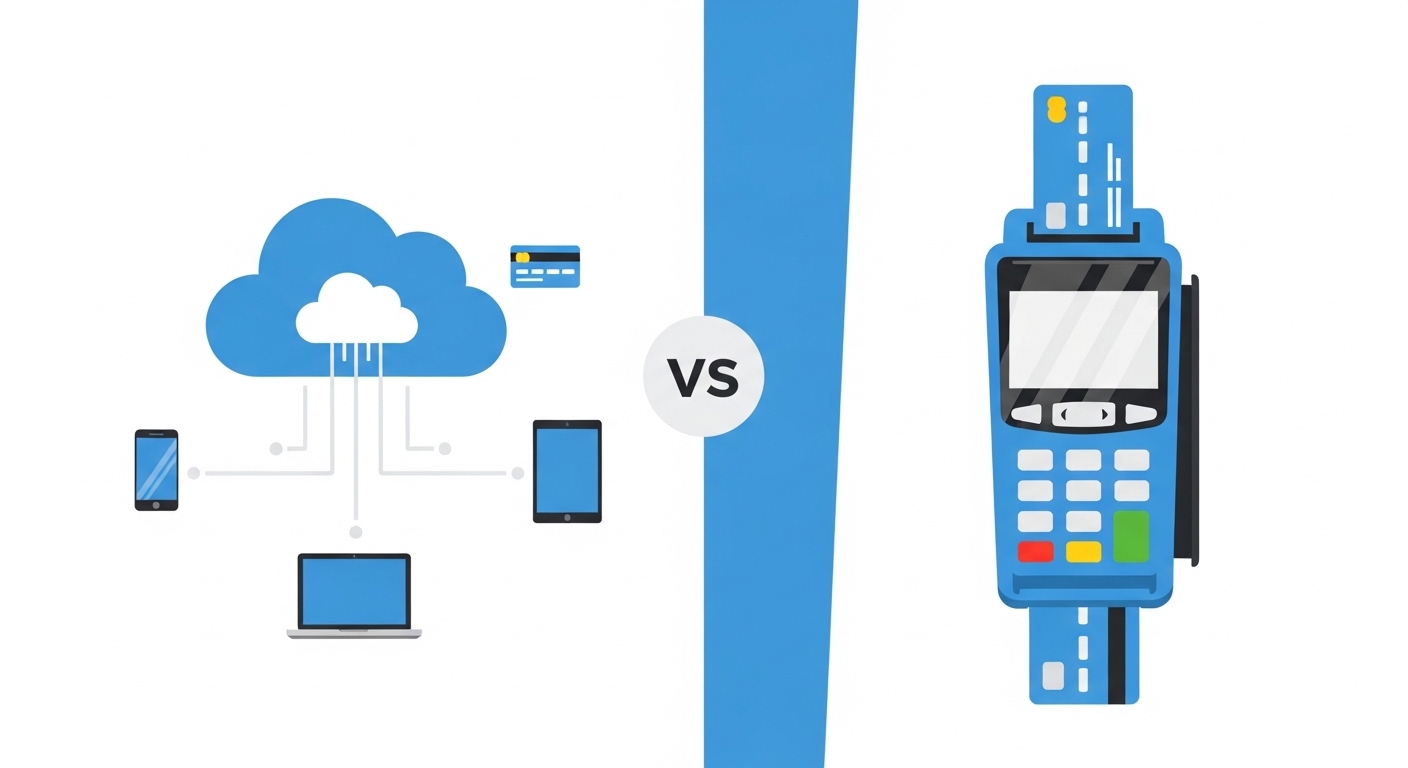
Imagine you’re buying something from a website. When you get to the checkout and enter your card details, there’s a clever system working behind the scenes to make sure your payment goes through safely. This system is called a Payment Gateway. Think of it as your online cashier, specifically designed to handle digital payments for things bought over the internet. It acts as a secure bridge between your customer’s bank and your bank.
How a Payment Gateway Works for You
When a customer makes an online purchase, the Payment Gateway quickly does several important jobs:
- Securely Collects Information: It gathers the customer’s payment details, like their card number and expiry date, and immediately scrambles this information so it’s unreadable to anyone else. This process is called encryption.
- Sends for Approval: It then sends these scrambled details to the customer’s bank to check if there’s enough money and if the card is valid.
- Receives a Response: The bank quickly sends back a message saying whether the payment is approved or declined.
- Confirms the Sale: The Payment Gateway then tells your website whether the payment was successful, allowing the customer to complete their purchase. All of this happens in just a few seconds!
When You Need a Payment Gateway
You definitely need a Payment Gateway if your business sells goods or services online. This includes:
- E-commerce Websites: If you have an online shop where customers can buy products.
- Online Service Bookings: If customers book appointments or services through your website.
- Digital Subscriptions: If you offer monthly or yearly subscriptions for content or services.
- Mobile Apps: If your business has an app where customers can make purchases.
Key Benefits of Using a Payment Gateway
- Reach More Customers: You can sell to anyone, anywhere in the world, at any time.
- Secure Transactions: It protects sensitive card information using strong security measures, helping to prevent fraud.
- Convenience for Customers: Customers can pay quickly and easily from their own homes.
- Automated Process: Payments are handled automatically, saving you time and effort.
What is a POS System?
Your Shop’s Central Hub for Sales
A POS System, which stands for “Point of Sale” System, is what you find in a physical shop or restaurant. It’s the central place where sales transactions happen. Think of it as the brain of your physical storefront, managing everything from ringing up sales to keeping track of what you have in stock. It typically includes a cash register, a card reader, a receipt printer, and special software.
How a POS System Works in Your Business
When a customer is ready to pay in your physical location, your POS System springs into action:
- Item Scanning: You scan the items the customer wants to buy, or enter them manually.
- Calculating Total: The system adds up all the prices, including any taxes or discounts.
- Payment Processing: The customer can then pay using cash, a debit card, a credit card, or even their phone for contactless payments, using a card reader connected to the POS.
- Receipt Generation: Once the payment is complete, the system prints a receipt for the customer.
- Beyond Payments: Many modern POS systems also help you manage your inventory (what products you have), track sales, and even manage customer information.
When You Need a POS System
You need a POS System if your business operates in a physical location where customers make in-person purchases. This includes:
- Retail Shops: Clothing stores, bookshops, electronics shops.
- Restaurants and Cafes: For taking food and drink orders and payments.
- Salons and Spas: For booking services and processing payments.
- Market Stalls: For accepting card payments easily on the go.
Key Benefits of Using a POS System
- Quick and Easy In-Person Sales: Speeds up the checkout process, reducing customer waiting times.
- Inventory Management: Helps you keep track of your stock, so you know what you have and when to reorder.
- Sales Tracking: Provides detailed reports on what you’ve sold, helping you understand your business better.
- Customer Loyalty Programmes: Many systems can help you manage loyalty points or special offers for returning customers.
- Flexible Payment Options: Accepts various payment methods, including cards, cash, and contactless payments.
The Main Differences for Your Business
While both Payment Gateways and POS Systems are about taking money, they do it in very different ways and for different situations.
Where They Are Used: Online vs. In-Person
The biggest difference is their location. A Payment Gateway is entirely digital and used for online transactions on websites or apps. A POS System is a physical setup used for in-person transactions at a business location.
How They Handle Money: Digital Pathways vs. Physical Terminals
A Payment Gateway acts as a secure digital pathway for money to move from a customer’s online payment method to your bank account. A POS System uses physical terminals, like card readers, to process payments made with physical cards or mobile devices directly at your business premises.
What They Do Beyond Payments: Online Security vs. Business Management
Beyond just processing payments, a Payment Gateway focuses heavily on the security and encryption of online data to protect sensitive information during digital transfers. A POS System often offers a broader range of business management tools, such as managing inventory, tracking sales, and managing staff schedules, all within your physical shop.
Why You Might Need Both
Many businesses today operate in both the online and offline worlds. For example, you might have a physical shop but also sell products through your website. In such cases, you would need both a POS System for your in-person sales and a Payment Gateway for your online sales. Having both ensures you can serve all your customers, no matter how they choose to shop with you, providing a smooth and consistent experience.
Choosing What’s Right for Your Business
Deciding between a Payment Gateway, a POS System, or both, depends on your unique business.
Thinking About Your Business Needs
Consider what you sell and how you sell it. Are you purely an online business? Do you only have a physical shop? Or do you have a mix of both? Your business model will guide your choice.
Considering Your Customers’ Payment Habits
Think about how your customers prefer to pay. Do they mostly shop online with cards? Or do they come into your shop and use contactless payment or cash? Understanding their habits helps you offer the most convenient options.
Looking at Costs and Features
Each system comes with different costs, such as transaction fees, monthly charges, or setup fees. Also, look at the features each system offers beyond just taking payments. Does it help with inventory, reporting, or customer loyalty? Compare these carefully to find the best fit for your budget and operational needs.
Important Things to Remember About digital payments
Keeping Your Customers’ Money Safe
No matter which system you choose, keeping your customers’ payment information safe must be a top priority. Both Payment Gateways and POS Systems use strong security measures, like scrambling sensitive data, to protect against fraud. Always ensure your chosen system follows the highest security standards to keep everyone’s money and details secure.
Following Rules and Regulations for Payments
The world of digital payments is carefully overseen by financial authorities to ensure fairness and safety for everyone. As a business, it’s important that the systems you use comply with all the national rules and guidelines for processing payments. This helps build trust with your customers and ensures your business operates legally and responsibly.
The Future of Payments for Your Business
The way people pay is always changing. New methods like contactless payments, mobile payments, and QR code payments are becoming more common. Choosing flexible systems that can adapt to these new technologies will help your business stay modern and continue to meet customer expectations in the years to come.
Author
