

'Excuse me, is this the right licence for my new scooter?' 'No, sir, this is only for cars.' This simple exchange highlights a common confusion many face at traffic checkpoints or while purchasing insurance. You see, driving isn't just about knowing how to operate a vehicle; it's about having the correct legal permission for the specific type of transport you're using.
In India, the Motor Vehicles Act 1988, updated over the years, clearly defines various categories of driving licences. Understanding these distinctions is crucial not only for compliance but also for your safety and the safety of others on the road. It ensures you're properly trained and authorised for the vehicle you intend to drive responsibly.
Table of Contents
What Is a Driving Licence and Why Do You Need One?
A driving licence is more than just a plastic card; it's your official authorisation from the government to operate a motor vehicle on public roads. It signifies that you've undergone specific tests and demonstrated the necessary skills and knowledge of traffic laws. Without a valid licence, you're not legally permitted to drive.
Possessing a driving licence also plays a vital role in road safety. It ensures that every driver has a basic understanding of rules, road signs, and safe driving practices, which helps to minimise accidents. This legal document is fundamental for personal mobility and public safety.
Quick Context: The Motor Vehicles Act
The Motor Vehicles Act, 1988, is the primary law governing all motor vehicles in India, including driving licences. It sets the rules for safe driving and vehicle registration, ensuring order on our roads.
Here's why having a proper driving licence is absolutely essential:
- Legal Requirement: It's mandatory by law to possess a valid driving licence for the class of vehicle you operate. Driving without one can lead to significant fines and penalties.
- Safety Assurance: It proves you've passed tests and understand road rules, reducing accident risks for yourself and other road users. This process ensures a minimum standard of driving competency.
- Insurance Validity: Your vehicle insurance may be invalid if you're driving without a proper licence for that vehicle category. This could leave you financially vulnerable in case of an accident.
Understanding Different Vehicle Categories
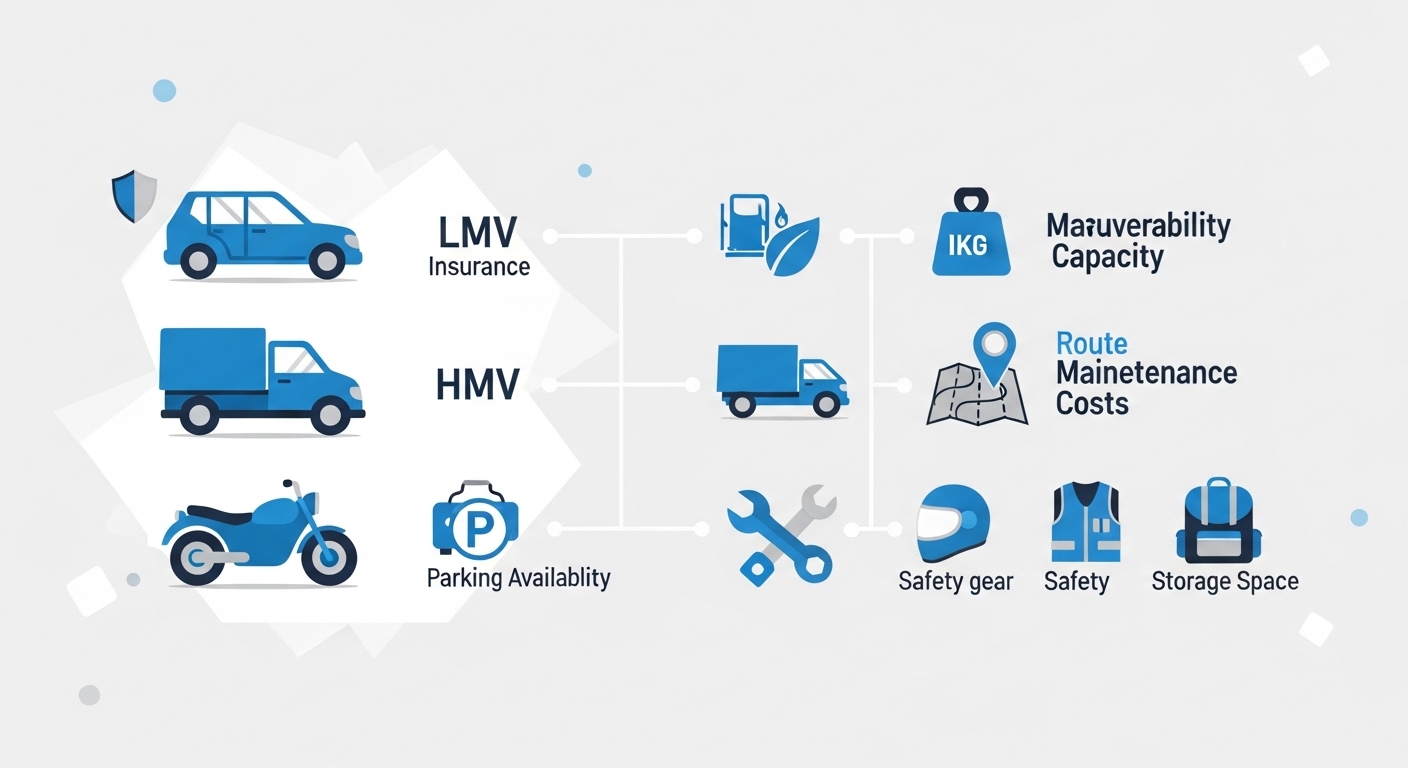
India's roads host a wide array of vehicles, from nimble two-wheelers to massive heavy goods carriers. Each type requires different skills, training, and levels of responsibility to operate safely. This is precisely why driving licences are categorised.
These categories ensure that drivers are specifically trained and tested for the particular vehicle they intend to drive. You wouldn't expect someone trained only for a scooter to safely handle a large truck, would you? The categorisation protects everyone on the road.
Common Confusion: Driving Any Vehicle
It is commonly assumed that once you have any driving licence, you can drive any vehicle
Each licence category specifies the exact types of vehicles you are legally permitted to operate. Driving a vehicle outside your licence category is illegal and can result in severe penalties.
Matching your licence to your vehicle is not just a legal formality; it's a critical safety measure. It confirms you possess the appropriate expertise for the vehicle's size, power, and handling characteristics. This system helps maintain order and reduce risks on our busy roads.
| Licence Category | Common Vehicles Covered | Examples |
| MCWG (Motorcycle With Gear) | Motorcycles, Scooters, Mopeds | Royal Enfield Classic 350, Honda Activa |
| MCWOG (Motorcycle Without Gear) | Scooters, Mopeds (engine capacity up to 50cc for 16-18 year olds) | TVS Scooty Pep+, Hero Electric Optima |
| LMV (Light Motor Vehicle) | Cars, Jeeps, Taxis, Delivery Vans | Maruti Swift, Mahindra Thar, Tata Ace |
| HMV (Heavy Motor Vehicle) | Trucks, Buses, Cranes | Ashok Leyland Dost, Tata Ultra Bus |
Getting Your Two-Wheeler Licence
For many Indians, a two-wheeler is their first step into personal mobility. Whether it's a scooter for daily commutes or a motorcycle for longer rides, you'll need a specific type of licence. This category typically includes MCWG (Motorcycle With Gear) and MCWOG (Motorcycle Without Gear).
To apply for an MCWG licence, you must be at least 18 years old. If you're between 16 and 18 years old, you can apply for an MCWOG licence for a two-wheeler with an engine capacity not exceeding 50cc, provided you have parental consent. This age restriction exists to ensure young riders have sufficient maturity and cognitive skills for road safety.
Pro Tip: Practice Makes Perfect
Before your actual driving test, spend ample time practicing with a licensed driver in a safe, controlled environment. Familiarise yourself with traffic rules and road signs, and always wear a helmet.
The application process involves a learner's licence first, followed by a practical driving test. The test assesses your ability to control the vehicle, follow signals, and navigate traffic safely. It's designed to confirm your readiness for independent riding.
Here are the steps to obtain your two-wheeler driving licence:
Step 1: Apply for a Learner's Licence (LL) online via the Parivahan portal or at your nearest Regional Transport Office (RTO), providing age and address proof. You'll need to pass a simple theory test on road signs and rules.
Step 2: Wait for at least one month after getting your LL before applying for the permanent driving licence. During this period, you should practice riding with a licensed driver accompanying you.
Step 3: Schedule your driving test at the RTO, bringing your two-wheeler and all necessary documents, including your Learner's Licence. You'll need to demonstrate your riding skills on a designated track.
Your Licence for Light Motor Vehicles (LMV)
The LMV category is perhaps the most common, covering private cars, jeeps, and even light commercial vehicles like delivery vans. If you plan to drive a personal car, this is the licence you'll need. It permits you to operate vehicles weighing up to 7,500 kg.
To apply for an LMV licence, you must be at least 18 years old. This age requirement ensures that drivers have reached legal adulthood and are deemed responsible enough to handle a car on public roads. Driving an LMV requires a different skill set than a two-wheeler, including understanding vehicle dynamics and parking.
Quick Context: What is LMV-NT?
LMV-NT stands for Light Motor Vehicle – Non-Transport. This category is specifically for private cars and jeeps, not used for commercial purposes like taxis or goods transport.
The LMV driving test is comprehensive, evaluating your ability to drive in various conditions, park, and adhere to traffic regulations. Successfully passing this test confirms you are competent to drive a car safely and independently.
Here's an essential document checklist for your LMV licence application:
- Application Forms: You'll need to fill out Form 4 (Application for Driving Licence) and Form 1A (Medical Certificate), especially if you are above 40 years old or applying for a commercial LMV.
- Proof of Age: Acceptable documents include your birth certificate, Aadhaar card, or school leaving certificate. These verify you meet the minimum age requirement.
- Proof of Address: Provide documents like your Aadhaar card, passport, utility bill (electricity, water), or a valid rent agreement. These confirm your residential address.
- Passport-sized Photographs: Typically, two to three recent passport-sized photographs are required for the application form and licence card.
- Existing Learner's Licence: Your valid Learner's Licence for LMV, which you must have held for at least one month but not more than six months.
Applying for Heavy Motor Vehicle (HMV) Licences
An HMV licence is for those who drive heavy goods vehicles like trucks, buses, and other large commercial vehicles. This category demands a much higher level of skill, experience, and responsibility due to the size and weight of these vehicles. It is crucial for commercial transport and logistics.
The requirements for an HMV licence are stricter than for LMV or two-wheelers. You must be at least 20 years old and have held a valid LMV licence for at least one year. This prerequisite ensures that HMV applicants already possess fundamental driving experience and a proven track record of safe driving.
Common Confusion: HMV Age Limit
The misunderstanding here is that you can apply for an HMV licence at 18 if you already have an LMV
You must be at least 20 years old and have held a valid LMV licence for at least one year to apply for an HMV licence, reflecting the increased responsibility.
Specialised training from a government-approved driving school is also mandatory for HMV applicants. This training covers specific aspects of heavy vehicle operation, including load management, braking distances, and manoeuvring large vehicles. A thorough medical examination is also a part of the process, ensuring you are physically fit for the demanding nature of HMV driving.
Here are the key steps for applying for your HMV licence:
Step 1: Ensure you meet the minimum age of 20 years and have held a valid LMV licence for at least one year, as these are non-negotiable prerequisites.
Step 2: Obtain a medical certificate in Form 1A from a government doctor, confirming your physical and mental fitness to operate heavy vehicles safely.
Step 3: Complete mandatory driver training from a government-approved driving school specialising in heavy vehicles, which will provide you with a training certificate.
Step 4: Submit your application with all required documents, including your LMV licence and training certificate, at the RTO, and then pass the practical HMV driving test.
General Requirements for All Driving Licences
While specific age limits and vehicle categories vary, some fundamental requirements apply to all driving licence applications in India. These general rules are in place to standardise the process and ensure all applicants meet basic eligibility criteria. Understanding these helps you prepare effectively.
You must be a citizen of India or a legal resident to apply for a driving licence. This ensures that the licence is issued to individuals with a legitimate presence in the country. Additionally, providing valid proof of address is crucial for establishing your jurisdiction with the RTO.
Pro Tip: Verify Document Validity
Always ensure your identity and address proofs are current and valid, as expired documents will not be accepted during the application process. Check the expiry dates on your Aadhaar or passport well in advance.
Your identity proof, such as an Aadhaar card or passport, is essential for confirming who you are. These documents help prevent fraud and ensure the licence is issued to the correct individual. Finally, passing the prescribed tests is non-negotiable, demonstrating your capability to drive safely.
Here are the general requirements applicable to all driving licence categories:
- Age Eligibility: You must meet the minimum age requirement for the specific vehicle category you are applying for, which is typically 18 for most licences.
- Learner's Licence: Obtain a Learner's Licence first and hold it for at least one month before applying for the permanent driving licence. This allows a practice period.
- Driving Test: Pass the practical driving test conducted by the RTO for your chosen vehicle category. This assesses your ability to operate the vehicle safely.
- Medical Fitness: For certain categories, especially commercial or heavy vehicles, a medical certificate in Form 1A from a registered medical practitioner is mandatory.
How to Apply for Your Driving Licence
The process of applying for a driving licence has become much more streamlined in recent years, with many steps now available online. You typically begin by applying for a Learner's Licence (LL), which acts as a provisional permission to learn driving under supervision. This initial step is crucial for gaining experience.
After holding your Learner's Licence for at least one month, you can then apply for your permanent driving licence. This involves a practical driving test at your local RTO, where your skills will be assessed by an examiner. The shift to digital platforms makes the application process more convenient for many.
Quick Context: Parivahan Portal
The Ministry of Road Transport & Highways (MoRTH) operates the Parivahan portal, which is the official online platform for driving licence applications and related services across India. It's your primary resource.
Once you successfully pass your driving test, your permanent driving licence will be dispatched to your registered address. This final step marks your full legal authorisation to drive independently.
Here's how you can typically apply for your driving licence:
Step 1: Visit the official Parivahan portal (parivahan.gov.in) and select 'Driving Licence Related Services' to begin your application for a Learner's Licence.
Step 2: Fill out the online application form with your personal details, upload all required documents (age proof, address proof, photos), and pay the application fees digitally.
Step 3: Book an appointment for your Learner's Licence test at your chosen RTO. After passing this test and waiting for at least one month, book your permanent driving test appointment.
Step 4: Attend your scheduled driving test at the RTO, bringing your vehicle and all original documents. Upon passing, your permanent driving licence will be processed and mailed to you.
When Should You NOT Use a Driving Licence?
While a driving licence grants you the legal right to operate a vehicle, there are specific situations where you absolutely should not use it. Understanding these limitations is as important as knowing the application process itself. Misusing your licence can lead to severe legal consequences and endanger lives.
Your driving licence is only valid for the specific categories of vehicles it covers. Attempting to drive a vehicle for which you're not licensed, such as driving a truck with only an LMV licence, is illegal and dangerous. It shows a lack of appropriate training for that vehicle type.
Common Confusion: International Driving
The belief is that your Indian driving licence is valid for driving in any country globally – but this is incorrect
You need an International Driving Permit (IDP) along with your Indian licence to drive legally in most foreign countries.
Furthermore, a licence does not grant permission to drive recklessly or irresponsibly. Driving under the influence of alcohol or drugs, or when your licence is expired, suspended, or revoked, are serious offences. These actions undermine the very purpose of having a licence, which is to ensure safe and legal driving.
Here are critical situations when you should never use your driving licence:
- Driving an Unauthorised Vehicle: Never operate a vehicle for which you don't possess the correct licence category, as this is a direct violation of the Motor Vehicles Act.
- Impaired Driving: You must never drive under the influence of alcohol, drugs, or any substance that impairs your ability to operate a vehicle safely.
- Expired or Invalid Licence: Do not drive if your driving licence has expired, been suspended, or revoked by the authorities. Ensure it's always current and valid.
- Unregistered or Uninsured Vehicle: Your licence doesn't cover driving a vehicle that is not properly registered or lacks valid insurance, as both are legal necessities.
Important Things to Remember About Your Licence
Once you've obtained your driving licence, your responsibilities don't end there; they simply evolve. It's crucial to remember a few key things to ensure you remain a legal and safe driver on Indian roads. These practices help maintain your driving privileges and contribute to overall road safety.
Always carry your driving licence with you whenever you're operating a vehicle. This can be the physical card or a digital copy stored in official apps like DigiLocker or mParivahan, which are legally recognised in 2026. This simple act ensures you can prove your authorisation if requested by traffic authorities.
Pro Tip: Digital Copy is Legal
In 2026, carrying a digital copy of your driving licence on apps like DigiLocker or mParivahan is legally valid and accepted by traffic police across India. Always ensure your digital documents are easily accessible.
Another critical aspect is renewing your licence on time. Driving with an expired licence is illegal and can lead to penalties.
Staying updated with renewal dates ensures continuous legal driving. Ultimately, driving responsibly, adhering to all traffic laws, is paramount for your safety and the safety of everyone else sharing the road.
Here are some important reminders for all licence holders:
- Always Carry Your Licence: Ensure you always have your physical driving licence or a legally accepted digital copy with you whenever you are driving a vehicle.
- Renew on Time: Keep track of your licence's expiry date and initiate the renewal process well in advance to avoid any lapse in validity and potential penalties.
- Drive Responsibly: Adhere strictly to all traffic rules, speed limits, and road signs. Safe and responsible driving is your duty as a licence holder.
Conclusion
Understanding the various driving licence categories, their age limits, and specific requirements is fundamental for every aspiring and current driver in India. It ensures you're legally compliant and adequately prepared for the vehicle you operate.
Taking the time to correctly apply for the right licence category, whether for a two-wheeler, LMV, or HMV, protects you and others on the road. By following the outlined steps and meeting all criteria, you're not just getting a permit; you're investing in your safety and responsible mobility.
Author

