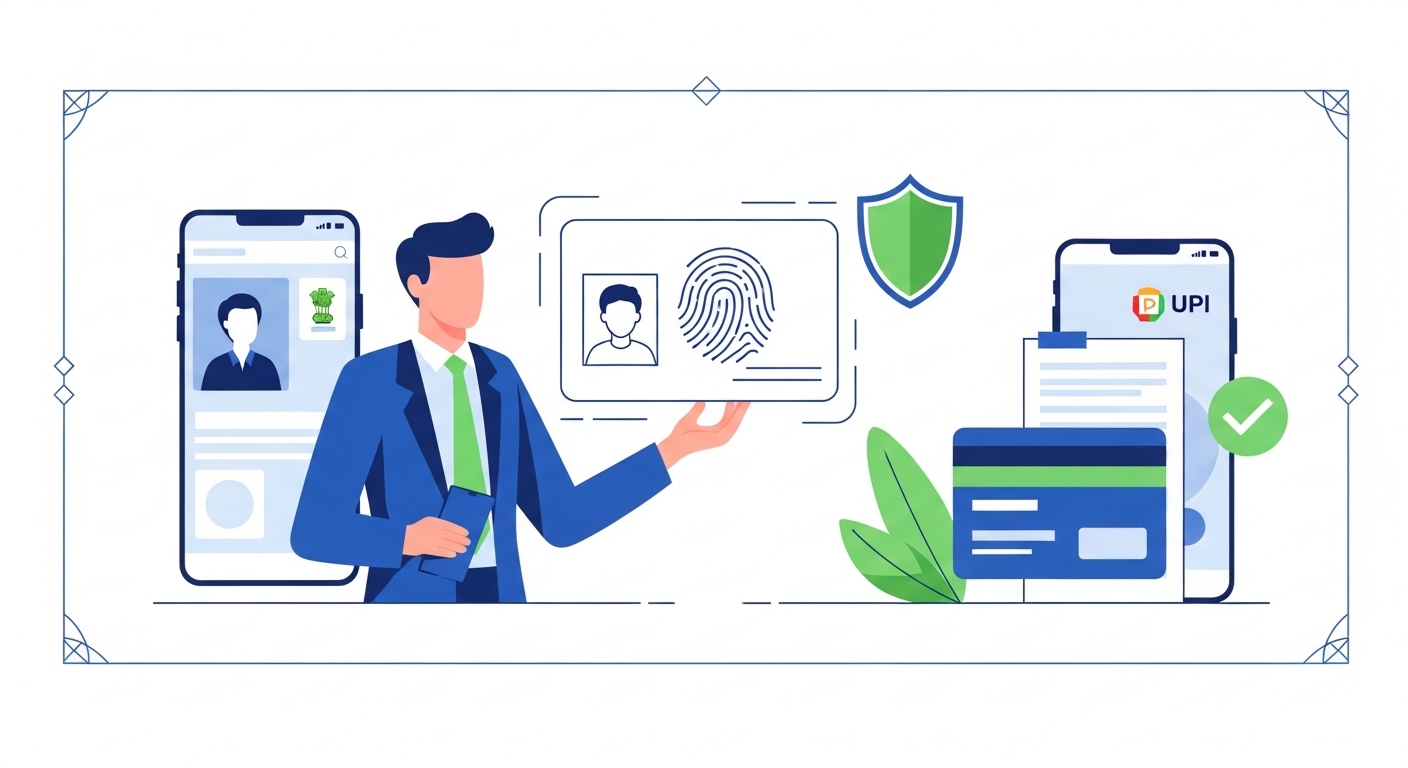
Do you worry about your government benefits getting delayed because of outdated address details? Have you ever had a banking application stuck because your address proof wasn’t accepted? Do you wish you knew exactly when Aadhaar is your only option for proving where you live?
Understanding the precise rules for using Aadhaar as address proof can save you a lot of trouble and ensure your services aren’t interrupted. This guide explains when Aadhaar is mandatory, when other documents are fine, and what to do if your address details cause a problem. You’ll learn how to manage common pitfalls and keep your essential services running smoothly.
Table of Contents
What Is Aadhaar?
Aadhaar is a unique 12-digit identification number issued by the Unique Identification Authority of India (UIDAI) to residents of India, serving as a primary proof of identity and address. This system allows for digital verification through eKYC and authentication services, making it easy for entities to confirm your details.
According to UIDAI (2026), over 1.4 billion Aadhaar numbers have been issued, making it a widely adopted identification method. If your Aadhaar details, especially your address, are not current or accurate, you might face delays or rejection when applying for critical government services or financial products.
You can update your Aadhaar details through the official UIDAI Resident Portal or by visiting a nearby Aadhaar Enrolment Centre.
What Is Aadhaar and Why Is It Important?
Aadhaar isn’t a number; it’s a foundational identity document for residents across India. It helps government and financial institutions confirm who you are and where you live, simplifying many processes. However, if your Aadhaar details are incorrect, it can lead to significant hurdles when you try to open services.
Your Unique Identity
Your Aadhaar number is designed to be a unique identifier, ensuring that no two individuals share the same identity in the system. This uniqueness helps prevent fraud and ensures that benefits reach the intended recipient. If your biometric data or demographic information doesn’t match what’s on file, your identity verification can fail, halting essential transactions.
Proof of Residence
Beyond identity, Aadhaar serves as a crucial proof of address, especially for official purposes. It contains your current residential address, which is often required for everything from opening a bank account to getting a new mobile connection. An outdated address on your Aadhaar can mean that important documents are sent to the wrong place, or your application for a new service is rejected outright.
Digital Verification Tool
The UIDAI offers various digital services, including eKYC (Electronic Know Your Customer) and authentication, which allow service providers to verify your details instantly. When you use Aadhaar eKYC, your identity and address details are shared electronically with your consent, speeding up processes significantly. If the eKYC authentication fails due to a mismatch or technical glitch, you’ll need to resort to physical document submission, which takes more time and effort.
Quick Context: Aadhaar Authentication
Aadhaar authentication is the process where your identity information, including biometrics or OTP, is verified against the UIDAI database. It confirms that the person performing a transaction is indeed the Aadhaar holder.
Why Do You Need Address Proof?
Address proof is a fundamental requirement for almost every formal interaction you have, whether with government bodies or private service providers. It establishes your physical location, which is critical for legal, security, and service delivery reasons. Without valid address proof, you might find yourself unable to open even basic services.
Essential for Services
From getting a new gas connection to registering for a voter ID, services require proof of your current residence. This ensures that you are eligible for services in a particular geographical area and that official communications can reach you. If your address proof is rejected, you won’t be able to complete the application, leading to frustration and delays.
Verifying Your Location
Service providers need to verify your location for several practical reasons, such as delivering products, sending statements, or confirming jurisdiction. For instance, banks must know your residential address to comply with regulatory guidelines and prevent money laundering. If your address cannot be verified, banks might freeze your account or refuse to onboard you.
Preventing Identity Fraud
One of the most critical reasons for demanding address proof is to prevent identity fraud and financial crime. By confirming your physical address, institutions can add an extra layer of security, making it harder for fraudsters to open accounts or obtain services in your name. If you submit a fraudulent or unverified address, you could face legal consequences, and your application will be denied.
Common Confusion: It is commonly assumed that any document with your name and an address is sufficient as address proof.
It is commonly assumed that any document with your name and an address is sufficient as address proof.
The truth is, only specific documents listed by regulatory bodies like RBI or UIDAI are accepted as valid address proofs, and they often have expiry or issuance date requirements.
When Is Aadhaar Mandatory for Address Proof?
While Aadhaar is a widely accepted document, it’s important to know the specific situations where it becomes mandatory as address proof. Understanding these rules helps you avoid last-minute rejections and ensure you’re compliant. Failing to provide Aadhaar when required can result in the denial of critical services or benefits.
Government Benefits Schemes
For many government welfare schemes and subsidies, linking your Aadhaar is compulsory to ensure transparent and targeted delivery of benefits. This includes schemes like the Public Distribution System (PDS) for ration, various pension schemes, and Direct Benefit Transfer (DBT) initiatives. If your Aadhaar isn’t linked or has an incorrect address, your subsidy payments might be held up or diverted to the wrong beneficiary.
Specific Financial Services
Certain financial services, particularly those involving government-backed schemes or specific regulatory requirements, mandate Aadhaar for KYC. For example, opening a Post Office Savings Account or investing in certain government-backed small savings schemes might require Aadhaar as proof of address.
According to SEBI (2026) guidelines, Aadhaar is a valid and often preferred document for KYC processes in the securities market, especially for electronic verification. If you don’t provide Aadhaar in these cases, you’ll likely need to undergo a more extensive physical verification process, which can be time-consuming.
New Mobile Connection
When you apply for a new mobile connection (SIM card), telecom operators are required to verify your identity and address. While other documents like a Passport or Voter ID are accepted, Aadhaar is often the quickest and most convenient option for eKYC. If your Aadhaar address doesn’t match your current residential address, the activation of your new SIM might be delayed or denied.
Certain Government Portals
Many online government portals now integrate Aadhaar-based authentication for accessing services, making it mandatory to use your Aadhaar for identity and address verification. This ensures secure open to your personal data and prevents unauthorised usage.
For example, applying for a PAN card online or accessing your EPF account often requires Aadhaar authentication. If your Aadhaar details aren’t accurate, you won’t be able to log in or complete these online applications.
Pro Tip: Check Aadhaar Status
Always check the status of your Aadhaar and its linked services on the UIDAI Resident Portal before applying for any new service to ensure all details are correct and active.
Scenarios Where Other Proofs Are Accepted
It’s a common misconception that Aadhaar is the only acceptable address proof for all services. In many situations, you have alternatives, and knowing these can be very useful. Sometimes, using an alternative document might even be preferable, especially if your Aadhaar address is outdated or you’re concerned about sharing your Aadhaar number.
Many Private Services
For a wide range of private services, such as signing up for a gym membership, taking a rental car, or even subscribing to certain digital platforms, Aadhaar is not the sole mandatory document. These entities often accept a broader list of documents, giving you flexibility. If you try to use an outdated Aadhaar for these services, it might be rejected, but a utility bill or driving licence could easily be accepted instead.
Not Always Compulsory
The Supreme Court of India has clarified that Aadhaar cannot be made mandatory for all services, particularly by private entities, unless there is a specific legal backing. This means you have the right to choose alternative identity and address proofs in many scenarios. If a private entity insists solely on Aadhaar, you can inquire about their policy and present alternative documents.
Alternative Document Options
For situations where Aadhaar isn’t mandatory, a variety of other documents are generally accepted as valid address proofs. It’s wise to keep a few of these updated and readily available. If your Aadhaar address is incorrect, having an alternative can prevent service disruptions.
| Document Type | Issuing Authority | Common Use Cases |
| Passport | Ministry of External Affairs | International travel, bank accounts, visa applications |
| Driving Licence | Regional Transport Office (RTO) | Driving, address proof, identity proof |
| Voter ID Card | Election Commission of India | Voting, identity proof, address proof |
| Utility Bills (Electricity, Water, Gas) | Respective Service Providers | Bank accounts, telecom, rental agreements (usually within 2-3 months old) |
| Bank Account Statement/Passbook | Bank | Address proof, financial transactions (recent statements often required) |
Aadhaar for Banking and Financial Services
Aadhaar plays a significant role in the banking and financial sector, primarily due to its utility in Know Your Customer (KYC) processes. While it simplifies verification, any discrepancies in your Aadhaar details can cause considerable problems when interacting with banks or other financial institutions. It’s crucial that your Aadhaar information matches your other records.
Opening a Bank Account
When you open a new bank account, banks are mandated to complete a KYC process to verify your identity and address. Aadhaar eKYC is often the fastest way to do this, allowing for instant account opening in many cases. However, if your Aadhaar details, especially your address, don’t match the information you provide to the bank, your account opening process will be stalled, and you might have to submit additional physical proofs.
KYC for Financial Products
Beyond basic bank accounts, most financial products like loans, mutual funds, and insurance policies require comprehensive KYC. SEBI (2026) regulations for the securities market allow Aadhaar to be used for eKYC, streamlining investment processes. If your Aadhaar address is outdated, you might be denied a loan or unable to complete an investment application, as the financial institution needs to send you critical documents to your verified address.
Digital Payment Onboarding
Aadhaar-enabled Payment System (AePS) allows you to perform basic banking transactions using your Aadhaar number and biometric authentication at micro-ATMs or banking correspondents. This system, managed by NPCI (2026), relies entirely on your Aadhaar data. If your Aadhaar isn’t linked to your bank account or if there’s an issue with your biometrics, you won’t be able to use AePS, limiting your open to essential banking services, especially in rural areas.
Common Confusion: Aadhaar is always mandatory for any financial transaction.
Aadhaar is always mandatory for any financial transaction.
While Aadhaar is widely used, it’s primarily mandatory for the initial KYC process for specific products or government-linked services, not for every single transaction you perform once your account is open.
Using Aadhaar for Government Services
Aadhaar has become an indispensable tool for accessing a multitude of government services, primarily to ensure transparency and prevent leakages in benefit delivery. However, this reliance means that an incorrect or outdated Aadhaar can directly impact your ability to receive essential public services. You must ensure your Aadhaar details are current to avoid such issues.
Applying for Subsidies
Many government subsidies, such as those for LPG connections or specific agricultural schemes, are disbursed directly into bank accounts linked with Aadhaar. This Direct Benefit Transfer (DBT) mechanism ensures that funds reach the rightful beneficiaries, reducing intermediaries. If your Aadhaar address is old, or your bank account isn’t correctly linked, you might miss out on these crucial financial supports.
Pension and Welfare Schemes
For senior citizens and other eligible individuals, pension and various welfare schemes are often linked to their Aadhaar for regular disbursement and verification. This ensures continuous support and simplifies the annual life certificate submission process. An address mismatch on your Aadhaar could lead to delays in your pension payments or even temporary suspension of benefits until the details are rectified.
Passport Applications
When applying for a new passport or renewing an existing one, Aadhaar is a commonly accepted document for both identity and address proof. It helps in speeding up the verification process with the Ministry of External Affairs. If the address on your Aadhaar doesn’t match your current residential address, your passport application could be put on hold, requiring you to submit additional, often harder-to-obtain, proofs of residence.
Aadhaar for Telecom Services
The telecom sector heavily relies on Aadhaar for customer verification, especially when issuing new connections or updating subscriber details. This is primarily driven by regulatory requirements to ensure accurate subscriber information and enhance national security. Any issue with your Aadhaar can directly affect your mobile services.
Getting a New SIM
When you apply for a new mobile SIM card, telecom operators are required to verify your identity and address as per the Department of Telecommunications (DoT) guidelines. Aadhaar-based eKYC is often the fastest method, allowing instant activation. If your Aadhaar address is different from where you currently reside, the telecom provider might reject your application or ask for alternative address proofs, delaying your new connection.
Changing Your Address
If you move to a new location and need to update your address with your telecom provider, an updated Aadhaar can simplify this process. Many operators allow you to use your e-Aadhaar as proof of your new residence. If you fail to update your address with your telecom provider and your Aadhaar is also outdated, you might face issues with service delivery or even re-verification processes in the future.
Re-verification Processes
Occasionally, the government or telecom regulators may mandate re-verification drives for existing mobile connections to ensure all subscriber data is accurate. During such drives, Aadhaar is often the primary document requested for re-verification. If your Aadhaar details, particularly your address, are incorrect or unverified, your mobile service could potentially be suspended until you rectify the information.
Pro Tip: Keep Copies
Always keep digital and physical copies of your updated Aadhaar and other valid address proofs readily accessible. This helps immensely when you need to quickly submit documents for new services or re-verification.
Your Rights and Choices Regarding Aadhaar
While Aadhaar is widely used, it’s important to understand your rights and the legal framework surrounding its use. You have choices in many scenarios, and knowing these can help you protect your privacy and avoid unnecessary sharing of your Aadhaar number. The legal space around Aadhaar has evolved, granting citizens more control over its usage.
Voluntary Submission Options
The Supreme Court has clarified that private entities cannot compel you to provide your Aadhaar number for services unless there is a specific law mandating it. This means for most private services like gym memberships, school admissions, or private hospital visits, you can choose to provide alternative identity and address proofs. If an entity insists, you can politely explain your right to offer alternatives.
Protecting Your Privacy
UIDAI offers features like Aadhaar Locking/Unlocking and Virtual ID (VID) to enhance your privacy and security. By locking your Aadhaar, you prevent unauthorised authentication attempts, and a VID can be used in place of your actual Aadhaar number for many transactions. Regularly checking your Aadhaar authentication history on the UIDAI website can help you spot any suspicious activity.
Understanding Legal Guidelines
The Aadhaar (Targeted Delivery of Financial and Other Subsidies, Benefits and Services) Act, 2016, and subsequent amendments, define where Aadhaar can be made mandatory. It’s primarily for government subsidies, benefits, and services where expenditure is drawn from the Consolidated Fund of India.
For other services, the requirement is often voluntary or allows for alternative documents. Staying informed about these guidelines, often published by UIDAI (2026), helps you make informed decisions.
Common Confusion: “Do I have to give my Aadhaar for everything?”
“Do I have to give my Aadhaar for everything?”
No, Aadhaar is not mandatory for every service. Its mandatory use is primarily limited to government subsidies, benefits, and services funded by the government, with provisions for alternatives in many other situations.
Keeping Your Aadhaar Details Updated
One of the most common reasons for issues with Aadhaar as address proof is outdated information. Life changes, and so does your address, so it’s critical to ensure your Aadhaar record reflects your current residential details. Failing to update your address can lead to a cascade of problems, from missed communications to service denials.
How to Change Address
Changing your address on Aadhaar is a simple process, but it requires valid proof of your new residence. You’ll need documents like a passport, bank statement, or utility bill in your name at the new address. If you don’t update your address, any service that relies on your Aadhaar for communication will send notices or documents to your old address, causing you to miss important information.
Online Update Process
The UIDAI Resident Portal offers a convenient online service to update your address. You can log in with your Aadhaar number and OTP, then submit your new address along with scanned copies of supporting documents.
This process is generally quicker and more accessible than visiting a physical centre. However, if your submitted documents are unclear or don’t meet the requirements, your online update request will be rejected, forcing you to restart the process.
Step 1: Visit the official UIDAI Resident Portal and click on “Update Aadhaar” or “Update Demographic Data & Check Status.”
Step 2: Log in using your 12-digit Aadhaar number and the OTP received on your registered mobile number.
Step 3: Select the “Address” option and carefully enter your new address details.
Step 4: Upload scanned copies of valid address proof documents (e.g., electricity bill, bank statement, passport) that clearly show your new address.
Step 5: Review all entered information for accuracy and submit your request. You’ll receive an Update Request Number (URN) to track the status.
Visiting an Enrolment Centre
If you prefer an offline method or face issues with the online process, you can visit any authorised Aadhaar Enrolment Centre. Here, you’ll fill out an Aadhaar Update/Correction Form, provide your new address details, and submit original copies of your address proof documents for verification.
The staff will assist you with the update, which is then processed by UIDAI. If you go without the necessary original documents, your request will not be processed, wasting your time and effort.
Conclusion
Understanding when Aadhaar is mandatory as address proof, and when alternatives are accepted, is crucial for smooth open to services. By keeping your Aadhaar details, especially your address, updated through the UIDAI Resident Portal, you can avoid common pitfalls like application rejections and service disruptions. This proactive step ensures your government benefits, financial services, and telecom connections remain uninterrupted, giving you peace of mind.
How can I update my address on my Aadhaar if I've moved house?
What alternative documents can I use as address proof if I don't want to use my Aadhaar or if its address is outdated?
Can I use my Aadhaar to get a new mobile phone connection (SIM card) in India?
Why is Aadhaar often preferred or even mandatory for government benefits and specific financial services compared to other identity documents?
What are the key advantages and potential drawbacks of relying on Aadhaar for digital verification (eKYC) across various services?
Is it always compulsory to provide my Aadhaar number for every service in India, or are there situations where I can refuse?
What should I do if my application for a service (e.g., bank account, mobile SIM) gets rejected because my Aadhaar address is outdated or incorrect?
For financial services like opening a bank account or applying for a loan, is it better to use Aadhaar or an alternative document like a Passport as address proof?
Author