Digital payments in India have seen incredible growth, with the Unified Payments Interface (UPI) handling billions of transactions monthly in 2026. Despite this surge, many essential services still struggle with slow, paper-based identity verification, creating delays for you. Aadhaar XML offers a simple, secure solution by allowing your identity details to be verified offline, making processes much quicker.
This new approach means you no longer need a constant internet connection or physical documents for many official tasks. Here, you’ll discover how Aadhaar XML works, its benefits for your privacy and convenience, and how it’s changing the way services are accessed across India.
Table of Contents
What Is Aadhaar Offline XML?
Aadhaar Offline XML is a digital file containing your identity details, issued by the Unique Identification Authority of India (UIDAI) for secure, offline verification. This file is encrypted and password-protected, allowing you to share your Aadhaar data without exposing your full 12-digit Aadhaar number.
It acts as a verifiable proof of identity, enabling various services to confirm your details instantly without an internet connection. If you don’t use this method, you’ll likely face longer queues and more paperwork, especially when applying for new services.
You can generate your Aadhaar XML file directly from the UIDAI Resident Portal.
Understanding Aadhaar and KYC
For anyone living in India, understanding Aadhaar and the Know Your Customer (KYC) process is crucial for accessing many essential services. These systems are designed to ensure your identity is correctly verified, protecting both you and the service providers. Let’s explore what each of these means and why they matter.
What is Aadhaar?
Aadhaar is a 12-digit unique identification number issued by the Unique Identification Authority of India (UIDAI) to every resident of India. It serves as your primary proof of identity and address, simplifying interactions with government and non-government services. According to UIDAI (2026), over 1.4 billion Aadhaar numbers have been issued, making it the world’s largest biometric ID system.
This number is linked to your biometric and demographic information, creating a strong and verifiable digital identity. It helps prevent fraud and ensures that government benefits reach the right people.
Why KYC is important
KYC, or Know Your Customer, is a mandatory process for financial institutions and other service providers to verify the identity of their clients. It’s a critical step to prevent money laundering, terrorist financing, and identity theft. By completing KYC, you help ensure the security and integrity of the financial system.
Without proper KYC, banks and other organisations wouldn’t know who they’re dealing with, making it easy for criminals to misuse services. This process protects everyone by establishing trust and transparency in transactions.
What is e-KYC?
e-KYC is the electronic version of the traditional Know Your Customer process, allowing for digital verification of your identity. It significantly reduces the need for physical documents and in-person visits, making onboarding quicker and more convenient. This digital method uses your Aadhaar details to confirm who you are.
e-KYC saves you time and effort, as you often don’t need to visit a branch or submit photocopies of documents. It’s a faster, more efficient way to get verified for various services, from opening a bank account to activating a new phone connection.
Quick Context: Aadhaar’s Role in KYC
Aadhaar is the cornerstone of e-KYC in India, providing a standardised and universally accepted digital identity. Its unique nature and biometric linkage make it highly reliable for verifying your details swiftly.
The Challenge of Traditional KYC
Before digital solutions like Aadhaar XML, getting verified for services often meant navigating a maze of paperwork and enduring significant delays. For residents in Tier-2 cities, these challenges could be even more pronounced, adding layers of inconvenience to everyday tasks. Understanding these hurdles helps appreciate the value of newer methods.
Paperwork and delays
Traditional KYC processes are notorious for their reliance on physical documents. You’d typically need to provide multiple photocopies of identity and address proofs, which then had to be manually verified by officials. This often meant visiting government offices or bank branches, sometimes multiple times.
These manual checks are time-consuming, leading to considerable delays in activating services or completing applications. The sheer volume of paper also creates administrative burdens and storage issues for organisations.
In-person verification issues
Many traditional KYC procedures require you to appear in person for verification. For someone in a Tier-2 city, this might mean travelling a significant distance to a main branch or a specific office, taking time off work or other important duties. Such visits can be particularly challenging for the elderly or those with mobility issues.
The need for in-person verification also creates bottlenecks, leading to long queues and frustrating waiting times. It’s a system that doesn’t always align with the fast pace of modern life.
Online e-KYC limitations
While online e-KYC offers speed, it’s heavily dependent on a stable internet connection, which isn’t always reliable everywhere. In areas with inconsistent network open, completing an online e-KYC can be frustrating or even impossible. This digital divide limits who can truly benefit from fully online verification.
Furthermore, some users have concerns about sharing their data online, fearing potential breaches or misuse. This reliance on a live connection and the associated security perceptions can be a barrier for many.
Common Confusion: It is commonly assumed that all digital KYC needs an internet connection.
This is incorrect.
Aadhaar Offline XML specifically allows for digital identity verification without needing a live internet connection at the point of service.
Aadhaar Offline XML represents a significant leap forward in digital identity verification, especially for those who value privacy and convenience. It’s a clever way to use your Aadhaar information without having to be online all the time. Let’s look at what this file actually is and how it works.
Your digital identity file
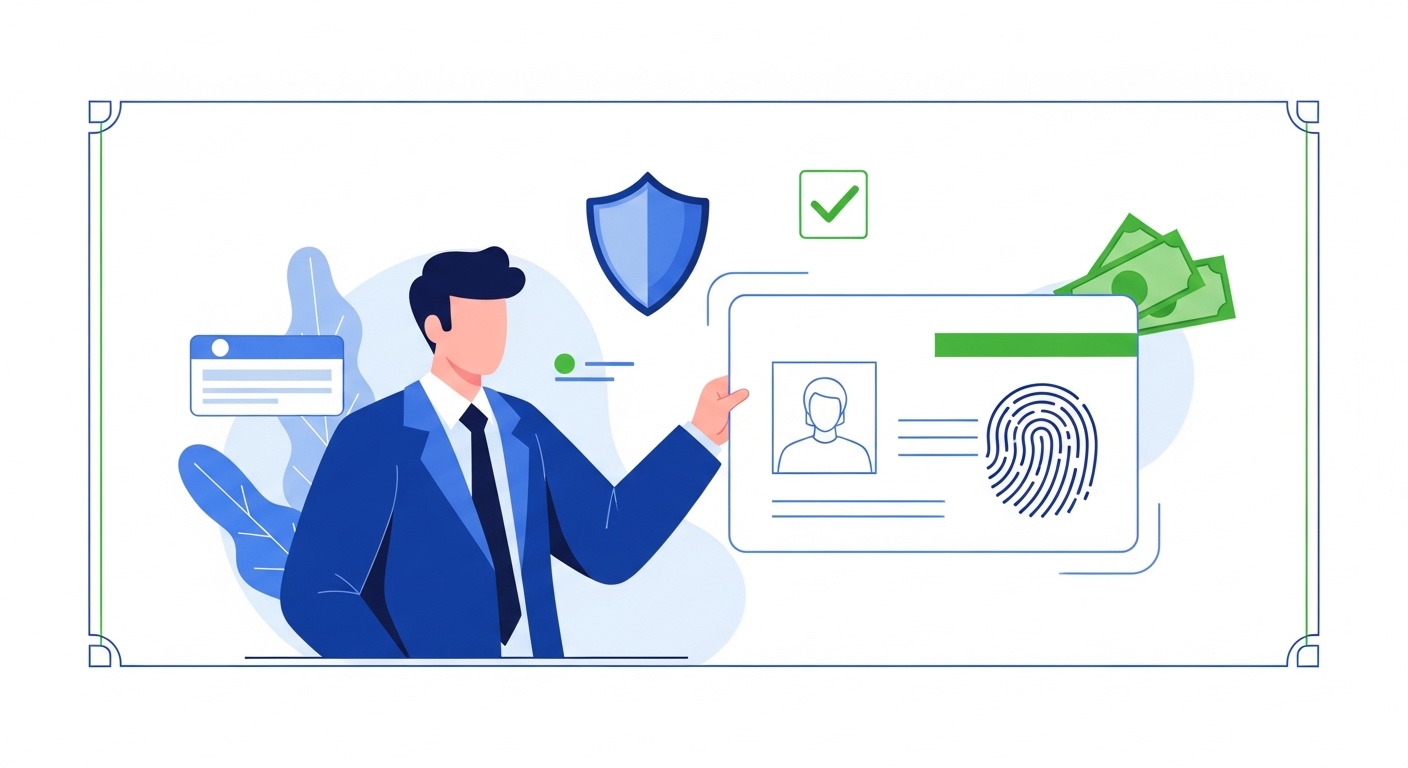
An Aadhaar Offline XML file is a secure, digitally signed document that contains your essential Aadhaar details like your name, address, date of birth, gender, photograph, and a masked Aadhaar number. Crucially, it doesn’t reveal your full 12-digit Aadhaar number, offering an added layer of privacy. This file is generated directly from the UIDAI Resident Portal.
It acts as a portable, verifiable proof of your identity that you control. Think of it as a digital identity card that you can carry on your phone or a USB drive.
Secure, shareable document
The Aadhaar XML file is protected in several ways to ensure your data stays safe. It’s encrypted, meaning your information is scrambled so only authorised parties can read it.
You also set a ‘Share Code’ (a 4-digit password) when you generate it, which is required to open the file. This ensures that only you, and those you explicitly share the code with, can open your details.
When you share this file, the service provider uses the embedded digital signature to confirm that the data genuinely came from UIDAI and hasn’t been tampered with. This makes it a highly trustworthy document for verification.
No internet needed
One of the most powerful features of Aadhaar Offline XML is its ability to facilitate verification without an active internet connection at the point of service. Once you’ve downloaded the XML file, you can present it to any service provider, even in remote areas where network coverage might be poor. The service provider’s system can then verify the details using the XML data and your Share Code.
This offline capability is a significant change for people in smaller towns and villages, who often face connectivity challenges. It ensures that digital services are accessible to a wider population, regardless of their internet open at a given moment.
- Contains your name, address, date of birth, gender, and photograph.
- Includes a masked Aadhaar number for privacy.
- Digitally signed by UIDAI for authenticity.
- Protected by an encryption and a 4-digit Share Code.
How Does Aadhaar XML Work?
Understanding the process of using Aadhaar XML is simple once you know the steps involved. It’s designed to be user-friendly, putting you in control of your digital identity. This method streamlines verification, reducing the hassle often associated with traditional paperwork.
Generating your XML file
The first step is to generate your Aadhaar XML file from the official UIDAI website. You’ll need your Aadhaar number or Virtual ID (VID) and a registered mobile number to receive an OTP. This process is secure and ensures that only you can generate your file.
Step 1: Visit the UIDAI Resident Portal and select the ‘Download Aadhaar’ option.
Step 2: Choose ‘Aadhaar Offline e-KYC (Beta)’ and enter your Aadhaar number or VID, along with the security code shown.
Step 3: Enter the OTP sent to your registered mobile number, then create a 4-digit Share Code for your XML file. This code will be needed whenever someone tries to open your XML file.
Step 4: Click ‘Download’ to save the encrypted XML file to your device. You’ll then have the file ready to use.
Sharing with service providers
Once you have your Aadhaar XML file, you can share it with any service provider that accepts offline e-KYC. This could be a bank, a telecom company, or a government service centre. You provide them with the downloaded XML file and the 4-digit Share Code you created.
The service provider’s system then uses this file to extract your details and verify them against the UIDAI’s digital signature. This process happens instantly, without needing a live connection to the Aadhaar database.
Verifying your details
When a service provider receives your Aadhaar XML file and Share Code, their system performs a quick, offline verification. They decrypt the file using your Share Code and check the digital signature embedded within the XML. This signature, issued by UIDAI, confirms that the data is authentic and hasn’t been altered.
This verification ensures that the details you’ve provided are accurate and officially sanctioned by UIDAI. The entire process is secure, efficient, and respects your privacy by only sharing necessary information.
Pro Tip: Keep your Share Code safe!
Your 4-digit Share Code is essential for accessing your Aadhaar XML file. Treat it like a password and avoid sharing it with untrusted parties.
Key Benefits for You
Aadhaar Offline XML brings a host of advantages directly to you, making various administrative tasks simpler, faster, and more secure. These benefits are particularly impactful for individuals in Tier-2 cities, where convenience and accessibility can sometimes be challenging. You’ll find that this method genuinely puts you in control.
Quicker verification process
Gone are the days of waiting for days or even weeks for your identity to be verified. With Aadhaar XML, the verification process happens almost instantly. Service providers can quickly extract and authenticate your details from the file.
This speed means you can get new services, like a bank account or a mobile connection, activated much faster. It significantly cuts down on the time you spend on administrative formalities.
Enhanced data privacy
One of the biggest concerns with digital identity is data privacy. Aadhaar XML addresses this by sharing only the necessary information and masking your full Aadhaar number. You also control who accesses your data by providing the Share Code.
The file is encrypted, adding another layer of security, and service providers can’t store your Aadhaar number directly. This gives you greater peace of mind knowing your sensitive information is protected.
Convenience and accessibility
Imagine completing KYC without needing a strong internet connection or having to visit a crowded office. That’s the convenience Aadhaar XML offers. You can carry your digital identity on your phone or a pen drive, ready to use whenever needed.
This accessibility is particularly beneficial in areas with limited internet infrastructure, or for those who find it difficult to travel. It truly brings digital services closer to everyone.
Reduced paperwork burden
Say goodbye to photocopying documents and filling out endless forms. Aadhaar XML significantly reduces the need for physical paperwork. You provide the digital file, and the service provider handles the rest.
This not only saves you time but also contributes to a greener, paperless environment. It simplifies the entire process, making it less daunting for you.
| Traditional KYC | Aadhaar Offline XML |
| Requires physical documents, photocopies | Uses a secure digital file |
| Time-consuming manual verification | Instant, offline digital verification |
| Full Aadhaar number often visible | Masked Aadhaar number, enhanced privacy |
| Often requires in-person visits | Can be completed remotely or offline |
| Prone to human error | Reduces errors through digital consistency |
Benefits for Organisations
Beyond the individual user, Aadhaar Offline XML offers substantial advantages for the organisations that adopt it. From banks to government agencies, these entities can streamline their operations, reduce costs, and improve their overall service delivery. It’s a win-win situation for the entire ecosystem.
Streamlined onboarding
Organisations can drastically speed up their customer onboarding processes by using Aadhaar XML. The instant, offline verification eliminates delays associated with manual checks and physical document handling. This means new customers can be served much faster, improving their initial experience.
Faster onboarding also translates to increased efficiency for staff, allowing them to process more applications in less time. It’s a significant improvement over traditional methods.
Cost-effective solution
Reducing paperwork and manual verification directly impacts an organisation’s operational costs. There’s less need for printing, scanning, storing physical documents, and employing staff solely for manual verification tasks. Aadhaar XML automates a large part of the KYC process.
This digital shift helps organisations save money on administrative overheads, allowing them to allocate resources more effectively. It’s a financially smart move for any business.
Regulatory compliance
Aadhaar Offline XML helps organisations meet regulatory KYC requirements efficiently and securely. The digital signature from UIDAI provides an undeniable proof of identity, ensuring compliance with official guidelines. This reduces the risk of non-compliance fines and legal issues.
The system is built on strong security standards, making it a reliable tool for maintaining accurate customer records. It simplifies the audit trails and record-keeping processes.
Fraud prevention measures
The inherent security features of Aadhaar XML, such as encryption and UIDAI’s digital signature, make it an excellent tool for fraud prevention. It’s much harder to tamper with a digitally signed XML file than with physical documents. This reduces the risk of identity fraud and impersonation.
By ensuring that the identity data is authentic and verified directly from the source, organisations can build greater trust in their customer base. This protects both the organisation and its genuine customers from illicit activities.
Pro Tip: Implement secure data handling
While Aadhaar XML is secure, organisations must also ensure their internal systems for handling and storing this data meet high security standards to maintain customer trust.
Ensuring Your Data Security
When you use any digital identity solution, understanding how your data is protected is paramount. Aadhaar Offline XML has several built-in security features designed by UIDAI to safeguard your personal information. These measures ensure that your identity remains private and secure.
Encrypted XML file
The Aadhaar XML file itself is encrypted, which means your personal details are scrambled into an unreadable format. This encryption protects your data from unauthorised open if the file falls into the wrong hands. Only systems with the correct decryption key and your Share Code can unlock and read the information.
This is a fundamental security layer, making sure that your sensitive data isn’t exposed during storage or transmission. It’s a strong defence against digital snooping.
Password protection
When you generate your Aadhaar XML file, you create a 4-digit Share Code. This code acts as a password, and it’s essential for anyone trying to open the contents of the file. Without this Share Code, the encrypted XML file remains inaccessible.
You control who you share this code with, adding an extra layer of personal security. It ensures that only trusted entities, with your explicit permission, can view your details.
UIDAI security standards
The Unique Identification Authority of India (UIDAI) maintains stringent security standards for all Aadhaar-related services, including Aadhaar Offline XML. The digital signature embedded in the XML file is a testament to these standards, guaranteeing that the data is authentic and hasn’t been tampered with since its generation. This signature is verifiable by any service provider.
UIDAI continuously updates its security protocols to protect the vast database of Aadhaar holders. You can trust that the system is built with strong safeguards.
Control over your data
Aadhaar Offline XML puts you firmly in control of your data. You decide when and with whom you share your XML file and Share Code. Unlike online e-KYC where a live connection might share more data than you intend, the XML file is a static snapshot of your details at the time of generation.
This means you have a clear understanding of what information is being shared and when. It help you to manage your digital identity actively.
Common Confusion: The misunderstanding here is that sharing an Aadhaar XML file is the same as sharing your full Aadhaar number.
This isn’t true.
The XML file specifically contains a masked Aadhaar number, protecting your full 12-digit number while still providing verifiable proof of identity.
Real-World Applications of Offline E-KYC
The practical applications of Aadhaar Offline XML are broad and continue to expand, touching various aspects of daily life. For you, this means easier open to essential services without the traditional hurdles. Let’s look at some key areas where this technology is making a real difference.
Opening bank accounts
Opening a new bank account typically requires extensive KYC documentation. With Aadhaar Offline XML, you can complete the identity verification process quickly and efficiently, even at a small branch in a Tier-2 city that might have limited internet. You provide the XML file and your Share Code.
This accelerates the account opening process, allowing you to start banking sooner. It removes the need for multiple photocopies and lengthy manual checks.
Insurance policy applications
Applying for insurance policies, whether for health, life, or vehicle, also involves identity verification. Aadhaar XML simplifies this by providing a secure and verifiable digital proof of identity. Insurers can process your application faster, getting your coverage in place without delay.
This convenience is particularly valuable when you need quick open to insurance services, reducing the administrative burden during critical times. It makes the process less stressful.
Telecom service activation
Getting a new mobile connection or activating a SIM card traditionally involved submitting identity documents and waiting for verification. With Aadhaar Offline XML, telecom providers can instantly verify your details. This means you can get your new connection up and running almost immediately.
This is incredibly useful for people moving to new cities or needing a quick replacement, ensuring smooth communication. It streamlines a common and necessary service.
Accessing government benefits
Many government schemes and benefits require identity verification to ensure they reach the intended beneficiaries. Aadhaar Offline XML can facilitate this process, making it easier for you to open subsidies, pensions, or other welfare programmes. It reduces the bureaucratic steps involved.
This method ensures that even in remote government service centres, your identity can be confirmed without relying on a constant internet connection. It helps bridge the digital divide in service delivery.
Pro Tip: Always confirm acceptance
Before using your Aadhaar XML, it’s a good idea to confirm with the service provider that they accept offline e-KYC using this method to ensure a smooth process.
Getting Started with Aadhaar XML
Ready to experience the convenience of Aadhaar Offline XML? The process of generating and using your file is designed to be simple, allowing you to take control of your digital identity verification. You’ll find it’s a quick way to prepare for future service applications.
Visiting the UIDAI portal
Your journey begins at the official Unique Identification Authority of India (UIDAI) website. This is the only authorised portal for generating your Aadhaar XML file, ensuring authenticity and security. Always make sure you’re on the correct government website to protect your data.
Step 1: Open your web browser and go to the official UIDAI Resident Portal. Look for the ‘Aadhaar Services’ section.
Downloading your XML
Once on the portal, you’ll manage to the Aadhaar Offline e-KYC section to initiate the download. You’ll need your Aadhaar number or Virtual ID (VID) and open to the mobile number registered with your Aadhaar for an OTP. This ensures only you can generate your file.
Step 2: Select ‘Aadhaar Offline e-KYC (Beta)’ and enter your 12-digit Aadhaar number or 16-digit Virtual ID (VID) along with the security captcha. Then, click ‘Send OTP’.
Step 3: Enter the One-Time Password (OTP) you receive on your registered mobile number. Before downloading, you’ll be prompted to create a 4-digit ‘Share Code’ for your XML file. This code protects your file.
Step 4: Click ‘Download’ to get your encrypted Aadhaar XML file. It will save to your device, usually in your ‘Downloads’ folder.
Using the share code
The 4-digit Share Code you created is vital. Whenever you present your Aadhaar XML file to a service provider for verification, you’ll need to provide this code. It allows them to decrypt the file and open your masked details for verification.
Keep this Share Code secure, as it’s your key to accessing the information within your XML file. It ensures your data remains protected even after download.
The Future of Digital Identity Verification
Aadhaar Offline XML is more than a convenient tool; it’s a glimpse into the future of digital identity verification in India. As technology evolves, so too will the ways we prove who we are, making processes even more efficient and secure. You can expect to see this method become even more integrated into daily life.
Expanding adoption
The benefits of Aadhaar Offline XML are clear, leading to its increasing adoption across various sectors. More banks, financial institutions, telecom providers, and government agencies are recognising its value for streamlined, secure, and accessible verification. This widespread acceptance will make your interactions with these services much smoother.
As awareness grows, more service providers, particularly in developing areas, will implement this solution. This ensures that digital convenience isn’t limited to metropolitan areas.
Continuous innovation
The UIDAI and other technology innovators are constantly working to improve digital identity solutions. You can anticipate continuous enhancements to the Aadhaar XML system, potentially including more intuitive generation processes or wider integration with different platforms. The goal is always to make identity verification as smooth and secure as possible.
These innovations aim to address emerging needs and security challenges, ensuring that your digital identity remains strong and trustworthy for years to come. India is at the forefront of this digital space.
Help you digitally
Ultimately, the evolution of tools like Aadhaar Offline XML is about help you to manage the digital world with greater ease and confidence. By providing a secure, convenient, and accessible way to verify your identity, it helps you participate fully in the digital economy and open essential services. This digital help is crucial for everyone.
It’s about making sure that digital services are inclusive, reaching every corner of the country and benefiting every resident. Your digital identity is becoming more powerful and portable than ever.
Conclusion
Aadhaar Offline XML is transforming how you verify your identity, offering a faster, more private, and incredibly convenient alternative to traditional methods. By generating your secure XML file from the UIDAI portal, you gain control over your digital identity, ensuring quicker service activations and reduced paperwork. This new solution truly help you to open essential services with ease and confidence, especially in areas where internet open might be inconsistent.
How can I generate my Aadhaar Offline XML file?
What specific personal details are contained within an Aadhaar Offline XML file?
Can I use Aadhaar Offline XML for identity verification even without an internet connection?
Why is Aadhaar Offline XML considered more private than traditional or online e-KYC methods?
What are the primary benefits of using Aadhaar Offline XML for individuals compared to older KYC processes?
How does Aadhaar Offline XML ensure the authenticity and security of my identity data during verification?
What should I do if I forget the 4-digit Share Code for my Aadhaar Offline XML file?
Which essential services in India are currently using Aadhaar Offline XML for faster identity verification?
How does Aadhaar Offline XML specifically address the challenges faced by residents in Tier-2 cities or rural areas?
Author