

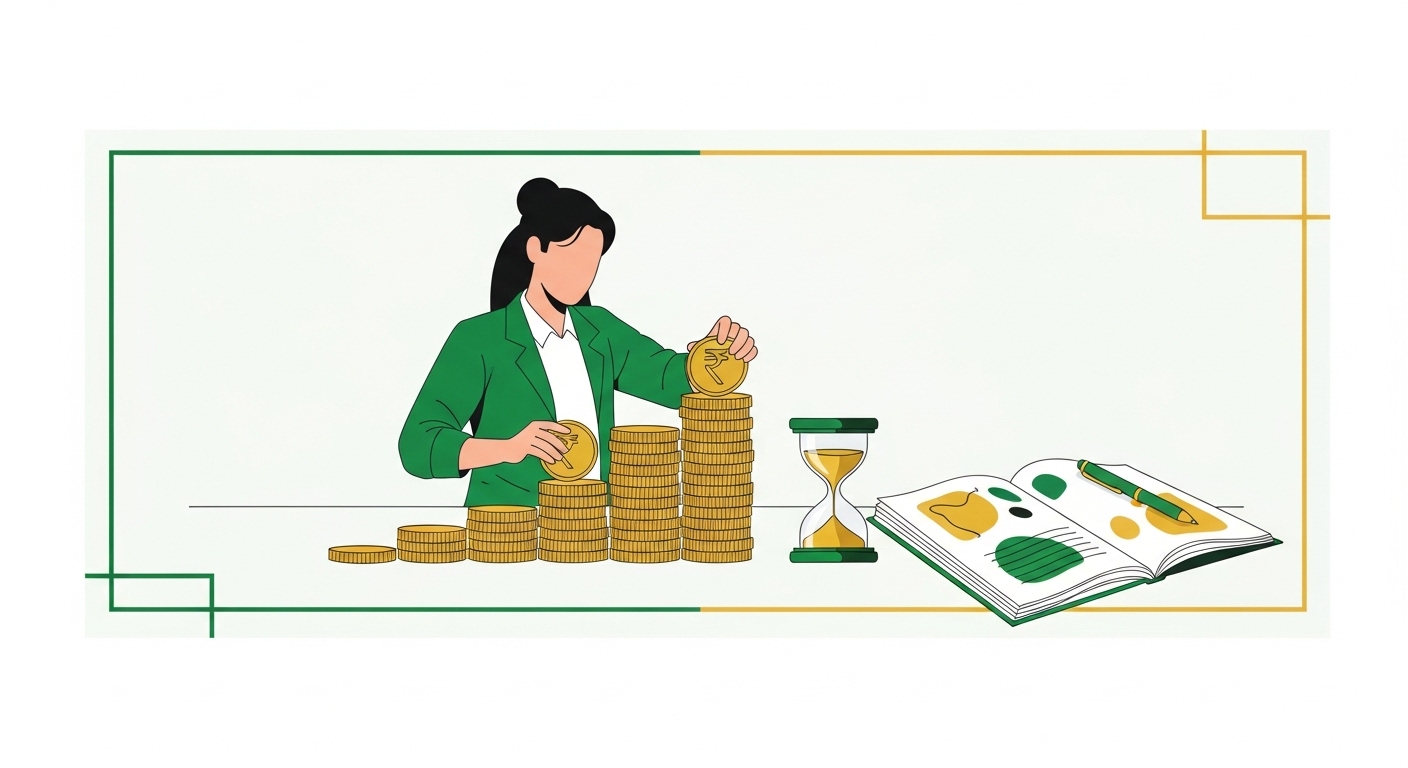
Your Employees’ Provident Fund (EPF) is like a sturdy financial umbrella, always ready to shield you from unexpected downpours or help you reach important life milestones. as you wouldn’t open an umbrella indoors, understanding when and how to open these funds is crucial for making the most of your savings. It’s a significant part of your long-term financial security.
This guide explains the specific rules for both full and partial EPF withdrawals, detailing when you’re eligible and what steps you need to take. Knowing these guidelines helps you plan wisely, ensuring you can open your hard-earned money smoothly when you truly need it for critical expenses or your retirement.
Table of Contents
What Is Employees’ Provident Fund?
The Employees’ Provident Fund (EPF) is a mandatory savings scheme managed by the Employees’ Provident Fund Organisation (EPFO) in India, designed to provide financial security for salaried employees upon retirement or in specific urgent situations. It operates through regular contributions from both the employee and their employer, accumulating over your working life.
For instance, as per official EPFO guidelines (2026), both you and your employer typically contribute a fixed percentage of your basic salary plus dearness allowance each month. Failing to keep your Universal Account Number (UAN) and Know Your Customer (KYC) details updated can significantly delay or even prevent withdrawals when you need them most.
To manage your account and initiate withdrawals, you should always visit the official EPFO Member Portal online.
What Is the Employees’ Provident Fund (EPF)?
The Employees’ Provident Fund (EPF) is a crucial social security scheme in India, primarily aimed at providing a retirement corpus for employees. It’s a long-term savings instrument where a portion of your salary is regularly saved, along with an equal contribution from your employer. This fund grows over time, offering a safety net for your future.
This scheme operates under the Employees’ Provident Funds and Miscellaneous Provisions Act, 1952, making it a regulated and secure avenue for your savings. Understanding its basics is the first step towards managing your financial well-being effectively.
Meaning of EPF
EPF stands for Employees’ Provident Fund, and it’s essentially a retirement benefits scheme for salaried individuals. It’s designed to help you build a substantial corpus that you can rely on once you stop working. The scheme ensures that a portion of your current earnings is set aside for future use.
The fund is managed by the EPFO, a government body, which ensures its security and adherence to legal provisions. Every eligible employee automatically becomes a member, contributing to this fund throughout their employment.
Pro Tip: Keep Track of Your Contributions
Regularly checking your EPF passbook online helps you verify that both your and your employer’s contributions are being deposited correctly each month. This simple check can prevent discrepancies later on.
Why EPF is important
The EPF scheme serves as a cornerstone of financial planning for many Indians, offering several key benefits beyond retirement savings. It provides a structured way to save, ensuring you have funds available for major life events. Its importance stems from the security and stability it offers.
- Retirement Security: Your EPF balance provides a significant lump sum payment at retirement, giving you financial independence in your later years. This helps you maintain your lifestyle without relying solely on a pension.
- Financial Safety Net: In times of urgent need, such as medical emergencies or housing, partial withdrawals are permitted, acting as a crucial backup. It’s a reliable resource during unexpected challenges.
- Tax Benefits: Contributions to EPF are eligible for tax deductions under Section 80C of the Income Tax Act, 1961, within specified limits. The interest earned and the final withdrawal amount are also generally tax-exempt, making it an attractive savings option.
Who contributes to EPF
Both you as an employee and your employer make regular contributions to your EPF account. This dual contribution model helps your savings grow faster than if you were saving alone. The government sets the rules for these contributions.
As per official EPFO guidelines (2026), employees typically contribute as per the latest official guidelines of their basic salary plus dearness allowance, with the employer also contributing an equal amount. For establishments employing 20 or more persons, EPF contributions are mandatory for employees earning up to as per the latest official guidelines per month.
Understanding Your EPF Account
Knowing how to open and manage your EPF account is as important as contributing to it. Your account isn’t a static savings pot; it’s a dynamic fund that requires occasional checks and updates. Keeping your details current ensures smooth transactions when you need them.
Managing your EPF involves understanding your unique identifiers and ensuring your personal information is accurate. This proactive approach prevents delays and complications, especially during withdrawal requests.
Checking your balance
Regularly checking your EPF balance is a good financial habit, allowing you to monitor your savings growth and ensure all contributions are correctly recorded. You don’t need to visit an office; you can do this from the comfort of your home. The online portal provides a transparent view of your fund.
You can check your balance easily through the official EPFO Member Portal. Here’s how you can do it:
Step 1: Open your web browser and visit the official EPFO Member Portal. You will need your Universal Account Number (UAN) and password to log in.
Step 2: Once logged in, manage to the ‘Our Services’ section and select ‘For Employees’. From there, click on ‘e-Passbook’.
Step 3: Enter your UAN, password, and the captcha code to view your EPF passbook. This passbook shows detailed transaction history, including monthly contributions and interest earned, giving you a clear picture of your accumulated savings.
Common Confusion: The misunderstanding here is that your employer automatically updates all your details with EPFO.
While employers do submit monthly contributions, it’s your responsibility to ensure your personal details like bank account, Aadhaar, and PAN are linked and verified with your UAN to avoid withdrawal issues.
While employers do submit monthly contributions, it’s your responsibility to ensure your personal details like bank account, Aadhaar, and PAN are linked and verified with your UAN to avoid withdrawal issues.
Your Universal Account Number (UAN)
Your Universal Account Number (UAN) is a unique 12-digit number assigned to you by the EPFO, acting as a permanent account number for all your EPF accounts across different employers. It remains the same throughout your career, even if you change jobs multiple times. This number is vital for managing your EPF funds.
The UAN links all your previous and current EPF accounts, making it easier to transfer funds or initiate withdrawals without needing to interact with each past employer. It’s the central identifier for all your EPF-related services.
Updating your KYC details
Keeping your Know Your Customer (KYC) details updated in your EPF account is a mandatory requirement for smooth transactions, especially withdrawals. KYC documents like Aadhaar, PAN, and bank account details must be linked and verified with your UAN. Unverified details can cause significant processing delays.
You can update your KYC details through the EPFO Member Portal by logging in with your UAN and password. After submitting the documents, your employer will need to approve them, which is a crucial step for verification.
Why You Might Need to Withdraw EPF
While the primary purpose of EPF is retirement savings, the scheme also offers flexibility to open funds under specific circumstances before retirement. These provisions are designed to help you manage significant life events or financial emergencies. Understanding these reasons is key to responsible financial planning.
It’s important to remember that withdrawing from your EPF early should be a considered decision, as it reduces your retirement corpus. However, for many, it provides a vital financial lifeline during critical times.
Meeting urgent financial needs
Life often throws unexpected challenges, and sometimes, your EPF can provide a crucial safety net during these times. Whether it’s a sudden medical emergency or an unforeseen financial crisis, partial withdrawals are permitted to help you cope. These withdrawals are designed to offer relief without completely depleting your retirement savings.
For example, if you or a family member requires urgent medical treatment, you can apply for a partial withdrawal. This provision ensures that your long-term savings can also serve as a short-term solution in dire circumstances.
Planning for future goals
Beyond emergencies, your EPF can also support you in achieving significant life goals that require substantial funding. These include major expenses like buying a home or funding your children’s education or marriage. The scheme recognises that these milestones are important and provides avenues to open your savings.
Using your EPF for these purposes can alleviate financial pressure, allowing you to invest in your family’s future or secure a home. It’s a way your savings can work for you at different stages of life.
Leaving your job
When you leave a job, the status of your EPF account changes, and you have different options for your accumulated funds. You can either transfer your EPF balance to your new employer’s account, keep it with the EPFO, or, under certain conditions, withdraw it entirely. Making the right choice depends on your employment status and future plans.
If you remain unemployed for a specified period, you become eligible for a full withdrawal. This provision helps you manage your finances during a transitional phase between jobs.
When Can You Withdraw Your Full EPF?
Full withdrawal from your EPF account is generally intended for specific life stages or situations where you are no longer employed. These rules are in place to ensure the fund serves its primary purpose of retirement security. Knowing these conditions helps you plan for your financial future.
It’s important to differentiate between full and partial withdrawals, as the eligibility criteria are distinct. Full withdrawals mean accessing your entire accumulated balance.
| Withdrawal Scenario | Eligibility Criteria | Key Consideration |
| Retirement | Upon reaching as per the latest official guidelines of age | Full tax exemption on withdrawal |
| Unemployment | Unemployed for two consecutive months | Must certify unemployment, tax implications possible if service < as per the latest official guidelines |
| Permanent Emigration | Moving abroad permanently | Requires specific documentation for emigration proof |
Retirement at age 58
The most common and simple reason for a full EPF withdrawal is reaching the official retirement age. As per official EPFO guidelines (2026), you are eligible to withdraw your entire accumulated EPF balance upon attaining as per the latest official guidelines of age. This withdrawal is typically tax-exempt, provided you have completed at least five years of continuous service.
This provision ensures that your EPF corpus is readily available to support you during your post-employment years. It’s the culmination of years of disciplined saving, providing a solid financial foundation for your retirement.
Pro Tip: Plan Your Retirement Withdrawal
Start the withdrawal process a few months before your 58th birthday to ensure all documents are in order and verified, allowing for a smooth and timely payout.
Unemployment for two months
If you find yourself unemployed after leaving a job, you may be eligible for a full EPF withdrawal under specific conditions. As per official EPFO guidelines (2026), you can withdraw as per the latest official guidelines of your EPF balance after one month of unemployment to meet immediate expenses. The remaining as per the latest official guidelines can be withdrawn after two months of continuous unemployment.
To qualify for the full withdrawal after two months, you must declare that you are still unemployed. This provision helps individuals manage their finances during periods of job transition.
Permanent emigration abroad
Another specific condition that allows for a full EPF withdrawal is permanent emigration from India. This rule acknowledges that if you are permanently moving out of the country, the primary purpose of the EPF scheme (retirement in India) no longer applies to you. You will need to provide documentary evidence of your emigration.
This withdrawal requires submitting specific forms and proofs to the EPFO, confirming your intent to settle abroad permanently. It ensures you can open your savings before leaving the country.
Rules for Partial EPF Withdrawal
Partial EPF withdrawals allow you to open a portion of your accumulated funds for specific, pre-defined needs without affecting your entire retirement corpus. These provisions are designed to offer financial assistance during significant life events or emergencies while still encouraging long-term savings. Each type of partial withdrawal comes with its own set of eligibility criteria and limits.
Understanding these specific rules is crucial to ensure your application is successful and that you meet all the necessary conditions. These withdrawals are not open-ended and are tied to particular circumstances.
Buying a house or land
You can make a partial withdrawal from your EPF for purchasing a house or land, either for yourself or jointly with your spouse. As per official EPFO guidelines (2026), you must have completed a minimum of five years of service to be eligible. The withdrawal amount is limited to 24 times your basic salary plus dearness allowance for purchasing land, or 36 times for purchasing a house, or the total of employee and employer share with interest, whichever is less.
This facility can be availed only once during your entire service period. It’s a significant help for achieving homeownership.
Building or renovating home
If you already own a home, you can also use your EPF for constructing a house or making major renovations. Similar to buying a house, you need to have completed a minimum of five years of service. The withdrawal limit for construction or renovation is generally up to 12 times your basic salary plus dearness allowance, or your share with interest, whichever is less.
This option helps you improve your living conditions without taking on high-interest loans. You can typically avail this facility after five years from the completion of your previous house purchase or construction.
Paying for children’s education
Your EPF can also assist in funding your children’s higher education. As per official EPFO guidelines (2026), you can withdraw a portion of your funds for your child’s post-matriculation (after 10th standard) education. You must have completed at least seven years of service, and the withdrawal is limited to as per the latest official guidelines of your share of contributions.
This facility can be availed up to three times for each child. It’s a valuable resource for investing in your children’s future.
Children’s marriage expenses
Another significant life event for which you can make a partial withdrawal is your children’s marriage. You can withdraw funds for the marriage of your son or daughter. You need to have completed a minimum of seven years of service to be eligible.
The withdrawal amount is limited to as per the latest official guidelines of your share of contributions, and this facility can be availed up to three times during your service period. This helps ease the financial burden of wedding expenses.
Common Confusion: The belief is that you can withdraw EPF for any family member’s medical treatment – but this is incorrect.
You can withdraw EPF for medical treatment only for yourself, your spouse, children, or dependent parents, and no minimum service period is required.
You can withdraw EPF for medical treatment only for yourself, your spouse, children, or dependent parents, and no minimum service period is required.
Medical treatment for illness
In times of medical emergencies, your EPF can provide immediate financial support. You can withdraw funds for medical treatment for yourself, your spouse, children, or dependent parents. There is no minimum service period required for this type of withdrawal, making it accessible when you need it most.
The withdrawal amount is typically limited to six times your basic wages plus dearness allowance, or your total share with interest, whichever is less. This provision offers crucial relief during health crises.
Purchasing equipment for disability
For members who are physically challenged, the EPFO provides a provision for partial withdrawal to purchase equipment necessary to overcome their disability. This includes aids like wheelchairs, hearing aids, or other assistive devices. This facility aims to support members in improving their quality of life.
There is no minimum service period for this withdrawal, and the amount is generally limited to six times your basic wages plus dearness allowance, or your total share with interest, whichever is less. This is a compassionate provision for those in need.
Natural calamity relief
In the unfortunate event of a natural calamity, such as floods, earthquakes, or other disasters, the EPFO allows for partial withdrawals to help members affected by such events. This provision is activated when a natural calamity is officially declared in a specific area. It offers financial assistance for recovery and rebuilding.
The withdrawal amount and specific conditions are usually announced by the EPFO in response to the particular calamity. This ensures timely support to those impacted.
Pre-retirement withdrawal (age 57)
You can make a partial withdrawal one year before your actual retirement, specifically upon attaining as per the latest official guidelines of age. This provision allows you to open a significant portion of your EPF corpus before you formally retire. It helps you prepare for your post-retirement life or manage any immediate financial needs.
As per official EPFO guidelines (2026), you can withdraw up to as per the latest official guidelines of your accumulated EPF balance at this stage. This option provides flexibility as you transition into retirement.
How to Apply for EPF Withdrawal
Applying for an EPF withdrawal, whether full or partial, has become much simpler with the advent of online services. However, you still need to follow specific steps and ensure all your documents are in order. A correct application process ensures your request is processed quickly and efficiently.
Failing to provide accurate information or missing necessary documents can lead to significant delays. It’s always best to be thorough and prepared before you begin.
Online application process
The online application method is the most convenient and preferred way to apply for EPF withdrawals today. It saves you time and allows you to track your application status from anywhere. Make sure your UAN is activated and linked with Aadhaar and bank account details.
Here’s a general sequence for applying online:
Step 1: Visit the official EPFO Member Portal and log in using your UAN and password. You’ll need to ensure your KYC details are verified and approved by your employer.
Step 2: manage to the ‘Online Services’ section and click on ‘Claim (Form-31, 19 & 10C)’. Form 31 is for partial withdrawals, Form 19 for full EPF settlement, and Form 10C for pension withdrawal.
Step 3: On the next page, verify your bank account number (which must be seeded with your UAN) and then click ‘Proceed Online Claim’. Select the type of withdrawal you need (e.g., ‘PF Advance (Form 31)’ for partial, or ‘Only PF Withdrawal (Form 19)’ for full settlement).
Step 4: Fill in the required details, such as the purpose of the advance (for Form 31) and the amount you wish to withdraw. Upload any necessary scanned documents, if prompted. After submitting, you will receive an OTP on your Aadhaar-linked mobile number for verification, and upon successful submission, an acknowledgment will be generated.
Quick Context: Aadhaar Linkage is Key
Your Aadhaar card must be linked and verified with your UAN for any online EPF withdrawal. Without this, the online claim process cannot be completed.
Offline application method
While online applications are encouraged, an offline method is still available for those who prefer it or face issues with the online portal. This involves submitting physical forms directly to the EPFO office. You’ll need to download the relevant forms from the EPFO website.
You would typically fill out a composite claim form (Aadhaar/Non-Aadhaar) and submit it to the nearest EPFO regional office. This method requires more manual effort and can take longer for processing.
Required documents for application
Regardless of whether you apply online or offline, having the correct documents ready is essential for a smooth EPF withdrawal process. Missing or incorrect documents are a common cause of delays. Always double-check your paperwork before submission.
- Universal Account Number (UAN): Your active UAN is fundamental for any EPF transaction.
- Bank Account Details: Your bank account must be linked with your UAN, and a cancelled cheque or bank passbook with IFSC code and account number clearly visible is often required.
- Aadhaar Card: This is mandatory for online claims and for linking with your UAN.
- PAN Card: If your service period is less than five years, your PAN card is crucial for tax calculation purposes on your withdrawal.
- Identity Proof: A government-issued ID like a passport or driving licence may be required in some cases.
Important Things to Remember
Navigating EPF withdrawals successfully goes beyond knowing the rules; it also involves understanding the broader implications and best practices. Being mindful of these additional points can save you from potential pitfalls and ensure your financial well-being. Always approach your EPF with a clear understanding of its long-term purpose.
These considerations help you make informed decisions and maintain the integrity of your retirement savings. It’s about being prepared and proactive.
Tax implications on withdrawals
One of the most critical aspects to understand about EPF withdrawals is their tax implications, especially if you withdraw before completing a certain service period. While EPF is generally tax-exempt (EEE status), early withdrawals can attract tax. As per official income tax guidelines (2026), if you withdraw your EPF balance before completing five years of continuous service, the amount becomes taxable.
The withdrawn amount is added to your income for that financial year and taxed as per your applicable income tax slab. This rule encourages long-term savings and discourages premature withdrawals.
Pro Tip: Maintain Continuous Service
Aim to transfer your EPF balance when changing jobs instead of withdrawing it, especially if your total service period is less than five years. This helps you avoid tax implications and keeps your retirement corpus growing.
Keeping your UAN active
Your Universal Account Number (UAN) is your gateway to all EPF services, so keeping it active and updated is paramount. An inactive UAN or outdated details can create significant hurdles when you need to open your funds. Regular verification of your details is a simple but effective preventive measure.
Ensure your mobile number and email ID linked with your UAN are current, and periodically check your KYC status on the EPFO portal. This proactive approach ensures you’re always ready for any EPF transaction.
Seeking expert advice
While this guide provides comprehensive information, individual financial situations can be complex. For intricate cases, large withdrawal amounts, or when planning major financial decisions involving your EPF, seeking expert advice is always a wise step. A financial advisor can offer personalised guidance.
They can help you understand the tax implications specific to your situation, evaluate the impact of an early withdrawal on your retirement goals, and assist with complex application procedures. Don’t hesitate to consult a professional for designed insights.
Conclusion
Understanding the full and partial EPF withdrawal rules is essential for managing your long-term savings effectively and responsibly. By knowing when and how you can open your funds, you gain control over your financial future, whether it’s for retirement, a medical emergency, or a significant life event.
Regularly checking your EPF balance and keeping your KYC details updated on the EPFO portal is a crucial action you should take. This vigilance ensures that when the time comes, you can open your hard-earned money smoothly and without unnecessary delays, providing the financial security you’ve built over years.
How can I check my EPF balance and transaction history online?
Can I withdraw my entire EPF balance if I'm unemployed for a short period?
What are the specific reasons I can make a partial withdrawal from my EPF account?
Why is it essential to link my Aadhaar and bank account with my UAN for EPF withdrawals, and what are the risks if I don't?
What are the tax implications of withdrawing my EPF before completing five years of continuous service, and how can I avoid them?
Should I opt for a full EPF withdrawal if I'm permanently moving abroad, or are there other considerations?
What should I do if my EPF withdrawal application is delayed because my KYC details are not approved by my employer?
Which is a better option for funding a significant life event like buying a house: a partial EPF withdrawal or exploring other financial avenues?
Author

