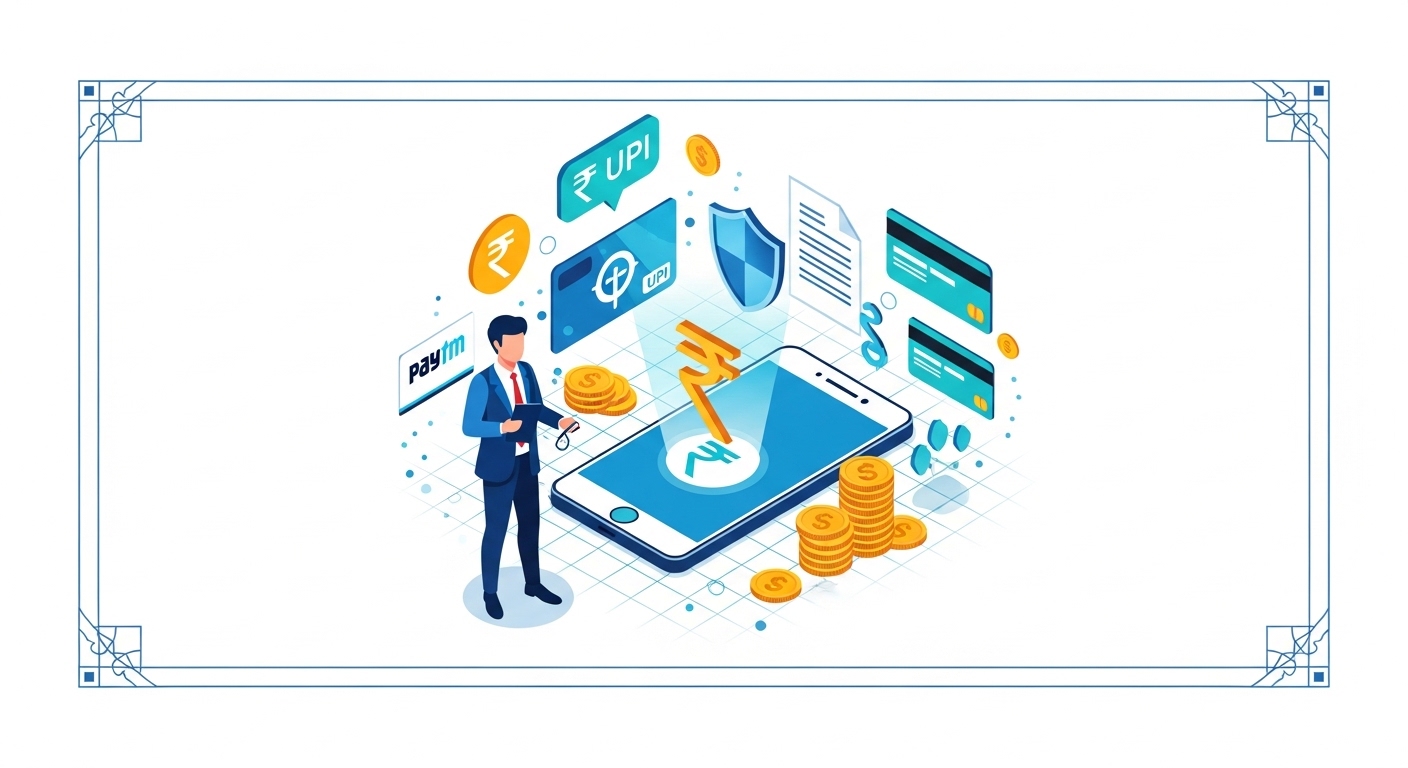
The Reserve Bank of India’s 2026 pronouncements on the e-Rupee pilot programme have significantly altered how financial institutions and merchants view future transactions. This shift means businesses and government agencies must now consider how Central Bank Digital Currencies (CBDCs) will integrate into their existing payment systems. Adapting to these new digital realities is no longer optional for staying competitive.
Here you will find a clear explanation of digital currencies, their benefits for businesses and governments, and how they simplify payments for you. We’ll explore the evolving landscape of digital finance, helping you understand the steps needed to prepare for a more digitally integrated future.
Table of Contents
What Is Digital Currency?
Digital currency refers to money existing purely in electronic form, managed and issued by a central authority or decentralised networks. Unlike physical cash, it lives entirely on computer systems and can be transferred instantly, making transactions quicker and often more secure.
The Reserve Bank of India (RBI) is actively piloting its own Central Bank Digital Currency (CBDC), the e-Rupee, aiming to offer a sovereign digital alternative to physical cash. If individuals and organisations don’t adapt to these evolving payment methods, they risk falling behind in efficiency and security, potentially missing out on streamlined services. Y
ou can learn more about India’s digital payment initiatives by visiting official portals like the National Payments Corporation of India (NPCI) or the Digital India Programme website.
What Are Digital Currencies?
Digital currencies are essentially the next stage in the evolution of money, moving beyond physical notes and coins into a purely electronic format. Think of them as digital versions of the cash you carry, but with added benefits like instant transferability and enhanced security. They represent a fundamental shift in how we think about and use money.
These digital forms of money are designed to be secure and efficient, often using advanced technologies to ensure every transaction is recorded accurately. They offer a modern solution to the challenges of traditional payment systems, promising a future where money moves as fast as information. You’re already familiar with digital payments through UPI and IMPS, and digital currencies take this concept even further.
Understanding New Money
You might already use digital money every day through online banking or UPI payments, but digital currencies introduce new layers of technology and functionality. These new forms of money are built to operate with greater speed and transparency than traditional electronic transfers. They aim to make financial interactions simpler and more direct.
The core idea is to create a form of money that is natively digital, meaning it’s born and lives purely in the digital realm. This approach allows for innovations that aren’t possible with physical currency or even current bank-based digital systems. It’s about making money work smarter for everyone.
Common Confusion: Digital currency is only for tech experts.
Digital currencies are complex and only for tech-savvy individuals.
In reality, new digital payment systems like the e-Rupee are being designed for ease of use, aiming to be as simple as your current UPI app.
How They Work
Digital currencies typically operate on a decentralised network or a centrally controlled digital ledger, ensuring that every transaction is recorded and verified. This technology makes it very difficult to alter or counterfeit transactions, adding a layer of security. The underlying system often involves advanced cryptography to keep your money safe.
When you make a payment with a digital currency, the transaction is processed and confirmed almost instantly, often without the need for multiple intermediaries. This directness helps reduce processing times and can significantly lower transaction costs. It’s a much more streamlined way to move money from one person or business to another.
Pro Tip: Exploring the e-Rupee
Keep an eye on announcements from the Reserve Bank of India regarding the e-Rupee pilot programme. Participating financial institutions will provide clear guidance on how you can access and use this new digital currency as it rolls out more widely.
Different Types Explained
There are several kinds of digital currencies emerging, each with its own characteristics and purpose. The most prominent type being explored by governments globally, including India, is the Central Bank Digital Currency (CBDC), often called the e-Rupee in India. This is a digital form of a country’s fiat currency, issued and backed by its central bank.
Other types include stablecoins, which are privately issued digital currencies designed to maintain a stable value relative to a traditional currency like the Indian Rupee or the US Dollar. These are often used in the broader digital asset ecosystem to facilitate faster transfers. Understanding these distinctions helps you appreciate the diverse landscape of digital finance.
| Digital Currency Type | Issuer | Purpose |
| Central Bank Digital Currency (CBDC) | Reserve Bank of India (e-Rupee) | Official digital fiat currency, public use |
| Stablecoin | Private Companies | Maintain stable value, bridge between traditional and digital assets |
| Tokenised Bank Deposits | Commercial Banks | Digital representation of bank deposits for specific transactions |
How Digital Currency Helps Businesses
For businesses, embracing digital currencies isn’t just about keeping up with trends; it’s about gaining a competitive edge through efficiency and broader reach. These new payment methods can transform how you manage finances, process transactions, and interact with your customers. You’ll find that many of the traditional hurdles of payment processing are significantly reduced.
Imagine a world where your payments settle instantly, and the fees associated with each transaction are minimal. Digital currencies are moving us towards that reality, allowing businesses to operate with greater agility and lower overheads. This efficiency directly translates into better profitability and customer satisfaction.
Faster Payment Processing
One of the biggest advantages for businesses is the speed at which digital currency transactions can be processed and settled. Unlike traditional bank transfers that might take hours or even days, digital currency payments can be near-instantaneous. This rapid settlement improves your cash flow, meaning you have access to funds much quicker.
Faster processing also reduces the time your staff spend reconciling payments, freeing them up for more productive tasks. You’ll experience fewer delays in fulfilling orders or releasing services, which directly enhances your customer experience. It’s a win-win for both your operations and your clientele.
- Real-time Settlement: Funds are transferred and confirmed almost immediately, improving cash flow.
- Reduced Waiting Times: Eliminates delays associated with traditional banking hours or processing cycles.
- Enhanced Operational Efficiency: Less time spent on payment reconciliation and manual tracking.
Lower Transaction Costs
Traditional payment systems often involve multiple intermediaries, each adding a fee to your transactions. Digital currencies, especially CBDCs, can significantly reduce these costs by streamlining the payment process and cutting out unnecessary steps. This means more of your revenue stays with your business.
For smaller businesses, these savings can be substantial, directly impacting your bottom line and allowing you to invest more in growth. You’ll find that the cumulative effect of lower fees across many transactions can make a real difference. It’s about making every rupee count for your business.
Quick Context: Cost Savings
Digital currencies reduce the need for intermediaries in payment processing, leading to lower transaction fees for businesses compared to traditional card networks or cross-border transfers.
Reaching More Customers
Digital currencies have the potential to expand your customer base by making payments accessible to a wider audience, including those who are unbanked or underbanked. Many people in rural or remote areas might not have traditional bank accounts but could easily use a digital currency app on their smartphone. This expands your market significantly.
Furthermore, digital currencies facilitate easier cross-border transactions, allowing you to accept payments from international customers without the complexities and high costs of traditional international transfers. You can tap into global markets with greater ease and efficiency. This opens up new avenues for growth that were previously difficult to access.
Boosting Business Growth
By improving efficiency, reducing costs, and expanding your reach, digital currencies directly contribute to business growth. You can reallocate savings from transaction fees into product development, marketing, or staff training. This strategic reinvestment helps your business innovate and scale.
The enhanced security and transparency of digital currency transactions also build greater trust with your customers and partners. When payments are reliable and traceable, it fosters stronger relationships and encourages repeat business. You’re building a more robust and future-proof operation.
Improving Payment Security
Digital currency systems are built with advanced cryptographic security measures, making transactions highly secure and resistant to fraud. Each transaction is encrypted and recorded on a secure ledger, providing an immutable audit trail. This level of security is a significant upgrade from many traditional payment methods.
This enhanced security protects both your business and your customers from potential scams and data breaches. You’ll have greater peace of mind knowing your financial data and transactions are well-protected. It’s about safeguarding your assets in an increasingly digital world.
Digital Currency for Government Services
Governments worldwide are exploring digital currencies to modernise public services, making them more efficient, transparent, and accessible to citizens. In India, the push for digital governance through initiatives like the Digital India Programme aligns perfectly with the capabilities of digital currencies. They offer a powerful tool to streamline how public funds are managed and distributed.
Imagine a system where welfare benefits reach beneficiaries instantly, without intermediaries, and every rupee spent can be tracked transparently. Digital currencies promise to deliver this level of efficiency and accountability in government operations. They represent a significant leap forward in public finance management.
Efficient Public Payments
Digital currencies can drastically improve the efficiency of government payment systems, from collecting taxes to paying salaries and vendors. Payments can be processed in real-time, reducing administrative overheads and speeding up financial cycles. This means less paperwork and faster processing for everyone involved.
The ability to automate and instantly reconcile payments also frees up government resources that can then be redirected to other critical public services. You’ll see a more responsive and streamlined government apparatus. It’s about making public money work harder and smarter.
Step 1: Government initiates a payment (e.g., salary, vendor invoice) using its digital currency platform.
Step 2: The payment is instantly processed and recorded on the digital ledger, ensuring transparency.
Step 3: Funds are credited to the recipient’s digital currency account within moments, eliminating delays.
Reducing Fraud Risks
The inherent transparency and traceability of digital currency transactions are powerful tools against fraud and corruption in public spending. Every transaction is immutably recorded on a digital ledger, creating an audit trail that is difficult to tamper with. This makes it much harder for illicit activities to go unnoticed.
By reducing opportunities for fraud, digital currencies help ensure that public funds are used for their intended purpose, benefiting citizens directly. You can have greater confidence that your tax money is being managed responsibly. This fosters a higher level of trust between the government and its people.
Common Confusion: Digital currencies are less secure for public funds.
Digital currencies are inherently risky for public funds.
CBDCs are issued by central banks and utilise advanced cryptographic security, making them more transparent and auditable than many traditional cash-based or legacy digital systems, thereby reducing fraud.
Faster Benefit Distribution
For welfare programmes and direct benefit transfers, digital currencies offer the potential for immediate and direct distribution of funds to beneficiaries. This eliminates delays often associated with cheque processing or bank transfers, ensuring that aid reaches those who need it most, precisely when they need it. This speed can be life-changing in emergency situations.
Such a system also reduces the administrative costs of distributing benefits, allowing more of the allocated funds to reach the actual recipients. You’ll experience a more efficient and impactful delivery of government support. It’s about putting people first by accelerating aid.
Pro Tip: Direct Benefit Transfers
Keep your digital identity documents, such as Aadhaar, updated. As digital currency use for government benefits expands, your verified digital identity will be key to receiving payments efficiently.
Improving Financial Inclusion
Digital currencies can play a crucial role in bringing financial services to segments of the population that are currently unbanked or underbanked. With just a smartphone and a digital currency wallet, individuals can access payment services without needing a traditional bank account. This can be particularly impactful in rural areas of India.
This increased access to digital payments fosters greater financial participation, allowing more people to save, transact, and access government services. You’re helping to bridge the digital divide and ensure everyone has a fair chance to participate in the modern economy. It’s about empowering every citizen.
According to the India Stack initiative, digital public infrastructure is key to financial inclusion, and digital currencies are a natural extension of this vision.
Tracking Public Spending
The transparency of digital currency transactions provides governments with unprecedented capabilities to track public spending in real-time. Every rupee spent can be monitored from issuance to its final destination, offering detailed insights into how funds are utilised. This level of oversight is invaluable for accountability.
This enhanced tracking capability allows for better auditing, performance evaluation, and policy adjustments, ensuring that public money delivers maximum impact. You’ll see a more accountable and data-driven approach to governance. It’s about ensuring every taxpayer’s rupee is accounted for.
What Are the Benefits for You?
As an individual, the shift towards digital currencies brings a host of personal benefits that can make your financial life simpler, safer, and more convenient. You’re already experiencing the ease of UPI, and digital currencies promise to build on that foundation, offering even more control and options. It’s about putting more power in your hands.
Think about how much faster and cheaper it could be to send money to family abroad, or simply knowing that your payments are more secure than ever before. Digital currencies are designed to enhance your everyday financial interactions. You’ll find they offer practical improvements to how you manage your money.
Safer Payment Methods
Digital currencies, especially those issued by central banks like the e-Rupee, are designed with robust security features to protect your transactions and personal data. The cryptographic security makes it extremely difficult for fraudsters to intercept or alter payments. This gives you greater peace of mind when transacting online or offline.
Furthermore, reducing reliance on physical cash means you’re less vulnerable to theft or loss. Your digital funds are protected by your device’s security and your unique credentials. You’re adopting a payment method that prioritises your financial safety.
- Enhanced Encryption: Transactions are secured with advanced cryptography, protecting your data.
- Reduced Cash Handling: Less physical cash means lower risk of theft or loss.
- Immutable Records: Every transaction is recorded on a secure ledger, preventing disputes.
Easier Cross-Border Payments
Sending money across international borders can often be slow, expensive, and complicated with traditional banking systems. Digital currencies promise to revolutionise cross-border payments by enabling near-instant transfers at significantly lower costs. This is particularly beneficial for remittances to and from India.
Imagine sending money to family in another country, and they receive it in their digital wallet within minutes, without hefty fees. This convenience and affordability will make international financial interactions much smoother for you. It’s about connecting you globally with ease.
According to NPCI (2026), the focus on interoperability aims to make all digital payments, including future digital currency transactions, seamless across platforms.
More Payment Choices
As digital currencies become more widespread, you’ll have even more options for how you pay for goods and services, both online and in physical stores. This increased choice means you can select the payment method that best suits your needs for speed, cost, and convenience. It’s about having flexibility in your financial decisions.
Whether it’s paying your utility bills, buying groceries, or making an online purchase, digital currencies will offer a new, efficient alternative. You’ll find merchants increasingly accepting these new forms of payment, expanding your purchasing power. This broadens your financial freedom.
Pro Tip: Exploring New Payment Options
Stay informed about which banks and merchants are adopting the e-Rupee or other digital currency payment options. Many will offer incentives for early adopters, so keep an eye out for official announcements.
Greater Financial Control
Digital currencies offer enhanced transparency over your spending, as every transaction is recorded and easily traceable in your digital wallet. This clear record can help you better track your expenses, manage your budget, and gain a more comprehensive understanding of your financial habits. You’ll have a clearer picture of where your money goes.
The ability to make instant payments and receive real-time confirmations also gives you immediate feedback on your financial activities. You’re empowered with more data and control over your personal finances. It’s about making you the master of your money.
The Road Ahead for Digital Payments
The journey towards a fully digital payment ecosystem, featuring digital currencies, is well underway, but it’s an evolving landscape. India has already made significant strides with platforms like UPI, which processed over 13.4 billion transactions in January 2026 alone, as per Digital Payment Dashboard (2026).
The next phase involves integrating digital currencies into this robust infrastructure. This future promises even greater efficiency and innovation.
You can expect continuous advancements in payment technologies, alongside ongoing efforts to establish clear regulatory frameworks. This dual focus ensures that the benefits of digital currencies are realised responsibly and securely. It’s an exciting time to be part of India’s digital transformation.
New Payment Technologies
The development of digital currencies is closely tied to advancements in various payment technologies, including blockchain, artificial intelligence, and the Internet of Things (IoT). These technologies are being explored to enhance the security, speed, and intelligence of payment systems. You’ll see smarter ways to pay and manage your money.
For example, smart contracts, powered by blockchain, could automate payments based on predefined conditions, revolutionising supply chain finance and escrow services. You’re looking at a future where payments aren’t just transactions, but intelligent processes. It’s about making payments work harder for you.
Common Confusion: Digital currencies are just a fad.
Digital currencies are a passing trend.
However, with central banks globally, including the Reserve Bank of India, actively developing CBDCs like the e-Rupee, they are clearly a fundamental shift in the future of money and payments, backed by government authority.
Working with Regulations
As digital currencies become more prevalent, governments and central banks are actively developing comprehensive regulatory frameworks to ensure their stability, security, and integrity. These regulations are crucial for protecting consumers, preventing illicit activities, and maintaining financial stability. You can expect a safe and regulated environment.
The Reserve Bank of India is at the forefront of this, carefully piloting the e-Rupee to understand its implications and establish appropriate guidelines. You’ll see a balanced approach that fosters innovation while mitigating risks. It’s about building a trustworthy digital financial system.
| Regulatory Focus Area | Purpose | Benefit for You |
| Consumer Protection | Safeguarding user funds and data | Increased trust and security |
| Anti-Money Laundering (AML) | Preventing illicit financial flows | Cleaner, more stable financial system |
| Data Privacy | Protecting personal financial information | Greater control over your data |
| Financial Stability | Ensuring the overall health of the economy | Reliable and predictable financial environment |
Preparing for the Future
To fully benefit from the evolving digital payment landscape, it’s wise to stay informed and adapt to new technologies as they emerge. This might involve understanding how to use digital wallets for CBDCs or familiarising yourself with new digital identity verification processes. You’re building your future-ready financial skills.
The National Digital Literacy Mission (NDLM) is a government initiative aimed at making citizens digitally literate, which includes understanding and using digital payment methods. Participating in such programmes can help you prepare effectively. It’s about empowering yourself with knowledge.
Global Payment Trends
The move towards digital currencies is a global phenomenon, with many countries exploring or implementing their own CBDCs. This global trend suggests a future where international payments could be significantly faster and cheaper, fostering greater economic interconnectedness. You’re part of a worldwide financial transformation.
India’s leadership in digital payments, particularly with UPI, positions it well to integrate with these global digital currency ecosystems. You can anticipate more seamless cross-border transactions and new opportunities arising from international digital payment corridors. It’s about a more connected world.
Sources
- NPCI – Payments – upi, imps, rupay, digital payments
- Digital Payment Dashboard – Payments – digital transactions
- India Stack – Digital – api, digital infra
- Digital India Programme – Digital Scheme – e governance, digital services
- National Digital Literacy Mission – Digital Scheme – digital literacy
Conclusion
Embracing digital currencies offers a clear path to more efficient, secure, and inclusive financial systems for everyone. By understanding how these new forms of money work, you can better prepare yourself and your business for the future of payments. Staying informed about the e-Rupee and other digital payment advancements ensures you’re ready to take advantage of these innovations.
How can individuals in India start using the e-Rupee once it's widely available?
What exactly is a Central Bank Digital Currency (CBDC) like India's e-Rupee, and how does it differ from existing digital payments?
Can digital currencies, such as the e-Rupee, completely replace physical cash in India in the near future?
Why should Indian businesses consider adopting digital currencies like the e-Rupee when they already use efficient systems like UPI for payments?
What are the key differences between a Central Bank Digital Currency (CBDC) like the e-Rupee and other digital currency types such as stablecoins or tokenised bank deposits?
Is it truly safe for the Indian government to use digital currencies for public funds, considering potential cyber threats and data security concerns?
What if I don't have a traditional bank account; can I still use digital currencies like the e-Rupee in India?
How can I prepare myself and my small business for the upcoming shift to digital currencies in India?
Author
