

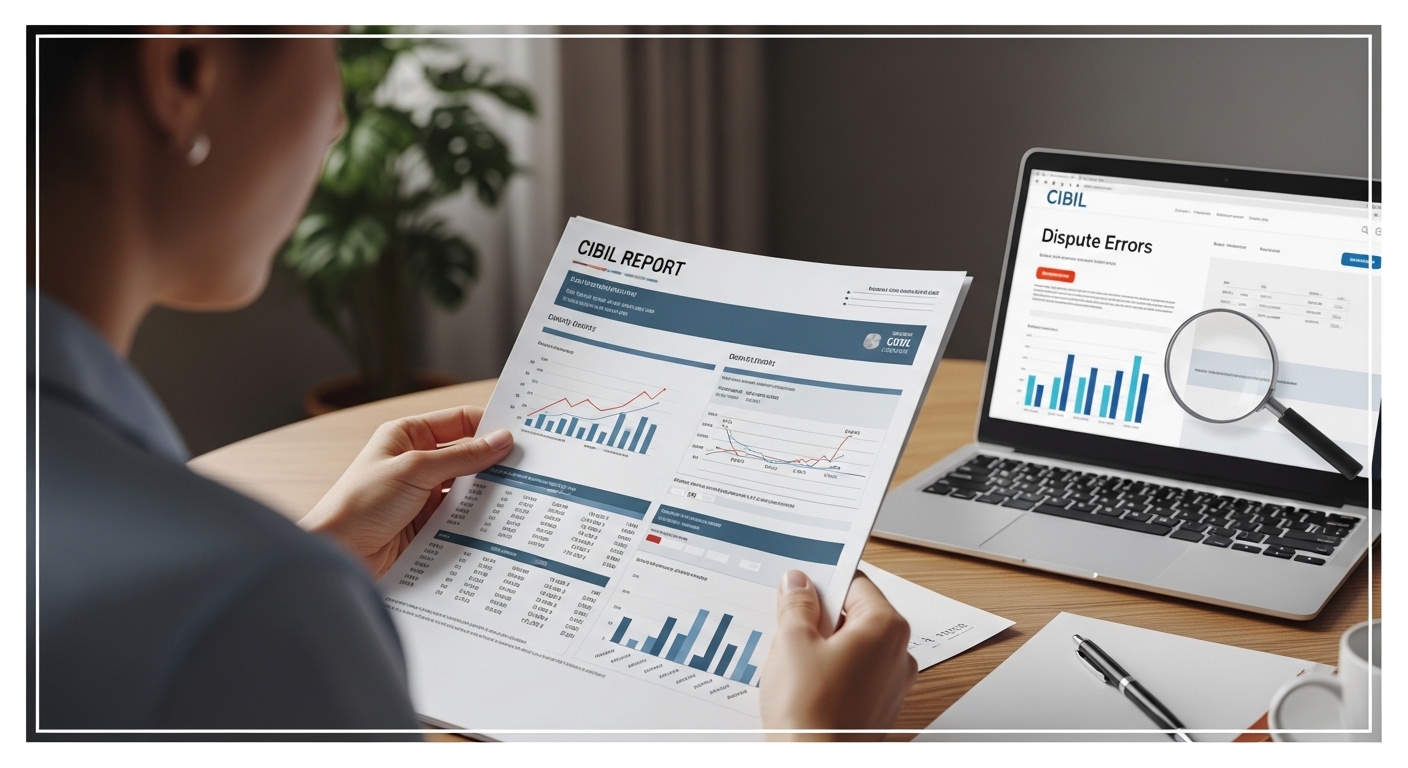
Your financial journey often involves borrowing money, whether for a home, a car, or simply using a credit card. How well you manage these financial responsibilities is recorded in a special document called your CIBIL Report. Understanding this report and ensuring it is accurate is very important for your financial health.
What is Your CIBIL Report?
Your CIBIL Report is like a detailed financial report card. It keeps a record of all your past and current loans and credit cards, showing how regularly you have repaid them. This report is used by banks and other financial companies to decide if they should lend you money.
Why Your CIBIL Report Matters to You
This report is incredibly important because it tells lenders how reliable you are as a borrower. If your report shows that you pay your bills on time and manage your money responsibly, you are more likely to get new loans or credit cards. A good report can also help you get better interest rates, which means you pay less money back in the long run. On the other hand, a report with problems could make it harder for you to borrow money when you need it.
Who Makes Your CIBIL Report?
In India, several companies are licensed by the Reserve Bank of India (RBI) to collect and maintain credit information. One of the most well-known is CIBIL Limited. They gather information from various banks and other lending institutions about your borrowing and repayment activities. This information is then put together to create your CIBIL Report and calculate your CIBIL Score.
Getting Your CIBIL Report
It is a good idea to check your CIBIL Report regularly to make sure everything is correct. You can get your report in a few ways.
How to Ask for Your Report Online
The easiest way to get your report is online. You can visit the official CIBIL website. There, you will need to fill in some personal details, prove your identity, and answer a few security questions. You are entitled to receive one free full credit report from CIBIL each year. If you need more reports within the same year, you may have to pay a small fee.
How to Ask for Your Report by Post
If you prefer, you can also request your report by post. You would typically need to download a request form from the CIBIL website, fill it out, attach copies of your identity and address proof, and then mail it to their office.
What You Need to Get Your Report
When you ask for your report, you will usually need to provide:
- Your full name and date of birth.
- Your Permanent Account Number (PAN).
- Proof of identity, such as your Aadhaar card or passport.
- Proof of address, like a recent utility bill or bank statement.
Understanding What Your CIBIL Report Shows
Once you have your report, it is important to know what each section means.
Your Personal Information
This section contains your basic details, such as your name, address, date of birth, and identification numbers like your PAN and Aadhaar. It is crucial that these details are accurate.
Your CIBIL Score: What It Means
Your CIBIL Score is a three-digit number, usually ranging from 300 to 900. It is a quick of your entire credit history. A score closer to 900 shows that you are a very responsible borrower, making it easier for you to get loans. Lenders often look for scores above a certain level, typically 750 or higher.
Details About Your Loans and Credit Cards
This part of your report lists all your credit accounts, including home loans, car loans, personal loans, and credit cards. For each account, it shows:
- The type of loan.
- The amount borrowed.
- Your repayment history, noting if payments were on time or delayed.
- The current outstanding balance.
- The date the account was opened and closed (if applicable).
When Others Have Checked Your Credit
This section lists all the times lenders have looked at your CIBIL Report. When you apply for a loan or credit card, the lender checks your report, and this is called a ‘hard enquiry’. Too many hard enquiries in a short period can sometimes make it seem like you are desperately seeking credit, which might be viewed negatively by lenders. Checking your own report is a ‘soft enquiry’ and does not affect your score.
Public Records (Like Court Cases, if Any)
In some cases, your report might include information from public records, such as if you have been involved in any bankruptcy proceedings. This information is less common but can be present if applicable.
Finding Mistakes in Your CIBIL Report
It is possible for errors to appear on your CIBIL Report. That is why checking it regularly is so important.
Common Errors to Look Out For
Some common mistakes you might find include:
- Incorrect personal details: Your name, address, or date of birth might be wrong.
- Accounts you did not open: Loans or credit cards that do not belong to you.
- Wrong payment history: Your payments might be incorrectly shown as delayed or missed when you paid on time.
- Accounts shown as active when closed: A loan or credit card you have fully paid off might still appear as open.
- Incorrect loan amounts: The outstanding balance or loan amount might be wrong.
Why Fixing Mistakes is Important for You
Any error on your CIBIL Report, especially those related to payments or accounts, can lower your CIBIL Score. A lower score can make it difficult for you to get new loans or credit cards, or it could mean you are offered them at much higher interest rates. Fixing these mistakes ensures your report accurately reflects your financial responsibility.
How to Fix Mistakes in Your CIBIL Report
If you find an error, do not worry; there is a clear process to get it corrected.
The Step-by-Step Process to Dispute an Error
- Identify the error: Clearly pinpoint what is wrong on your report.
- Raise a dispute: Go to the CIBIL website and use their online dispute resolution form.
- Provide proof: Gather and submit any documents that support your claim.
Gathering Your Proof (Like Bank Statements)
Having strong evidence is key. This could include:
- Bank statements showing timely payments.
- Loan closure certificates if an account is wrongly shown as active.
- Payment receipts.
- Identity documents if your personal information is incorrect.
Sending Your Complaint Online
On the CIBIL website, navigate to the ‘Dispute Resolution’ section. You will need to log in, select the specific section of your report that has the error, describe the mistake, and upload your supporting documents.
What Happens After You Send Your Complaint
Once you submit your complaint, CIBIL will contact the bank or financial institution that reported the information. The lender will then investigate the matter. If they confirm an error, they will update the information, and CIBIL will then correct your report. This process usually takes about 30 days. You can track the status of your dispute online.
What to Do if the Mistake is Still There
If, after a reasonable time, the mistake has not been corrected, you should follow up with CIBIL and the lender. If the issue remains unresolved, you may consider escalating the matter to the appropriate regulatory body, such as the Banking Ombudsman, for further assistance.
Keeping Your CIBIL Report Healthy
Maintaining a good CIBIL Report is an ongoing process that requires responsible financial habits.
Checking Your Report Often
Make it a habit to check your CIBIL Report at least once a year. This helps you spot any errors quickly and ensures you are aware of your financial standing. Regular checks also help you understand how your financial decisions affect your score.
Always Paying Your Bills on Time
This is the most important advice for a healthy CIBIL Report. Always pay your loan instalments and credit card bills by their due dates. Even a single late payment can negatively impact your score and remain on your report for several years. Setting up reminders or automatic payments can be very helpful.
Using Credit Wisely
Manage your credit responsibly. Avoid taking on too many loans at once. Try to keep your credit card usage low compared to your total credit limit. For example, if your credit limit is £1000, try not to use more than £300 of it. Also, having a mix of different types of credit, such as a home loan and a credit card, can show that you can manage various forms of borrowing well.
Author

