

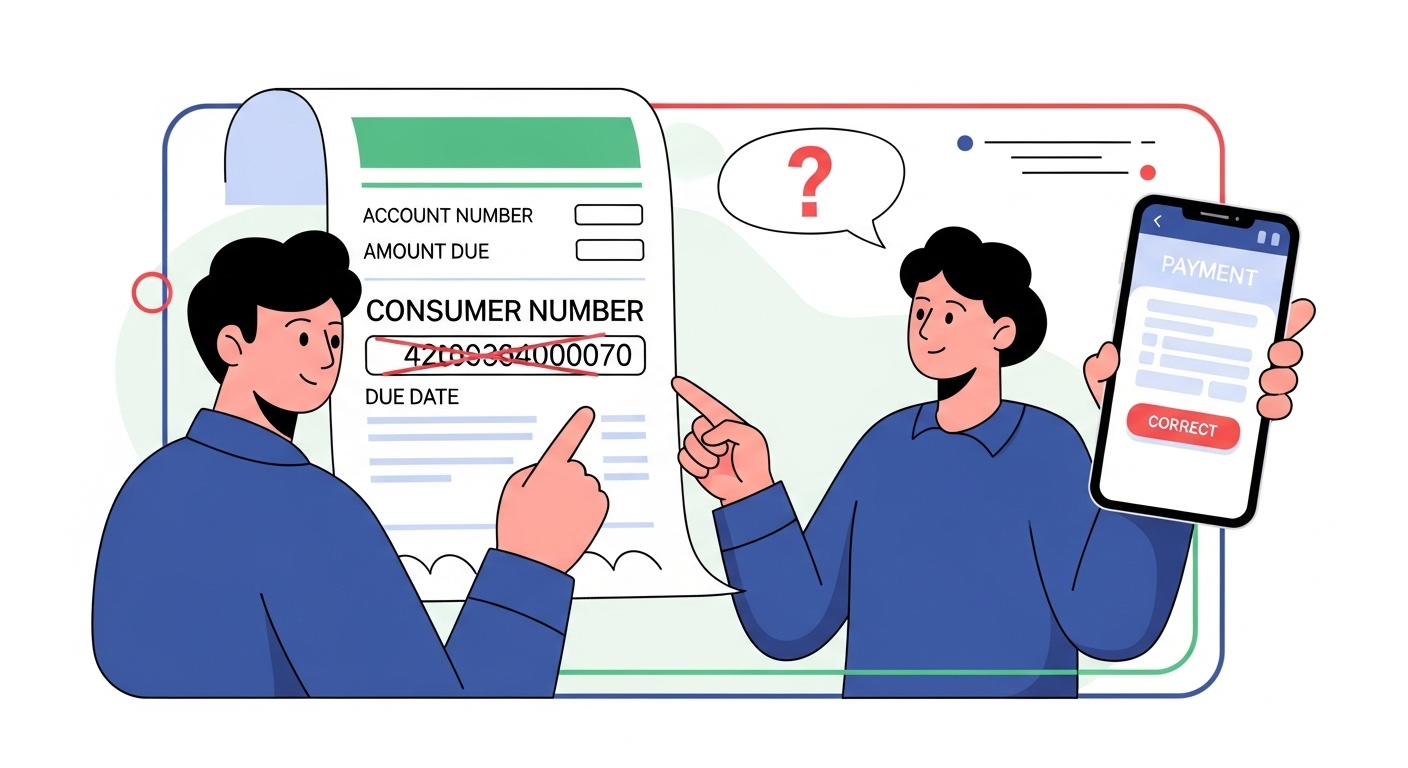
Paying your bills digitally has become a part of everyday life, making things much easier and quicker. However, sometimes, a small mistake, like entering the wrong consumer number, can lead to big problems. It’s a common worry, but thankfully, there are clear steps you can take to put things right. This guide will help you understand what a consumer number is, what happens if you get it wrong, and exactly how to fix the issue, ensuring your money goes to the right place.
What Exactly is a Consumer Number?
Think of a consumer number as your unique identification code for a specific service, like electricity, water, gas, or even your internet connection. Every household or individual who uses these services is given one. It’s how the service provider knows exactly who you are and which account belongs to you. When you pay a bill, this number tells the company where to apply your payment.
Why Your Consumer Number is So Important for Bills
Your consumer number is incredibly important because it ensures your payment reaches your specific account. Without it, or if it’s incorrect, your payment might go to someone else’s account, or worse, it might not be processed at all. This number acts like a unique address for your money, guaranteeing that your bill is marked as paid and you continue to receive uninterrupted service. It helps companies keep accurate records and ensures you don’t face any unexpected issues like late fees or service disconnections.
Oh No! I Entered the Wrong Number – What Happens?
It’s a moment many of us dread – you’ve just paid a bill, and suddenly you realise you might have typed in the wrong consumer number. Don’t panic, but it’s important to understand the immediate effects of such a mistake.
The Immediate Trouble a Wrong Number Can Cause
If you enter an incorrect consumer number, several problems can arise:
- Your Bill Remains Unpaid: The most common issue is that your actual bill isn’t settled. The payment might have gone to a non-existent account or, in some cases, to another customer’s account. This means your service provider still sees your bill as outstanding.
- Late Fees and Penalties: If your bill isn’t paid on time due to the error, you could face late payment charges.
- Service Disruption: In more serious cases, if the bill remains unpaid for too long, your service (like electricity or water) could be temporarily disconnected.
- Difficulty in Tracking Funds: Your money might be in limbo, making it tricky to track and recover without swift action.
Why You Need to Act Fast
Time is truly of the essence when you’ve made a payment error. The sooner you report the mistake, the higher the chance of resolving it quickly and getting your money back or correctly applied. Delays can make it much harder for banks and service providers to trace the payment, especially if the funds have already been credited to another account or withdrawn. Acting fast can also help you avoid those pesky late fees and prevent any service interruptions.
Your Step-by-Step Guide to Fixing the Mistake
If you find yourself in this situation, follow these steps carefully to resolve the issue effectively.
Step 1: Gather All Your Payment Proof
Before you do anything else, collect all the information related to your payment. This includes:
- Transaction ID/Reference Number: This is a unique code for your payment.
- Date and Time of Payment: Exactly when you made the payment.
- Amount Paid: The precise sum of money.
- Payment Method: Which bank account or digital payment application you used.
- Screenshots: If you used a digital payment application, a screenshot of the successful transaction page is very helpful.
- The Incorrect Consumer Number: The number you accidentally entered.
- The Correct Consumer Number: The number you should have entered.
This information is your evidence and will be crucial for any investigation.
Step 2: Contact Your Payment App or Bank Straight Away
Your first point of contact should be the platform you used to make the payment.
- For Digital Payment Applications: Reach out to their customer support through their helpline, in-app chat, or email. Explain the situation clearly and provide all the payment proof you gathered.
- For Bank Payments: Contact your bank’s customer service department. They can help you trace the transaction.
Ask them to investigate the payment and, if possible, initiate a reversal or correction.
Step 3: Speak Directly to the Company You Were Paying
While your bank or payment application investigates, it’s also a good idea to contact the service provider (e.g., the electricity board, water department).
- Inform them about the mistaken payment.
- Provide them with your correct consumer number and the details of the incorrect payment.
- They might be able to trace the payment on their end or at least make a note on your account to prevent service disruption while the issue is being resolved.
Step 4: What If the Payment Has Already Gone Through?
If the payment has already been credited to another, incorrect consumer number, the process becomes a little more complex but is still manageable. Your bank or payment application will typically need to coordinate with the bank of the recipient of the incorrect payment. This might involve a formal request to reverse the transaction. Be prepared for this to take a little longer.
Step 5: Getting Your Money Back (Refunds and Reversals)
The goal is to either get your money back or have it correctly applied to your bill.
- Reversal: If the payment hasn’t been fully processed or hasn’t reached an active account, a direct reversal might be possible.
- Refund: If the money has gone to an incorrect account and that account holder is identified, a refund process might be initiated. This often requires cooperation from the person who wrongly received the money.
- Patience is Key: This process can take several working days, sometimes even longer, depending on the complexity and the cooperation of all parties involved. Keep following up regularly.
Step 6: Keep a Detailed Record of Everything
Throughout this process, maintain a meticulous record of every interaction:
- Dates and Times: When you made calls or sent emails.
- Reference Numbers: Any complaint or ticket numbers given by customer service.
- Names of Representatives: Who you spoke to.
- of Conversations: What was discussed and what actions were promised.
This detailed log will be invaluable if you need to escalate your complaint further.
Simple Ways to Avoid This Problem Next Time
Prevention is always better than cure, especially when it comes to your money. Here are some easy habits to adopt to prevent future payment errors.
Always Double-Check Your Details Before Paying
This is the golden rule. Before you hit that ‘pay’ button, take an extra moment to carefully review all the details:
- Consumer Number: Is it exactly right?
- Amount: Is it the correct bill amount?
- Biller Name: Are you paying the right company?
A quick check can save you a lot of trouble later.
Saving Your Correct Numbers for Easy Payments
Many digital payment applications and banking portals offer a feature to save biller details. Once you’ve successfully paid a bill, you can often save that consumer number under a specific name. The next time you need to pay, you can simply select the saved details, reducing the chance of manual entry errors.
Using Official and Trusted Payment Methods
Always use payment applications or banking services that are well-known, regulated, and have a strong reputation for security and customer support. These platforms usually have robust systems in place for transaction tracking and grievance redressal, which can be very helpful if an error occurs.
What to Do If You Need More Help
Sometimes, despite your best efforts, issues can be difficult to resolve. It’s important to know where to turn for further assistance.
Understanding Your Rights as a Digital Consumer
As a consumer making digital payments, you have certain rights designed to protect you. Financial regulators in the UK, such as the Financial Conduct Authority (FCA), set rules for financial service providers. These rules ensure fair treatment, transparency, and a clear process for handling complaints. You have the right to a proper investigation of your complaint and a timely resolution.
How to Lodge a Formal Complaint
If your initial attempts to resolve the issue with your bank, payment application, or service provider are unsuccessful, you can escalate your complaint.
- Internal Grievance Redressal: Most organisations have a formal complaint procedure. Follow this first, ensuring you have your detailed records handy.
- Financial Ombudsman Service: If you are still unsatisfied with the resolution provided by your bank or payment service provider, you can refer your complaint to the Financial Ombudsman Service. This independent body helps resolve disputes between consumers and financial businesses.
- Consumer Protection Bodies: For issues related to the service provider (e.g., electricity company), you might also be able to approach relevant consumer protection bodies or industry regulators for assistance.
Remember, you are not alone in this, and there are established channels to help you resolve payment issues.
Author

