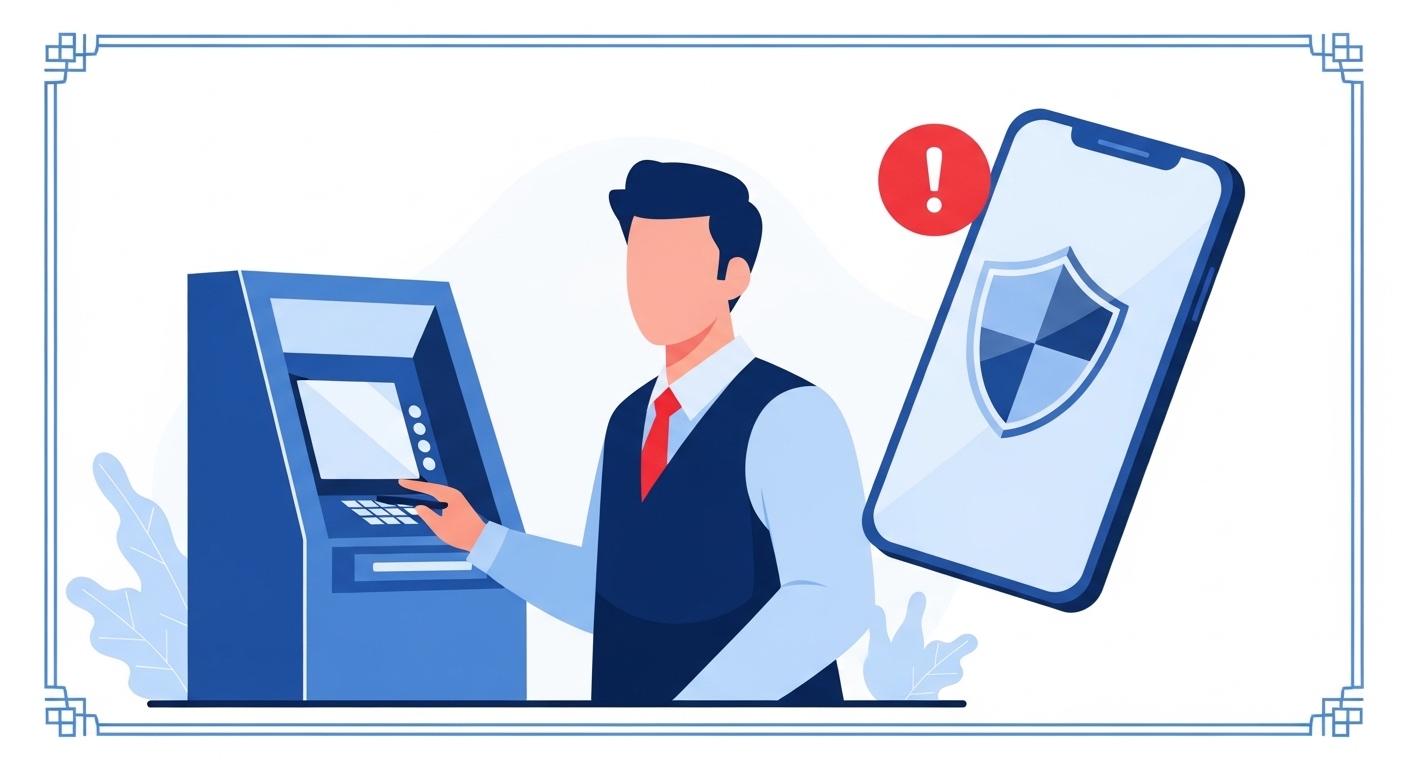
‘Excuse me, I think someone tampered with this ATM.’ ‘Don’t worry, I saw you check it thoroughly before using it.’ This quick exchange highlights a growing concern for everyone using cash machines today. You’re right to be vigilant, as criminals are always looking for new ways to steal your money.
Here you’ll find essential tips to keep your cash safe and your bank account secure from fraudsters. This guide covers everything from spotting suspicious devices to knowing exactly what to do if you suspect your card details have been compromised. You’ll learn how to protect yourself before, during, and after your ATM transactions.
Table of Contents
What Is ATM Skimming?
ATM skimming is a type of fraud where criminals use hidden electronic devices to steal your debit or credit card information and PIN when you use an automated teller machine. These devices, often disguised to blend in with the ATM’s design, can include fake card readers placed over the real slot or tiny cameras positioned to record your PIN entry.
The stolen data is then used to create cloned cards, allowing fraudsters to withdraw cash from your account or make unauthorised purchases. If you don’t report suspicious activity promptly, you could face significant financial losses, as many banks have a limited window for disputing unauthorised transactions.
Always report any suspected ATM tampering or fraudulent transactions to your bank immediately and consider filing a complaint on the official Cyber Crime Portal (https://cybercrime.gov.in).
Understanding ATM Skimming and Card Fraud
ATM skimming and card fraud are serious threats that can affect anyone who uses a cash machine. These crimes are becoming more sophisticated, making it harder to spot the hidden dangers. You need to understand how these scams work to protect your hard-earned money.
Criminals are constantly evolving their methods, so staying informed is your best defence. Knowing the common signs of tampering can save you a lot of trouble and financial stress in the long run. It’s about being prepared, not paranoid.
What Is ATM Skimming?
ATM skimming involves criminals secretly installing devices on an ATM to capture your card details and PIN. These devices are often designed to look like a normal part of the machine, making them difficult to detect. They can be placed over the card slot or even inside the machine itself.
When you insert your card into a compromised ATM, the skimmer reads the magnetic stripe data. At the same time, a hidden camera or a fake keypad overlay captures your Personal Identification Number (PIN). This combination of card data and PIN is all a fraudster needs to create a duplicate card and empty your account.
Quick Context: Types of Skimming Devices
Skimmers can range from simple overlays on the card reader to more advanced internal devices. They might include fake keypads that record your PIN, tiny pinhole cameras hidden in the ATM fascia, or even Bluetooth-enabled devices that transmit stolen data wirelessly. You should always check for anything loose or out of place on the card reader, keypad, and surrounding panels.
Why ATM Security Matters to You
Your bank account holds your savings, and its security is paramount. When your card details are stolen through skimming, fraudsters can gain direct open to your funds, leading to significant financial losses. This can happen quickly, sometimes before you even realise your information has been compromised.
Beyond immediate financial loss, dealing with fraud can be a lengthy and stressful process, involving disputes with your bank and potentially impacting your credit history. Taking proactive steps to ensure ATM security helps protect your financial well-being and peace of mind. Different banks may have varying policies for fraud liability, so understanding your bank’s specific terms is crucial.
Common Confusion: Reporting Fraud
It is commonly assumed that your bank will always recover all stolen funds quickly.
While banks do investigate and often reverse fraudulent transactions, the speed and success of recovery can depend on how quickly you report the fraud. Delays can make it harder to trace and recover your money, especially if your bank’s specific reporting window has passed.
Before You Approach an ATM
Being cautious before you even touch an ATM can significantly reduce your risk of falling victim to skimming. Your choice of ATM and your quick visual check of the machine are your first lines of defence. Think of it as a pre-flight check for your money.
Taking a moment to assess your surroundings and the machine itself can make all the difference. This small habit can prevent a major headache later on. You’re looking for anything unusual or out of place.
How to Pick a Secure ATM
Choosing the right ATM is a crucial first step in preventing fraud. Always try to use ATMs located inside bank branches or in well-lit, busy areas.
These locations are generally more secure because they are often under surveillance and regularly monitored by bank staff. ATMs in isolated areas or those that appear poorly maintained are higher risk.
Consider using ATMs you’re familiar with, as you’ll be more likely to spot any new additions or changes to the machine’s appearance. While most banks follow similar security standards, some may have additional features like anti-skimming devices or more frequent security checks. If you have a choice, pick an ATM that feels safe and secure.
Pro Tip: Use Bank Branch ATMs
Always prioritise using ATMs located inside bank branches during working hours. These machines are typically monitored by security cameras and bank staff, making it much harder for fraudsters to install skimming devices undetected. If you can’t use a branch ATM, choose one in a well-lit, high-traffic area.
What to Look for on the Machine
Before you insert your card, take a moment to inspect the ATM thoroughly. You’re looking for anything that seems loose, damaged, or out of place. Pay close attention to the card reader, the keypad, and the surrounding panels.
Skimmers are often designed to fit over the original parts, so they might feel slightly bulky or poorly attached. A quick tug on the card reader can sometimes reveal a fake device. You’re essentially looking for any signs of tampering that don’t match the rest of the machine.
| ATM Component | What to Check For | Fraud Indicator |
| Card Slot | Is it loose? Does it protrude unusually? | Fake overlay, extra plastic piece, different colour/texture. |
| Keypad | Does it feel spongy or raised? Is it different from the main body? | Overlay on top of the real keypad, often thicker or less responsive. |
| Side Panels | Are there any small holes or unusual attachments? | Pin-hole camera hidden in a false panel or brochure holder. |
| Wiring/Cables | Are there any exposed or suspicious wires? | External wires or devices attached to the machine. |
While You Are Using the ATM
Even after your initial check, vigilance during the transaction is key. Criminals are clever, and some skimming devices are almost impossible to detect with a quick glance. Your actions while entering your PIN and conducting your transaction are vital for security.
Maintaining awareness of your surroundings and protecting your PIN from prying eyes are non-negotiable steps. It’s about creating a personal security bubble around your transaction. Don’t let your guard down until you’ve received your cash and card.
How to Guard Your PIN
Protecting your Personal Identification Number (PIN) is perhaps the most critical step in preventing card fraud. Even if fraudsters manage to skim your card data, they can’t use it without your PIN. You must shield your PIN entry every single time you use an ATM.
Always use your free hand, a wallet, or any other object to cover the keypad while you enter your PIN. This simple action blocks any hidden cameras that might be attempting to record your enter. Don’t assume no one is watching; assume a camera is always present.
Common Confusion: PIN Security
A widespread myth is that your bank will always protect your PIN from being stolen.
While banks implement strong encryption, your PIN is only secure if you protect it during entry. If you openly type your PIN and it’s captured by a hidden camera, your bank may argue negligence, making it harder to recover funds.
Staying Alert During Transactions
While you’re at the ATM, stay focused on your transaction and your surroundings. Avoid distractions like talking on your phone or engaging with strangers. Be aware of anyone standing unusually close or observing you.
If the ATM seems to be taking an unusually long time to process your request, or if it makes strange noises, consider cancelling the transaction and finding another machine. These could be signs that the machine has been tampered with or is malfunctioning. Always retrieve your card promptly after the transaction is complete.
Pro Tip: Check for Shoulder Surfers
Before and during your transaction, quickly glance around to ensure no one is standing too close or looking over your shoulder. If you feel uncomfortable, cancel your transaction and move to a safer location. Trust your instincts.
After Your ATM Transaction
Your security efforts shouldn’t end when you walk away from the ATM. The steps you take immediately after your transaction, and in the days that follow, are crucial for detecting and reporting any potential fraud. This ongoing vigilance helps you catch issues early.
Think of it as closing the loop on your security process. You’ve protected yourself at the machine, and now you need to protect your account. These habits are simple but incredibly effective.
What to Do with Your Receipt
After completing your transaction, always take your receipt. This small piece of paper is a vital record of your withdrawal or balance inquiry. It contains important details like the transaction amount, date, time, and the ATM location.
Don’t discard your receipt in a public bin near the ATM. Fraudsters can sometimes retrieve these to gather information about your banking habits or even partial card details. Keep it safe until you can reconcile it with your bank statement, then shred it.
Common Confusion: Receipt Disposal
The misunderstanding here is that ATM receipts are useless and can be thrown away anywhere.
While receipts don’t contain your full card number or PIN, they do provide transaction details that can be pieced together by criminals for identity theft or targeted phishing attempts. Always dispose of them securely by shredding.
How to Monitor Your Bank Account
Regularly checking your bank account statements is one of the most effective ways to detect fraud. Don’t wait for your monthly statement to arrive; make it a habit to check your account activity online or through your bank’s mobile app every few days. You’re looking for any transactions you don’t recognise.
Many banks offer SMS alerts for transactions above a certain amount, which is a useful feature to enable. If you spot any suspicious activity, no matter how small, report it to your bank immediately. Early detection is key to minimising potential losses and ensuring a quicker resolution.
Step 1: Log in to your bank’s official net banking portal or mobile app. Ensure you are using the official app or website to avoid phishing scams.
Step 2: manage to your account statement or transaction history section. This is usually clearly labelled within the application.
Step 3: Review all recent transactions carefully, looking for any unfamiliar debits or credits. Pay attention to small, unusual amounts as these are often test transactions by fraudsters.
Step 4: If you find an unauthorised transaction, immediately contact your bank’s customer service helpline and block your card. You can usually find the helpline number on the back of your card or your bank’s official website.
Hover to preview each step · Click to pin the details open
What to Do If You Suspect Fraud
Even with the best precautions, fraud can sometimes occur. Knowing the correct steps to take immediately can significantly impact the outcome. Your swift action is your best defence in limiting damage.
Don't panic, but act quickly. Every minute counts when it comes to reporting potential fraud. You have a critical role to play in helping your bank investigate and resolve the issue.
How to Report a Suspicious ATM
If you encounter an ATM that appears to be tampered with, or if you notice anything suspicious about its components, do not use it. Your first action should be to report it to the bank that owns the ATM. Look for the bank's name and contact number usually displayed on the machine itself.
You should also consider filing a complaint on the official Cyber Crime Portal (https://cybercrime.gov.in). This portal, managed by the Ministry of Home Affairs (https://mha.gov.in), allows you to report cybercrimes, including ATM fraud, and helps authorities track and investigate such incidents across the country. Your report helps protect others from falling victim to the same device.
Pro Tip: Document Everything
If you suspect an ATM is compromised, take clear photos or videos of the suspicious parts of the machine. Note the ATM's location, date, and time. This evidence will be invaluable when reporting the incident to the bank and potentially to law enforcement.
What to Do If Skimming Happens
If you discover unauthorised transactions on your account and suspect your card was skimmed, you need to act immediately. The very first step is to contact your bank and report the fraudulent activity. Ask them to block your card instantly to prevent any further unauthorised use.
Many banks have dedicated fraud departments that will guide you through the process of disputing transactions and issuing a new card. You should also file a formal complaint with the police and on the Cyber Crime Portal (https://cybercrime.gov.in).
According to CERT-In (https://cert-in.org.in), reporting cyber incidents promptly is crucial for effective response and mitigation. Keep detailed records of all communication with your bank and the police, including reference numbers and dates.
- Contact Your Bank Immediately: Call your bank's fraud helpline to report the unauthorised transactions and block your card. The sooner you report, the better your chances of fund recovery.
- File a Police Complaint: Register a First Information Report (FIR) with your local police station. This is often required by banks for processing fraud claims.
- Report on Cyber Crime Portal: Submit a detailed complaint on the official Cyber Crime Portal (https://cybercrime.gov.in). This helps national agencies track and investigate cyber fraud.
- Keep Records: Maintain a log of all calls, emails, and reference numbers related to your fraud report. This documentation is essential for follow-up.
Staying Safe with Your Money
Protecting your money in 2026 goes beyond ATM security. With the increasing reliance on digital payments and online services, a complete approach to security is essential. Your digital footprint and physical vigilance both contribute to your overall financial safety.
It's about building good habits that safeguard your finances across all platforms. You're not protecting your ATM card; you're protecting your entire financial identity. This continuous effort pays off in peace of mind.
General Tips for Digital Security
While this article focuses on ATMs, your overall digital security also plays a vital role in protecting your money. Always use strong, unique passwords for your banking apps and online accounts. Consider enabling two-factor authentication (2FA) wherever possible, as this adds an extra layer of security to your logins.
Be extremely cautious of phishing attempts, which are fraudulent emails or messages designed to trick you into revealing personal information. Never click on suspicious links or download attachments from unknown senders. Your bank will never ask for your PIN or OTP via email or SMS.
Common Confusion: Online Security
Many people believe that as long as they don't share their PIN, their online banking is completely safe.
While PIN protection is vital, online security also relies on strong passwords, two-factor authentication, and vigilance against phishing. A compromised email or weak password can still lead to financial fraud, even without your ATM PIN.
Why Staying Informed Is Key
The world of financial fraud is constantly changing, with criminals developing new techniques regularly. Staying informed about the latest scams and security threats is your best long-term defence. Regularly check official sources like CERT-In (https://cert-in.org.in) for cybersecurity alerts and advisories.
Your bank also often provides security tips and warnings on its official website or through its communication channels. Make it a habit to review these updates. By understanding new threats, you can adjust your security practices and continue to protect your money effectively.
Conclusion
Protecting yourself from ATM skimming and card fraud requires constant vigilance and proactive steps. By carefully inspecting ATMs, shielding your PIN, and regularly monitoring your bank accounts, you significantly reduce your risk.
Taking immediate action to report any suspicious activity to your bank and the Cyber Crime Portal (https://cybercrime.gov.in) is crucial for a swift resolution and to help protect the wider community. Your diligence ensures your financial security in an increasingly digital world.
Author
