

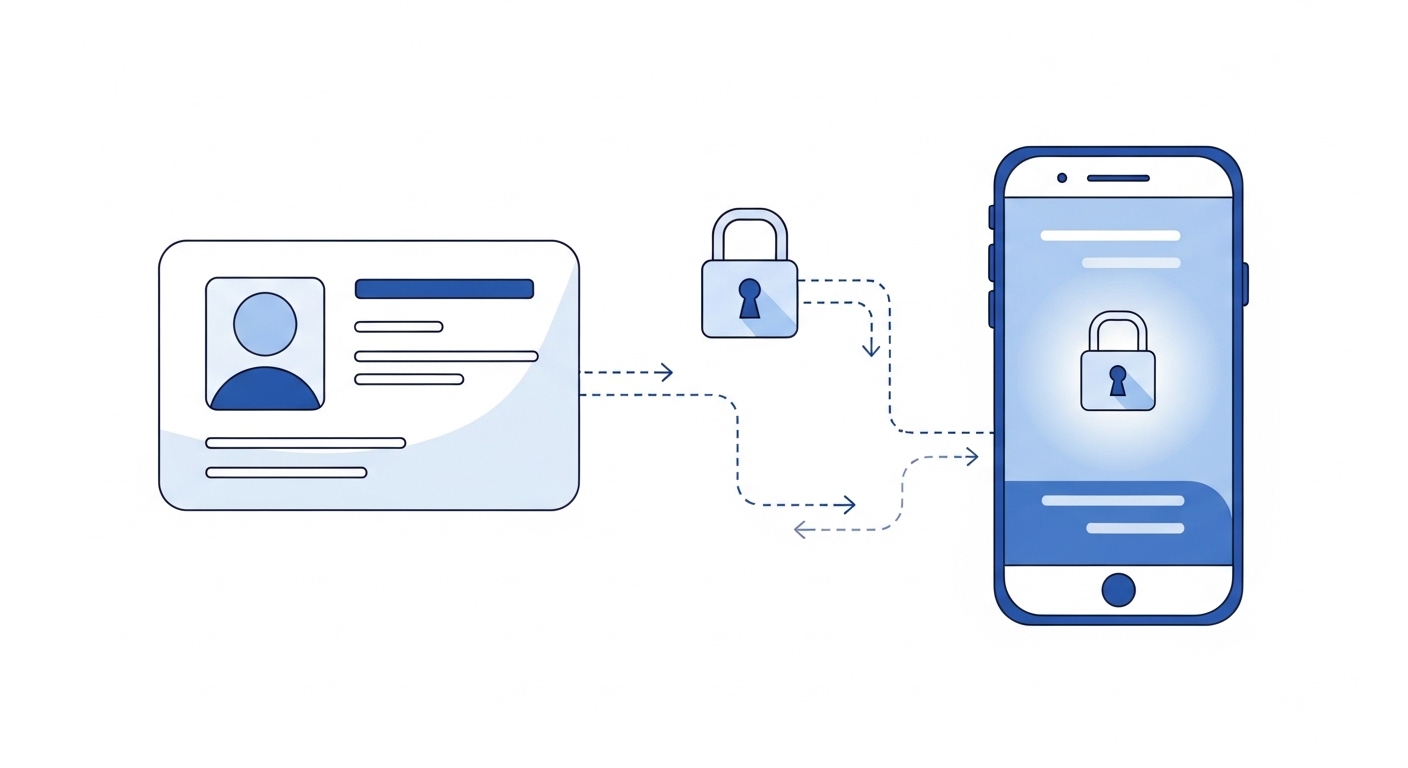
Renewing your driver’s license isn’t about proving you can drive for the very first time. It’s about confirming your details are still current, your address hasn’t changed, and you’re still eligible to be on the road. This regular check keeps records accurate and ensures everything is up-to-date for your safety and for public records.
Similarly, in the world of finance, ‘Re-KYC’ acts like this renewal process for your financial accounts. It’s not about establishing your identity from scratch, but digitally confirming that the information your bank or financial institution holds about you is still correct and complete. Aadhaar OTP-based e-KYC offers a modern, efficient way to handle this crucial update, making it as simple as receiving a text message.
Table of Contents
What Is Re-KYC?
Re-KYC, short for ‘Re-Know Your Customer’, is a process where banks and financial institutions update your customer information periodically. This isn’t just about paperwork; it’s a vital step to ensure the integrity and security of the financial system. You’ll find that this process helps to prevent financial fraud and keeps your accounts safe from misuse.
The Reserve Bank of India (RBI) mandates Re-KYC for all regulated entities to combat money laundering and terrorist financing. By regularly verifying customer identities, institutions can maintain accurate records and identify any suspicious activities promptly. This proactive approach protects both you and the financial system.
Why Re-KYC is important
Re-KYC is crucial for several reasons beyond just regulatory compliance. It helps financial institutions keep your contact details, address, and other personal information accurate. This ensures you receive important communications and that your identity isn’t compromised.
Maintaining up-to-date records also strengthens the overall security framework against identity theft and financial scams. When your information is current, it’s harder for fraudsters to impersonate you or misuse your accounts. This vigilance is a cornerstone of a trustworthy financial environment.
When you need Re-KYC
Financial institutions typically request Re-KYC at specific intervals, depending on the risk category of your account. High-risk accounts might require updates more frequently, perhaps every two years, while lower-risk accounts could be every ten years. You might also need to complete Re-KYC if there are significant changes to your personal details or if your account has been dormant for an extended period.
- Periodic Review: Banks will often notify you when your scheduled Re-KYC is due, based on their internal policies and RBI guidelines.
- Change in Details: If your address, name, or marital status changes, you’ll need to update these with your financial institution, which often triggers a Re-KYC.
- Dormant Accounts: Accounts that haven’t seen activity for a long time may require Re-KYC to reactivate them and ensure the account holder is still the legitimate owner.
- Regulatory Triggers: Sometimes, new government circulars or policy updates in 2026 might necessitate a fresh round of Re-KYC for specific customer segments.
Quick Context: Why Re-KYC?
Re-KYC is a regulatory requirement for financial institutions to update customer information periodically. This helps prevent fraud, ensures accurate records, and maintains the security of your financial accounts.
Understanding Aadhaar OTP E-KYC
Aadhaar OTP e-KYC represents a significant leap in how identity verification is handled in India. It moves away from the traditional paper-based methods, offering a faster and more secure digital alternative. This system simplifies the process for both individuals and financial institutions.
The “e” in e-KYC stands for electronic, meaning the entire verification process happens digitally. Instead of submitting physical documents like your passport or driving license, you can use your Aadhaar number to confirm your identity. This digital shift makes financial services more accessible and efficient.
Digital identity verification explained
Digital identity verification uses electronic means to confirm who you are, without the need for physical documents. With Aadhaar e-KYC, your unique 12-digit Aadhaar number acts as your primary identifier. This number is linked to your demographic and biometric information stored securely by the Unique Identification Authority of India (UIDAI).
When you opt for digital verification, your financial institution sends a request to UIDAI, which then verifies your identity against its central database. This process is almost instantaneous, eliminating the delays associated with manual document checks. It transforms a cumbersome task into a quick, digital interaction.
How Aadhaar works for you
Aadhaar provides a singular, verifiable identity that is widely accepted across various services in India. For e-KYC, it acts as a digital key that unlocks your verified information from the UIDAI database. This means you don’t have to carry multiple documents or photocopies.
When you use your Aadhaar for e-KYC, only specific demographic details like your name, address, date of birth, and gender are shared with the requesting entity. Your biometric information (fingerprints, iris scan) is never shared directly with the financial institution; it’s only used by UIDAI for internal authentication. This protects your sensitive biometric data.
Role of OTP in E-KYC
The One-Time Password (OTP) is a critical security layer in Aadhaar e-KYC, ensuring that only you can authorise the sharing of your information. When you initiate an Aadhaar-based e-KYC request, an OTP is sent to the mobile number registered with your Aadhaar. This adds an extra layer of authentication.
You must enter this OTP to complete the verification process, confirming your consent for the data sharing. This two-factor authentication makes the process highly secure, preventing unauthorised access to your Aadhaar information. It’s a simple yet powerful way to protect your digital identity.
| Feature | Traditional Physical KYC | Aadhaar OTP E-KYC |
| Process | Document submission, manual verification | Digital authentication with OTP |
| Time Taken | Days to weeks | Minutes |
| Convenience | Branch visit, paperwork | From anywhere, paperless |
| Cost | Printing, travel, staff time | Minimal, digital |
| Security | Risk of document forgery, manual errors | Encrypted, consent-based, UIDAI verification |
Common Confusion: Aadhaar vs. PAN for all KYC
It is commonly assumed that Aadhaar can replace PAN for all financial transactions and KYC needs
While Aadhaar is widely used for e-KYC, PAN remains mandatory for specific transactions, such as cash deposits or withdrawals exceeding Rs 50,000, and for income tax filings. Aadhaar cannot fully substitute PAN in these cases.
Your Key Benefits of Aadhaar OTP E-KYC
Aadhaar OTP e-KYC brings a host of advantages that significantly improve the Re-KYC experience for you. It transforms what used to be a time-consuming chore into a quick and easy digital task. These benefits highlight why it has become the preferred method for many financial interactions in India.
The shift to digital verification aligns perfectly with India’s broader Digital India initiative. By adopting this method, you’re not only simplifying your own financial life but also contributing to a more efficient and technologically advanced ecosystem. It’s a win-win for everyone involved.
Speed and convenience for you
The most immediate benefit you’ll notice is the incredible speed and convenience. Gone are the days of waiting in long queues at bank branches or scrambling to find photocopies of documents. With Aadhaar OTP e-KYC, the entire process can be completed in a matter of minutes, right from your home or office.
This instant verification means your Re-KYC is updated almost immediately, allowing you to continue using your financial services without interruption. It saves you valuable time and effort, making financial compliance much less of a burden. You’ll appreciate how quickly you can tick this task off your list.
Reduced paperwork, less hassle
Imagine not having to print, sign, and submit stacks of documents every time your bank asks for an update. Aadhaar OTP e-KYC makes this a reality by creating a completely paperless process. This digital approach drastically reduces the amount of paperwork involved in financial transactions.
Less paperwork translates directly to less hassle for you. You don’t need to worry about misplaced documents or the environmental impact of paper consumption. This streamlined method simplifies administrative tasks, freeing you up for more important things.
Accessibility from anywhere
One of the standout features of Aadhaar OTP e-KYC is its unparalleled accessibility. As long as you have an internet connection and your registered mobile phone, you can complete your Re-KYC from virtually anywhere in the world. This is particularly beneficial for individuals living in remote areas or those who are frequently on the move.
Whether you’re travelling for work or simply prefer to manage your finances from home, this method offers ultimate flexibility. You are no longer tied to specific locations or banking hours to fulfill your Re-KYC obligations. This truly empowers you to manage your financial identity on your own terms.
Secure digital process
Security is paramount in financial matters, and Aadhaar OTP e-KYC is designed with robust measures to protect your data. The process involves encryption and direct verification with UIDAI, ensuring that your information is handled securely at every step. Your biometric data is never shared with the financial institution itself.
The use of an OTP sent to your registered mobile number adds a crucial layer of security, confirming your explicit consent for the transaction. This two-factor authentication significantly reduces the risk of identity theft or fraudulent activity. You can rest assured that your digital identity is well-protected.
Environmentally friendly approach
By eliminating the need for physical documents, Aadhaar OTP e-KYC contributes significantly to environmental sustainability. This paperless process reduces paper consumption, energy usage for printing, and the carbon footprint associated with physical travel to branches. It’s a small but meaningful step towards a greener future.
Choosing digital Re-KYC means you’re participating in an environmentally conscious approach to financial services. It aligns with global efforts to reduce waste and promote sustainable practices. This modern method benefits not only you but also the planet.
- Time-Saving: Complete Re-KYC in minutes, not days.
- Paperless: No need for printing or submitting physical documents.
- Remote Access: Update your details from any location with internet access.
- Enhanced Security: Two-factor authentication with OTP protects your data.
- Eco-Friendly: Reduces paper waste and environmental impact.
Pro Tip: Speeding Up Your Re-KYC
Before initiating your Aadhaar OTP e-KYC, ensure your mobile number is actively linked to your Aadhaar and is updated in the UIDAI records. This simple check prevents delays and ensures you receive the OTP promptly.
Your Step-by-Step Guide to Aadhaar OTP E-KYC
Completing your Re-KYC using Aadhaar OTP authentication is a straightforward process designed for simplicity. You’ll find it intuitive, whether you’re using a bank’s website or a mobile application. Following these steps will ensure a smooth and successful update of your financial records.
Remember that while the general steps are consistent, the exact wording or screen layout might vary slightly between different financial institutions. However, the core actions you need to take remain the same across platforms. Always look for the ‘Re-KYC’ or ‘Update KYC’ option.
Step 1: Initiating Re-KYC request
You’ll typically receive a notification from your bank or financial institution via email, SMS, or through their online portal, prompting you to complete your Re-KYC. Look for a direct link or navigate to the ‘KYC’ or ‘Profile Update’ section on their official website or mobile app.
Step 2: Providing your Aadhaar number
Once you’ve selected the Aadhaar OTP e-KYC option, the system will ask you to enter your 12-digit Aadhaar number. Carefully type in your Aadhaar number to avoid any errors, and then proceed to the next step.
Step 3: Receiving the One-Time Password
After submitting your Aadhaar number, UIDAI will send a One-Time Password (OTP) to the mobile number registered with your Aadhaar. This OTP is a six-digit code that is valid for a short period, typically 10 minutes.
Step 4: Authenticating with your OTP
You will then need to enter the OTP you received on your mobile phone into the designated field on the financial institution’s portal. This step confirms your identity and provides your consent for the e-KYC process.
Step 5: Confirmation of successful update
Upon successful entry of the OTP, the system will process your request and usually display a confirmation message, such as “KYC Updated Successfully” or “Re-KYC Completed”. You might also receive an SMS or email confirmation from your financial institution shortly after.
Quick Context: What is OTP?
An OTP (One-Time Password) is a unique, automatically generated numeric or alphanumeric string of characters that authenticates a user for a single transaction or login session. It provides an extra layer of security, ensuring that only the legitimate user can complete the action.
Ensuring Your Security and Privacy with Aadhaar
The security and privacy of your personal information are paramount when using any digital service, especially for identity verification. Aadhaar OTP e-KYC is built upon a robust framework designed to protect your data. You can have confidence in the measures taken to safeguard your digital identity.
UIDAI, the body responsible for Aadhaar, has implemented stringent protocols to ensure that your information remains secure. Understanding these safeguards can further assure you of the system’s reliability and your control over your data. This commitment to security is a cornerstone of the Aadhaar ecosystem.
UIDAI’s robust security measures
UIDAI employs state-of-the-art encryption technologies and multi-layered security protocols to protect the Aadhaar database. All data transmission during e-KYC is encrypted, preventing unauthorised interception. Their systems are constantly monitored for potential threats, ensuring continuous protection.
The authentication process itself is highly secure. When you use Aadhaar for e-KYC, the request goes directly to UIDAI’s secure servers for verification. This direct communication minimises points of vulnerability and ensures the integrity of the authentication.
Data protection principles
A key principle of Aadhaar e-KYC is data minimisation. Financial institutions only receive the necessary demographic data (name, address, date of birth, gender) required for Re-KYC. They do not get access to your biometric information or your Aadhaar number directly after the authentication is complete.
This ensures that only essential information is shared, limiting exposure of your personal data. Furthermore, UIDAI does not track the purpose or location of your authentication requests, enhancing your privacy. Your data is used strictly for verification and nothing else.
Your control over data
You have significant control over your Aadhaar information. UIDAI provides options like Aadhaar locking, which prevents any authentication requests until you unlock it. This feature adds an extra layer of security, allowing you to temporarily disable your Aadhaar for authentication purposes if you wish.
You can also view your Aadhaar authentication history, allowing you to see where and when your Aadhaar has been used for verification. This transparency empowers you to monitor your identity usage and report any suspicious activity. It’s a powerful tool for self-management.
Consent-based authentication
Every Aadhaar OTP e-KYC transaction is strictly consent-based. This means your explicit permission is required for the financial institution to access your demographic details from UIDAI. The OTP acts as your digital signature, confirming your consent for that specific transaction.
Without the OTP, no information can be shared, even if someone has your Aadhaar number. This ensures that you are always in control of when and how your identity is used for verification. It’s a fundamental safeguard designed to protect your autonomy.
- Encryption: All data transmissions during e-KYC are securely encrypted.
- Data Minimisation: Only essential demographic data is shared with financial institutions.
- Aadhaar Locking: You can lock your Aadhaar to prevent any authentication requests.
- Authentication History: You can track where and when your Aadhaar has been used.
- Explicit Consent: OTP ensures you always authorise data sharing.
Common Confusion: Biometric Data Sharing
A widespread myth is that financial institutions store your biometric data when you use Aadhaar e-KYC
This is incorrect. Financial institutions never receive or store your biometric data. Only UIDAI uses your biometrics for internal verification, ensuring your sensitive information remains private.
What You Need for Aadhaar OTP E-KYC
To successfully complete your Re-KYC using Aadhaar OTP authentication, you’ll need a few essential items. These requirements ensure that the digital verification process is secure and can confirm your identity accurately. Having these ready will make the process quick and seamless for you.
Without these prerequisites, the Aadhaar OTP e-KYC process cannot be completed. It’s always a good idea to check these before you begin to avoid any interruptions or delays. Making sure everything is in order will save you time and frustration.
Active Aadhaar number
The most crucial requirement is an active and valid 12-digit Aadhaar number. This is your unique identity proof in the system. If your Aadhaar is inactive or linked to outdated information, the e-KYC process will not be successful.
Ensure you have your Aadhaar number readily available when you start the Re-KYC process. You can easily retrieve it from your Aadhaar card or by visiting the official UIDAI website if you’ve misplaced your physical card.
Registered mobile number
Your mobile number must be registered and actively linked to your Aadhaar. This is where the One-Time Password (OTP) will be sent for authentication. If your mobile number has changed or is no longer active, you won’t receive the OTP, and the process cannot proceed.
It’s vital to keep your mobile number updated with UIDAI. You can check your registered mobile number on the UIDAI portal and update it at an Aadhaar Enrolment Centre if needed. This step is non-negotiable for OTP-based authentication.
Stable internet connection
Since Aadhaar OTP e-KYC is an online process, you’ll need a stable internet connection. This ensures that you can access the financial institution’s portal and receive the OTP without any connectivity issues. A strong connection prevents timeouts and errors during the verification.
Whether you’re using Wi-Fi or mobile data, ensure your connection is reliable throughout the process. A dropped connection mid-way can lead to incomplete transactions and require you to start over.
Device for OTP entry
You’ll need a device, such as a smartphone, tablet, or computer, to access the financial institution’s website or app and to enter the OTP. Your registered mobile phone is essential for receiving the OTP itself. Ensure your device is charged and functional.
Having your mobile phone close by is critical, as the OTP usually has a limited validity period. You’ll need to enter it quickly after receiving it to complete the authentication successfully.
- Valid Aadhaar: Your 12-digit Aadhaar number must be active and correct.
- Linked Mobile: The mobile number registered with your Aadhaar must be active to receive the OTP.
- Internet Access: A stable internet connection is necessary for the online process.
- Digital Device: A smartphone or computer is needed to access the portal and enter the OTP.
Pro Tip: Checking Aadhaar-Linked Mobile
To confirm which mobile number is linked to your Aadhaar, visit the official UIDAI website and use the “Verify Email/Mobile Number” service. This will tell you if your current number is registered, or prompt you to update it if it’s not.
Common Questions About Aadhaar OTP E-KYC
Even with a straightforward process like Aadhaar OTP e-KYC, you might have some questions or encounter specific situations. Addressing these common queries helps ensure you’re fully prepared and understand how to navigate any potential challenges. Knowing the answers beforehand can save you time and effort.
It’s natural to wonder about alternatives or what happens if certain conditions aren’t met. This section aims to provide clear, concise answers to the most frequent concerns regarding Aadhaar OTP e-KYC. You’ll find practical advice to guide you.
What if mobile number changes?
If your mobile number has changed, you must update it in your Aadhaar records with UIDAI before attempting Aadhaar OTP e-KYC. The OTP will only be sent to the number registered with your Aadhaar. Without receiving the OTP, you cannot complete the authentication process.
You can update your mobile number by visiting any authorised Aadhaar Enrolment Centre. This process usually takes a few days to reflect in the UIDAI database. Once updated, you can proceed with Aadhaar OTP e-KYC.
What if you don’t have Aadhaar?
If you do not have an Aadhaar number, or if you prefer not to use it for Re-KYC, financial institutions offer alternative methods. You can still complete your Re-KYC through traditional physical KYC, by submitting other valid identity and address proofs. These typically include your PAN card, passport, driving license, or Voter ID.
The process might be slower and require a branch visit, but it remains a valid option. Financial institutions are mandated to offer multiple KYC options to ensure everyone can access services.
How to update Aadhaar details?
You can update your Aadhaar details, such as your name, address, date of birth, or mobile number, through various channels. The most common methods are online via the UIDAI portal for demographic updates (if your mobile is registered) or by visiting an Aadhaar Enrolment Centre for all types of updates, including biometric ones.
Keeping your Aadhaar details current is crucial for smooth e-KYC transactions. Always ensure your information is accurate to avoid any discrepancies during verification.
When is physical KYC needed?
While Aadhaar OTP e-KYC is highly efficient, there are specific situations where physical KYC might still be required. Financial institutions may request physical verification for high-risk accounts or for certain complex financial products. This is often a regulatory requirement or part of their internal risk management policies.
Additionally, if your Aadhaar details are significantly mismatched with the institution’s existing records, or if there are issues with your Aadhaar authentication, you might be asked to complete physical KYC. Always follow the specific instructions from your financial institution.
Common Confusion: Aadhaar is Mandatory for Everything
The belief is that Aadhaar is now mandatory for every single financial transaction and service in India – but this is incorrect
While Aadhaar is widely accepted and often the most convenient, it is not universally mandatory for all services. Alternative KYC documents are available for those who don’t have Aadhaar or choose not to use it.
When Should You NOT Use Aadhaar OTP E-KYC?
While Aadhaar OTP e-KYC offers immense convenience, there are specific situations where it might not be the appropriate or safest method for you. Understanding these scenarios helps you make informed decisions and ensures the security of your financial transactions. It’s important to know the limitations.
Choosing the right method for Re-KYC depends on your personal circumstances and the specific requirements of the financial institution. Always prioritise security and accuracy over speed if there’s any doubt.
- Unregistered Mobile Number: You should not attempt Aadhaar OTP e-KYC if your current mobile number is not updated and linked to your Aadhaar. The OTP will not reach you, making the process impossible.
- Suspicious Requests: If you receive an unsolicited request for Aadhaar OTP e-KYC via an unknown link or message, do not proceed. Always initiate Re-KYC directly through your financial institution’s official website or app to avoid phishing scams.
- High-Value/Complex Products: For certain very high-value financial products or complex services, some institutions might still require a physical verification step. It’s best to confirm their specific KYC policy for such cases.
- Technical Glitches: If you experience persistent technical issues with the online portal or OTP delivery, it’s often better to switch to an alternative method or contact customer support rather than repeatedly trying a failing digital process.
Pro Tip: Verifying Re-KYC Requests
Always verify the authenticity of any Re-KYC request by contacting your financial institution directly through their official customer service channels. Never click on suspicious links in emails or SMS messages.
The Future of Digital Identity Verification
The journey towards fully digital identity verification is continuously evolving, with Aadhaar playing a central role in India’s digital transformation. The convenience and security offered by Aadhaar OTP e-KYC are just a glimpse into a future where financial services are more accessible and efficient for everyone. You’ll see even greater integration and innovation in the years to come.
This ongoing evolution is driven by both technological advancements and the government’s strategic vision for a digitally empowered nation. The aim is to create an ecosystem where identity verification is seamless, secure, and inclusive. This benefits millions of citizens across the country.
Growing role of Aadhaar
Aadhaar is poised to play an even larger role in digital identity verification, extending beyond just financial services. As of 2026, it continues to be a foundational pillar for various government welfare schemes, public services, and private sector offerings. Its unique and verifiable nature makes it an ideal tool for digital authentication across diverse sectors.
You can expect to see more services integrating Aadhaar-based authentication, making interactions faster and more secure. This widespread adoption reinforces its position as a cornerstone of India’s digital infrastructure.
Government’s digital India vision
The Indian government’s Digital India initiative aims to transform the country into a digitally empowered society and knowledge economy. Aadhaar OTP e-KYC directly supports this vision by promoting paperless, cashless, and faceless transactions. It reduces bureaucratic hurdles and makes services more transparent.
This initiative is not just about technology; it’s about improving governance and enhancing the quality of life for citizens. By simplifying processes like Re-KYC, the government is making digital participation easier and more widespread.
Empowering citizens digitally
Ultimately, the advancements in digital identity verification, particularly through Aadhaar OTP e-KYC, are about empowering you. They provide easier access to financial services, reduce the time and effort spent on administrative tasks, and enhance the security of your personal data. This digital empowerment fosters greater financial inclusion.
You gain more control over your financial identity and can manage your affairs with greater flexibility and confidence. This shift represents a significant step towards a more connected and efficient digital economy for all Indians.
Quick Context: Digital India
Digital India is a flagship program of the Government of India with a vision to transform India into a digitally empowered society and knowledge economy. It focuses on digital infrastructure, digital delivery of services, and digital literacy for all citizens.
Conclusion
Aadhaar OTP-based e-KYC authentication for Re-KYC offers a modern, secure, and remarkably convenient way to update your financial records in 2026. You should always ensure your mobile number is updated with UIDAI to take full advantage of this swift process. Embracing this digital method means you can complete your Re-KYC in minutes from anywhere, eliminating paperwork and enhancing the security of your financial identity.
Author

