

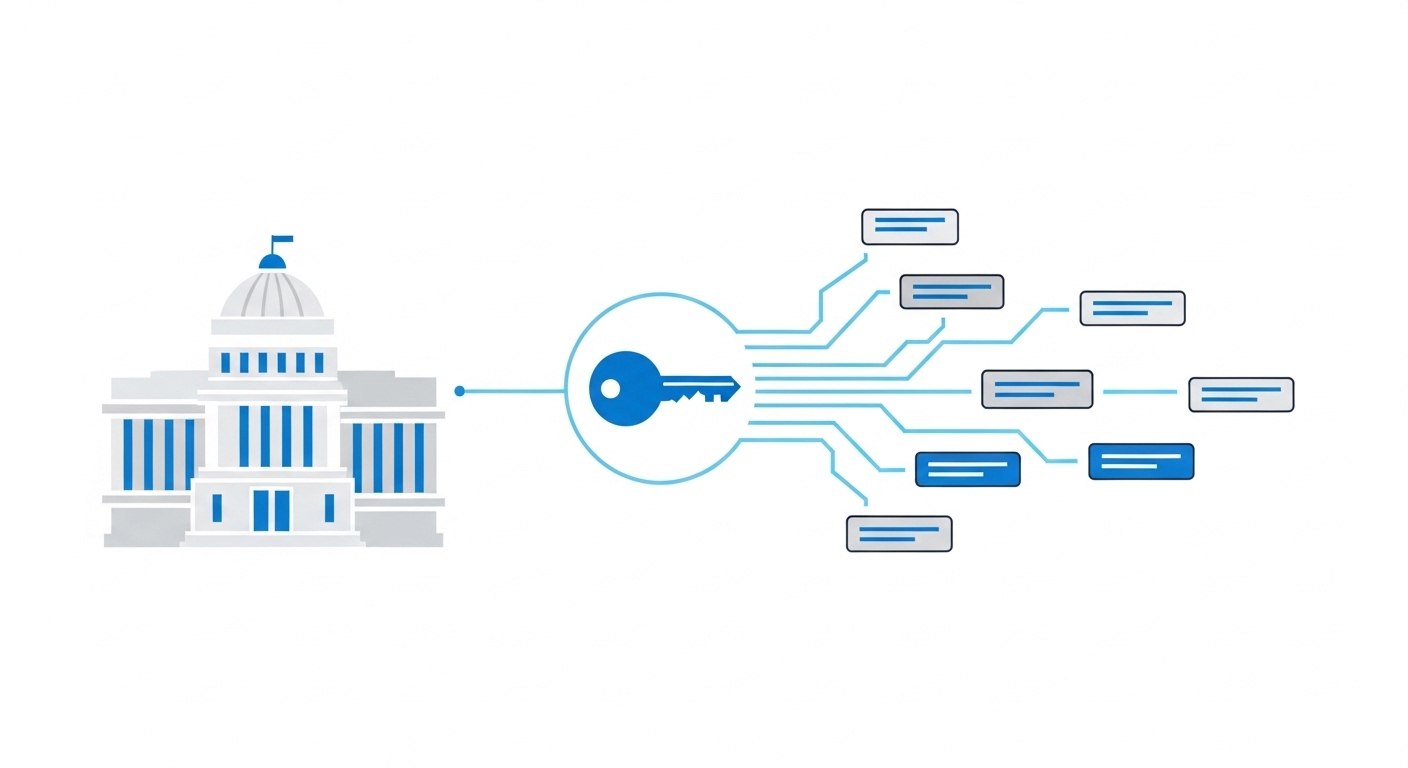
Missing a payment confirmation for your government dues can lead to significant stress and financial penalties. Delayed verification of your tax payments means you might face notices from tax authorities, even if you’ve already paid. Correctly understanding and using the BSR (Basic Statistical Return) code solves these issues, ensuring your funds are accurately tracked and attributed to your account.
This simple seven-digit code is essential for maintaining transparent and verifiable financial interactions with government departments across India. It helps you confirm that your payments, whether for income tax or other government services, are correctly recorded. Relying on the BSR code means you’re building a clear audit trail for all your official transactions.
Table of Contents
What Is a BSR Code?
A BSR code is a unique seven-digit identification number assigned to every bank branch authorised to collect government taxes and other dues in India. Think of it as a specific address for a bank branch within the vast government payment system. This code helps the government precisely identify which bank and branch processed your payment.
The Reserve Bank of India (RBI) assigns these codes to ensure systematic tracking of all government financial transactions. It’s a critical element in the reconciliation process between banks and government treasuries. Without this unique identifier, distinguishing between payments made through different branches of the same bank would be incredibly difficult.
Quick Context: BSR Code Basics
The BSR code is a seven-digit number that uniquely identifies a bank branch for government payment collection. It’s crucial for accurate tracking of your tax and other government dues.
Here’s what makes a BSR code essential:
- Unique Identification: Each bank branch has its own distinct BSR code, ensuring no two branches share the same identifier for government transactions.
- Government Financial Transactions: It’s specifically used for payments made to the government, such as income tax, Goods and Services Tax (GST), and other levies.
- Ensuring Proper Payment Tracking: The code helps government departments and you to verify that your payment has been received and correctly recorded against your Permanent Account Number (PAN) or other relevant identifier.
Why BSR Codes Are Important for You
Understanding BSR codes is crucial because they directly impact how your government payments are processed and acknowledged. If you make a payment without the correct BSR code, or if it’s recorded incorrectly, your payment might not be attributed to you, leading to potential complications. This code acts as a vital link between your payment and its official record.
It essentially provides a digital fingerprint for your transaction, allowing both you and the government to trace the payment back to its origin. This level of detail is fundamental for transparency and accountability in financial dealings with public bodies. You’ll find it incredibly useful when you need to confirm payments or resolve discrepancies.
Common Confusion: BSR Code Use
A widespread myth is that BSR codes are only for banks to use, and not relevant to individual taxpayers.
You, as a taxpayer, need to know and verify the BSR code on your payment challans and receipts to ensure your payments are correctly recorded and avoid future issues.
Here’s how BSR codes safeguard your financial interactions with the government:
Step 1: Tracking Your Government Funds: When you pay your taxes, the BSR code, along with the Challan Identification Number (CIN), creates a unique identifier for your transaction. This allows you to track the status of your payment online on government portals, confirming it has been received.
Step 2: Ensuring Payment Accuracy: The specific BSR code ensures your payment is routed to the correct government account associated with that particular bank branch. This accuracy prevents misallocation of funds, which could otherwise lead to your payment being unaccounted for.
Step 3: Official Record Keeping: Your payment receipt will always include the BSR code. This serves as undeniable proof that your payment was processed through an authorised bank branch, providing you with a reliable record for future reference, audits, or dispute resolution.
Who Uses BSR Codes?
BSR codes are a shared component in the ecosystem of government financial transactions, involving several key players. You, as a taxpayer, are directly involved in ensuring its correct usage, while banks and government departments rely on it for reconciliation and record-keeping. It’s a collaborative system designed for accuracy.
This broad usage highlights the code’s foundational role in maintaining financial order between citizens and the state. Each entity plays a distinct part, all converging on the accurate and transparent processing of public funds. Understanding these roles helps you appreciate the code’s importance.
| Entity | Role in BSR Code Usage | Why It Matters to You |
| Taxpayers and Citizens | enter the BSR code on challans, verify it on receipts for direct tax payments and other government dues. | Ensures your payments are correctly attributed to your PAN, preventing notices or penalties. |
| Banks and Financial Institutions | Collect government payments, generate challans with BSR codes, and remit funds to the government treasury. | They are the authorised channels for your payments, and their BSR code confirms their legitimacy. |
| Government Departments (e.g., Income Tax Department) | Use BSR codes to reconcile payments received from various banks and update taxpayer records. | This reconciliation process ensures your tax liabilities are correctly settled in their records. |
Pro Tip: Verify BSR Code
Always cross-check the BSR code on your payment challan against the official list provided by your bank or the tax department. A single incorrect digit can lead to payment processing errors.
When You Need a BSR Code
You’ll primarily encounter the need for a BSR code when dealing with direct tax payments and certain other government dues. It’s not a universal requirement for every single government transaction, but it’s critically important for those where precise banking channel identification is necessary. Knowing these specific instances will prevent confusion.
For example, when you file your income tax returns, the BSR code on your tax payment challan is crucial for the Income Tax Department to match your payment with your tax liability. Failing to include or incorrectly stating this code can lead to your payment being considered outstanding. This could result in you receiving demand notices, even if you’ve already paid.
Here are the key scenarios where you’ll definitely need a BSR code:
- For Direct Tax Payments: This is the most common scenario. Whether you’re paying advance tax, self-assessment tax, or tax on regular assessment, you’ll need the BSR code of the bank branch where the payment is made. This applies to individual taxpayers as well as businesses.
- Other Government Dues: Beyond income tax, BSR codes are also used for other central government payments like customs duties, excise duties, and some state government taxes if the payment is routed through a designated bank. Always check the specific challan or payment form instructions.
- Specific Challan Forms: Forms like Challan 280 for income tax, Challan 281 for TDS/TCS, and Challan 282 for wealth tax or gift tax, all require the BSR code of the collecting bank branch. These forms are designed with a specific field for this code.
Where BSR Codes Are Used
BSR codes are explicitly integrated into various government payment mechanisms, especially those related to tax collection. You’ll find dedicated fields for them on specific challan forms and they will be prominently displayed on your payment receipts. This ensures that the code is an intrinsic part of the payment process.
The structure of these forms and receipts is designed to capture all necessary information for accurate accounting. You should always pay close attention to where the BSR code is located and ensure it’s correctly filled in. This diligence helps prevent any future discrepancies or reconciliation issues.
Common Confusion: All Payments
The misunderstanding here is that all government payments will involve a BSR code.
While crucial for direct taxes, many modern digital payment portals for government services might use internal transaction IDs or auto-populate bank details, so a BSR code isn’t always manually entered by you.
Here’s where you’ll typically encounter BSR codes:
Step 1: Income Tax Challan 280: When you fill out Challan 280 to pay your income tax, there’s a specific box for the BSR code of the bank branch. You must accurately enter this seven-digit code to ensure your payment is correctly processed by the Income Tax Department. After submitting, the challan counterfoil will show this code.
Step 2: GST and Other Taxes: For certain GST payments or other central and state government taxes, especially those paid offline or through specific bank portals, the BSR code of the collecting bank branch will be required. Always refer to the specific payment instructions for these taxes.
Step 3: Government Payment Receipts: Once your payment is processed, the bank will provide you with a receipt or an e-challan counterfoil. This document will clearly display the BSR code of the branch that collected your payment, along with the Challan Identification Number (CIN) and date of deposit. This receipt is your proof of payment.
Is a BSR Code Always Mandatory?
No, a BSR code isn’t always mandatory for every single government payment, but it is unequivocally essential for certain critical transactions, particularly direct taxes. The requirement depends on the type of payment and the method you use to make it. You must always check the specific instructions for each payment.
For instance, if you are making an online payment for a municipal service through a dedicated government portal, the system might handle the bank identification internally without requiring you to manually enter a BSR code. However, for income tax payments, its inclusion is non-negotiable. Always err on the side of caution and verify the need.
Quick Context: Mandatory vs. Optional
BSR codes are mandatory for direct tax payments via challans but may not be required for all online government service payments where the system handles bank identification automatically.
Here’s a breakdown of when it’s typically mandatory:
- When Paying Your Taxes: For all direct tax payments, including income tax, corporate tax, TDS, and TCS, the BSR code is a mandatory field on the challan. This ensures the payment is correctly linked to your PAN and assessed by the tax authorities.
- For Specific Government Transactions: If a government department specifically requests a BSR code on their payment form or challan, then it becomes mandatory for that particular transaction. This often applies to older, more formal payment processes.
- Check Official Instructions Carefully: The golden rule is always to refer to the official instructions provided by the respective government department or the tax portal. These instructions will clearly state whether a BSR code is required and where to obtain it.
How to Find a BSR Code
Finding the correct BSR code is straightforward if you know where to look. You should always aim to get this information from reliable and official sources to prevent errors. Relying on outdated or unverified information can lead to your payment being misdirected or delayed.
It’s a good practice to have the BSR code handy before you start filling out any government payment challan. This proactive approach saves time and reduces the chances of making mistakes under pressure. You’ll find several accessible avenues to retrieve this crucial identifier.
Pro Tip: Official Sources
Always use official bank websites, the NSDL website, or the Income Tax e-filing portal to find BSR codes. Avoid third-party sites that might provide outdated or incorrect information.
Here’s how you can reliably find a BSR code:
Step 1: Your Bank’s Official Website: Most banks authorised to collect government taxes will list their BSR codes for various branches on their official website. Navigate to the ‘Government Payments’ or ‘Tax Payments’ section, and you’ll often find a branch locator or a list of BSR codes.
Step 2: Official Tax Payment Portals: The National Securities Depository Limited (NSDL) website, which facilitates online tax payments, provides a comprehensive list of BSR codes for all authorised bank branches. You can search by bank name and branch to find the specific code you need. The Income Tax e-filing portal also provides this information when you generate an e-challan.
Step 3: Bank Branch Details: If you are making an offline payment at a bank branch, the bank staff can provide you with their branch’s BSR code. It’s always a good idea to confirm this detail with them before finalising your payment.
Understanding Your Payment Receipt
Your government payment receipt is more than just a piece of paper; it’s your official proof of payment and contains vital information, including the BSR code. You must understand how to read and verify these details to ensure your payment has been correctly processed and recorded. This receipt is your primary defence against any future queries.
It’s crucial to keep these receipts safe, whether in physical or digital form, for several years. They serve as essential documentation for your financial records, especially during tax audits or when you need to prove compliance. Always treat these documents with the utmost importance.
Common Confusion: Receipt Number
The belief is that the receipt number alone is sufficient for tracking your payment – but this is incorrect.
While important, the receipt number needs to be combined with the BSR code and Challan Identification Number (CIN) to uniquely identify and track your government payment.
Here are the key elements you should check on your payment receipt:
Read More
How to approve UPI payment in Paytm?- Locating the BSR Code: The BSR code will be clearly printed on your receipt, usually alongside the bank name and branch details. Make sure this matches the code you intended to use.
- Verifying Payment Details: Check the Challan Identification Number (CIN), the date of deposit, the amount paid, your PAN, and the assessment year. Every detail must be accurate to ensure the payment is correctly attributed to you.
- Importance of Record-Keeping: Retain all your government payment receipts for at least seven years, as per tax regulations, as they are crucial for audit purposes and proving that you have met your financial obligations to the government.
Ensuring Correct Government Payments
Making correct government payments is a fundamental responsibility that saves you from future hassles and potential penalties. You must adopt a meticulous approach, double-checking every detail before finalising a transaction. Accuracy in this area is not just a recommendation; it’s a necessity for smooth financial operations.
Any error, no matter how small, can lead to significant delays in processing or even misattribution of your funds. This could mean you’re still liable for a payment you’ve already made, causing undue stress and administrative burden. Therefore, your diligence is paramount.
Quick Context: Payment Accuracy
Ensuring your government payments are accurate, especially with BSR codes, prevents delays, penalties, and ensures your tax records are correctly updated.
Here’s how you can ensure your payments are always correct:
Step 1: Follow Official Guidance: Always refer to the latest guidelines and instructions published by the Income Tax Department, NSDL, or the specific government body you are paying. These portals provide the most up-to-date information on payment procedures and required codes.
Step 2: Accuracy is Crucial for You: Before making any payment, meticulously review all the information you’ve entered, including your PAN, assessment year, tax amount, and especially the BSR code. A single digit error can invalidate the payment process.
Step 3: Your Payment Responsibility: Ultimately, it is your responsibility to ensure that your government payments are made correctly and on time. Take the time to understand the process, use official channels, and keep thorough records to protect yourself.
When Should You NOT Rely Solely on BSR Codes?
While BSR codes are incredibly important for specific government payments, especially direct taxes, you shouldn’t assume they are the sole identifier for every single transaction with the government. Modern digital payment systems often employ different mechanisms or integrate BSR codes behind the scenes. Relying only on manual BSR code entry in all scenarios could be misleading.
It’s crucial to understand the context of your payment. For many online government services, the portal itself will guide you through the payment process, often generating a unique transaction ID that serves a similar purpose. You should always prioritise the instructions given by the specific payment portal or challan.
Pro Tip: Digital Payment Portals
When using government digital payment portals for services like utility bills or specific permits, follow the portal’s instructions. These systems often manage bank identification automatically and may not require manual BSR code entry.
Here are situations where you might not rely solely on BSR codes:
- For Non-Tax Government Services: When paying for services like passport applications, driving licence fees, or property registration, the respective government portals typically generate a unique application or transaction ID. While a bank might still be involved, the BSR code might not be a primary identifier you need to manually enter.
- When Direct Online Portals Handle Payment: Many government departments have moved to fully integrated online payment gateways. In these cases, once you select your bank, the system often auto-populates the necessary bank identification details, or uses an internal payment reference number that links to the BSR code without your direct enter.
- For Specific State Government Payments: While some state government payments might use BSR codes, many states have their own treasury codes or payment identification systems. Always check the state-specific payment instructions, as they might differ from central government tax payment requirements.
Conclusion
Correctly using the BSR code is fundamental for ensuring your government payments, especially taxes, are accurately tracked and attributed to you. Taking the concrete action of verifying the BSR code on your payment challans and receipts will save you from potential penalties and administrative headaches. This diligence provides the specific benefit of transparent and verifiable record-keeping, giving you peace of mind that your financial obligations are properly met.
Author

