

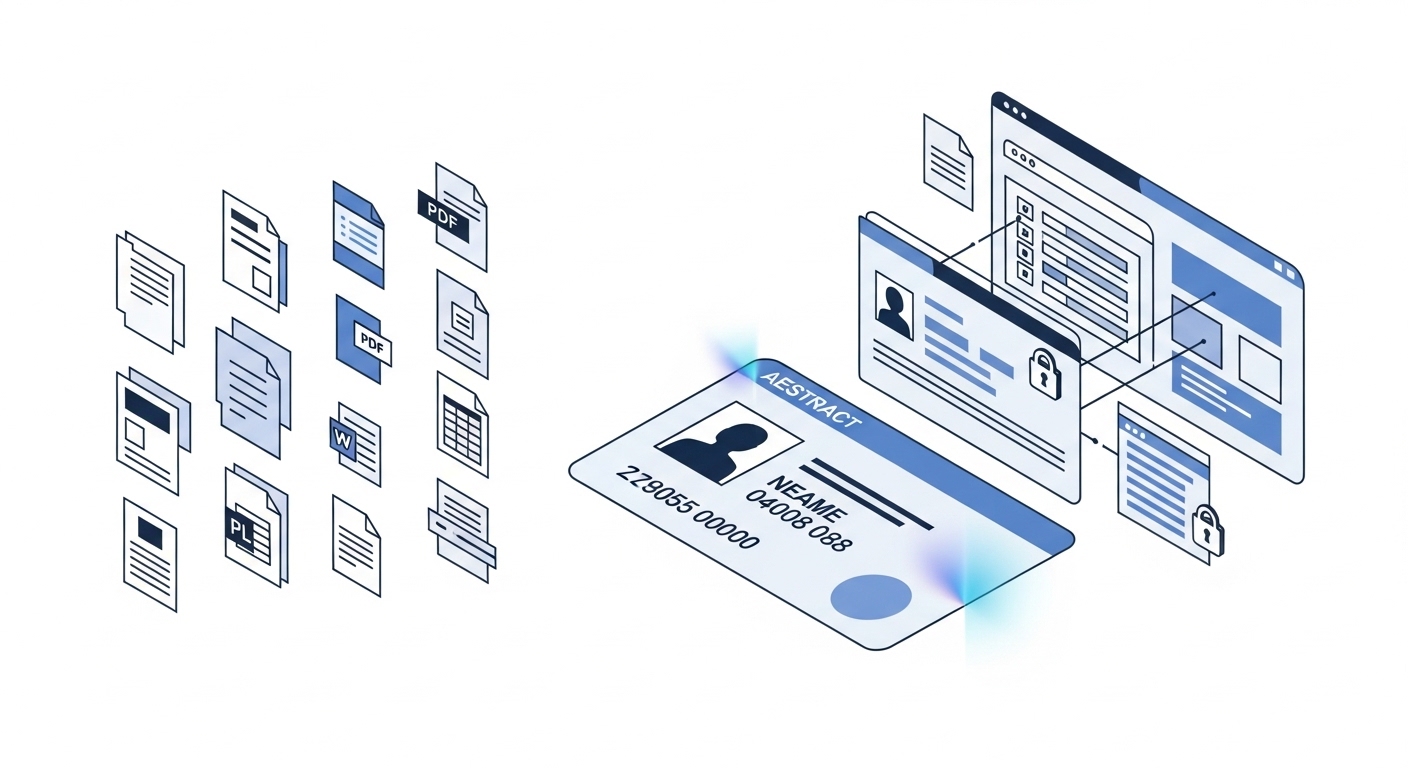
The Ministry of Road Transport and Highways recently introduced updated digital verification protocols for driving licence applications, streamlining the process significantly. This change, effective from early 2026, aims to enhance security and reduce processing times for millions of new drivers across India. However, it also places a greater emphasis on applicants submitting perfectly accurate and complete documentation from the outset, leading to potential challenges for those unprepared.
These new guidelines mean that any discrepancies in your submitted documents could cause delays or even outright rejection of your application. Understanding precisely which papers you need and how to present them correctly is now more crucial than ever for a smooth journey towards obtaining your first driving licence.
Table of Contents
What Is a Driving Licence?
A driving licence is your official permission from the government to operate a motor vehicle on public roads. It confirms that you have met the necessary legal and practical requirements to drive safely and responsibly. Without this crucial document, you are not permitted to drive any vehicle.
This licence isn’t just a piece of paper; it’s a legal authorisation that comes with significant responsibilities. It indicates that you have passed specific tests and are deemed competent enough to handle a vehicle, understanding traffic rules and road etiquette. Obtaining one is a rite of passage for many, marking a step towards greater independence.
Your Official Permission
Your driving licence serves as official proof that you have acquired the basic skills and knowledge required for driving. It’s issued by the Regional Transport Office (RTO) or District Transport Office (DTO) in your state after you successfully complete both a written test and a practical driving examination. This permission is a legal necessity, not an optional convenience.
Road Safety Importance
The rigorous process of obtaining a driving licence is designed to promote road safety for everyone. It ensures that only individuals who understand traffic laws and can demonstrate safe driving practices are allowed behind the wheel. This commitment to safety helps reduce accidents and makes our roads safer for all users.
Quick Context: What is an RTO?
The Regional Transport Office (RTO) is a government department responsible for vehicle registration, driving licences, and enforcing motor vehicle laws in India.
Why You Need a Driving Licence
Driving without a valid licence is a serious offence with significant legal repercussions. The Motor Vehicles Act, 1988, clearly states that no person shall drive a motor vehicle in any public place unless they hold a valid driving licence issued to them. This rule protects both the driver and other road users.
Beyond the legal aspect, possessing a driving licence signifies your commitment to responsible conduct on the road. It ensures that you are insured, accountable for your actions, and capable of navigating complex traffic situations safely. It’s about respecting the law and the safety of others.
Legal Requirement to Drive
Driving any motor vehicle on Indian roads without a valid licence can lead to hefty fines, vehicle impoundment, and even imprisonment. As per the Motor Vehicles (Amendment) Act, 2019, driving without a licence can attract a penalty of up to Rs 5,000, which is a substantial amount. This strict enforcement underscores the importance of legal compliance.
Responsibility on the Road
A driving licence is a symbol of your responsibility towards road safety. It means you’re expected to follow traffic rules, understand road signs, and drive defensively to prevent accidents. You’re not just driving for yourself; you’re sharing the road with pedestrians, cyclists, and other motorists, whose safety depends on your careful driving.
Pro Tip: Check Your Licence Validity
Always check the expiry date on your driving licence and apply for renewal well in advance to avoid penalties. Most licences are valid for 20 years or until you turn 40, whichever comes first, for non-transport vehicles.
Who Can Apply for a First Driving Licence?
Eligibility for a driving licence in India depends primarily on your age and the type of vehicle you intend to drive. The law sets clear minimum age requirements to ensure drivers have reached a certain level of maturity and understanding before operating a vehicle. Meeting these criteria is the first step in your application journey.
Different vehicle categories have distinct age limits, reflecting the varying levels of skill and responsibility required. You cannot apply for a licence for a geared vehicle until you reach the specified age, even if you meet other criteria. It’s crucial to understand these age brackets before you begin your application.
Minimum Age Requirements
For a two-wheeler without gears (like a moped or scooter up to 50cc engine capacity), the minimum age to apply for a learner’s licence is 16 years. However, you must have parental consent if you are under 18. For all other types of motor vehicles, including cars and geared two-wheelers, the minimum age is 18 years.
Eligibility for Different Vehicles
If you wish to drive a light motor vehicle (LMV) such as a car, you must be at least 18 years old. For commercial vehicles, including heavy goods vehicles or passenger vehicles, the minimum age requirement is 20 years. These higher age limits for commercial vehicles are due to the increased responsibility and professional nature of such driving.
Common Confusion: Age for Geared Vehicles
It is commonly assumed that you can apply for a geared two-wheeler licence at 16 if you have parental consent.
This is incorrect; the 16-year age limit with parental consent applies only to non-geared two-wheelers with an engine capacity up to 50cc. For geared two-wheelers and cars, you must be at least 18 years old.
| Vehicle Category | Minimum Age Requirement | Notes |
| Non-geared Two-wheeler (up to 50cc) | 16 years | Parental consent required if under 18 |
| Geared Two-wheeler (above 50cc) | 18 years | |
| Light Motor Vehicle (Car) | 18 years | |
| Commercial Vehicle | 20 years | Requires prior experience with LMV |
Essential Documents You Will Need
Gathering all the necessary documents is perhaps the most critical part of your driving licence application. Any missing or incorrect paper can lead to immediate rejection or significant delays, wasting your time and effort. The RTO requires specific proofs to verify your identity, age, and address.
You’ll need to prepare a comprehensive set of documents, ensuring each one is valid and meets the specified criteria. It’s always a good idea to create a checklist and tick off each item as you collect it. This meticulous approach helps prevent common application pitfalls.
Gathering Your Papers
Before you even start filling out forms, compile all your original documents and make several photocopies of each. The RTO typically requires both original documents for verification and self-attested copies for their records. Having everything in order will make the submission process much smoother.
Ensuring Everything Is Ready
Double-check every document for accuracy, ensuring that names, dates, and addresses match across all proofs. Discrepancies, even minor ones, can raise red flags and cause your application to be put on hold. Your proactive preparation is key to a successful application.
- Proof of Age: To confirm your date of birth.
- Proof of Address: To verify your residential location.
- Proof of Identity: To establish who you are.
- Application Form: The official request for a licence.
- Passport-sized Photographs: Recent and clear images of yourself.
- Medical Certificate (Form 1A): Required for specific applicants.
Pro Tip: Organise Your Documents
Keep all your original documents in a clear folder and photocopies in a separate one. This helps you quickly present them for verification at the RTO and ensures nothing gets misplaced.
Proof of Your Age
Submitting valid proof of your age is fundamental to your driving licence application. This document confirms that you meet the minimum age requirements for the vehicle category you wish to drive. The RTO needs this to ensure legal compliance and driver maturity.
Showing Your Birth Date
Your age proof must clearly state your date of birth, allowing the authorities to verify your eligibility. This is a non-negotiable requirement, as driving laws are strictly enforced based on age criteria. An invalid or unclear age proof will halt your application immediately.
Accepted Age Documents
You have several options for proving your age, and it’s best to choose one that is readily available and clearly shows your date of birth. Always ensure the document is authentic and has not been tampered with.
- Birth Certificate: An official document issued by the municipal corporation or local authority.
- Passport: A valid Indian passport serves as robust proof of both age and identity.
- School Leaving Certificate (SLC) / Mark Sheet of Class 10: These documents are widely accepted as they contain your date of birth.
- Aadhaar Card: Your unique identification number card is increasingly accepted for age verification.
- PAN Card: While primarily for tax purposes, it can also serve as age proof.
Quick Context: Document Validity
All submitted documents, especially those like passports or utility bills, must be valid and not expired. For utility bills, ensure they are recent, typically no older than three months from the application date.
Proof of Where You Live
Providing proof of your current residential address is another mandatory step in the driving licence application process. This ensures that your licence is registered to your correct local RTO jurisdiction and helps with future communication. The RTO needs to confirm your permanent residence.
Confirming Your Home Address
Your address proof must show your full residential address, matching the details you provide on your application form. Any discrepancies between your documents and the form can lead to complications. It verifies your local residency for official purposes.
Accepted Address Documents
Similar to age proof, there are several accepted documents for proving your address. Select one that is current and clearly displays your name and address.
- Aadhaar Card: A widely accepted proof of address across government services.
- Passport: Your Indian passport can also serve as valid address proof if the address is current.
- Utility Bills: Electricity bill, water bill, or landline telephone bill (not mobile bill) issued in your name, not older than three months.
- Bank Passbook/Statement: A recent bank statement or a passbook with your current address.
- Rent Agreement: A valid and registered rent agreement, along with a landlord’s address proof, can be accepted.
- Voter ID Card: Your Election Photo Identity Card (EPIC) is another reliable option.
Common Confusion: Temporary Address Proof
The misunderstanding here is that a temporary address, like a hostel receipt, is sufficient for a driving licence application.
The RTO generally requires proof of your permanent residential address within their jurisdiction. If you’ve recently moved, you might need to update your address on documents like Aadhaar before applying.
Proof of Who You Are
Identity proof is essential to confirm your legal identity and prevent fraudulent applications. This document ensures that the person applying for the licence is genuinely who they claim to be. It’s a fundamental security measure in the application process.
Verifying Your Identity
Your identity proof should contain your full name and a photograph, allowing the RTO officials to match your face to the document. This verification step is crucial for establishing your unique identity. It’s about personal validation.
Accepted Identity Documents
Choose an identity document that is officially recognised and includes your photograph. Make sure the name on this document matches exactly with your other proofs.
- Passport: A primary form of identity proof that is universally accepted.
- Aadhaar Card: Your Aadhaar card is a strong and widely used identity document.
- PAN Card: The Permanent Account Number card is also accepted as identity proof.
- Voter ID Card: Your Election Photo Identity Card is another valid option for identity.
- Government-issued ID Card: Any other identity card issued by a central or state government department.
Pro Tip: Name Consistency
Ensure your name is spelled identically across all your submitted documents. Even minor variations can cause your application to be flagged for review, leading to delays.
The Application Form Explained
The primary document you’ll need to fill out is Form 4, which is the application for a driving licence. This form gathers all your personal details, vehicle category preference, and declarations about your physical fitness and driving history. You can usually download it from the official Parivahan portal or obtain it from your local RTO.
Accurate and complete filling of Form 4 is paramount for a smooth application process. Any blank fields, incorrect information, or illegible handwriting can lead to your application being rejected. Take your time and fill it out carefully.
Filling Out Form 4
Form 4 requires details such as your name, father’s name, permanent and present address, date of birth, and educational qualification. You’ll also need to specify the class of vehicle you intend to drive, such as a motorcycle with gear or a light motor vehicle. Ensure all sections are completed truthfully.
Accuracy Is Important
False information on your application form can lead to severe penalties, including legal action and permanent disqualification from obtaining a driving licence. Always provide accurate details as they will be cross-referenced with your supporting documents. It’s a legal declaration, so treat it with utmost seriousness.
Step 1: Download Form 4 from the official Parivahan website or collect it from your RTO office.
Step 2: Read all instructions carefully before you begin filling in your details.
Step 3: Fill in all personal information, address details, and vehicle class accurately and legibly.
Step 4: Attach your recent passport-sized photographs in the designated spaces on the form.
Step 5: Sign the declaration and ensure your guardian signs if you are under 18 and applying for a non-geared two-wheeler.
Quick Context: Form 1 and Form 1A
Form 1 is a self-declaration of your physical fitness, while Form 1A is a medical certificate filled by a registered medical practitioner, usually required for older applicants or those applying for commercial licences.
Your Passport-Sized Photos
Your driving licence will feature your photograph, making it a crucial component of your application. You’ll typically need two to three recent passport-sized photographs for the application form and potentially for the RTO’s internal records. These photos must meet specific standards to be accepted.
The quality and specifications of your photos are not merely aesthetic; they are part of the identity verification process. A clear, recent photograph ensures that your licence accurately represents you. Don’t underestimate the importance of this seemingly small detail.
Recent Clear Pictures
The RTO requires recent photographs to ensure they accurately reflect your current appearance. Photos that are too old or significantly altered will be rejected. Aim for a photo taken within the last six months.
Specific Photo Requirements
Your passport-sized photos must typically be in colour, against a white or light-coloured background, and show your full face looking directly at the camera. Avoid wearing hats, sunglasses, or anything that obscures your face. The dimensions are usually 3.5 cm x 4.5 cm.
- Taken within the last six months.
- Clear, in colour, with a plain white or light background.
- Full face view, looking directly at the camera.
- No hats, sunglasses, or anything obscuring your face (unless for religious reasons).
- Standard passport size (e.g., 3.5 cm x 4.5 cm).
Pro Tip: Professional Photos
To avoid rejection, consider getting your passport-sized photographs taken by a professional studio. They are familiar with the specific requirements for government documents and can ensure compliance.
Do You Need a Medical Certificate?
While not every applicant for a first driving licence needs a medical certificate, it is a mandatory requirement for certain age groups and vehicle categories. This certificate, usually Form 1A, assesses your physical and mental fitness to drive safely. It’s a critical step for ensuring public safety.
The requirement for a medical certificate is in place to identify any health conditions that might impair your ability to drive. This includes vision, hearing, and certain neurological or cardiovascular conditions. It’s an important safeguard for both you and other road users.
For Certain Age Groups
If you are 40 years of age or older when applying for a non-transport (private) vehicle driving licence, you must submit Form 1A, a medical certificate. This is also required for all applicants seeking a commercial driving licence, regardless of age. This rule ensures that older drivers and professional drivers meet specific health standards.
Form 1A Details
Form 1A must be filled out and signed by a registered medical practitioner. It includes sections for your general health, vision, hearing, and any known medical conditions. The doctor will perform a basic check-up and declare whether you are fit to drive.
Common Confusion: Medical Certificate for All Applicants
A widespread myth is that every applicant for a first driving licence must submit a medical certificate.
This is incorrect; Form 1A is specifically mandatory for applicants aged 40 and above for private vehicles, and for all applicants seeking a commercial driving licence.
| Applicant Type | Medical Certificate (Form 1A) Required? | Notes |
| Non-transport vehicle, under 40 years | No | Self-declaration (Form 1) is sufficient |
| Non-transport vehicle, 40 years or older | Yes | Must be signed by a registered medical practitioner |
| Commercial vehicle, any age | Yes | Essential for professional drivers |
Understanding the Application Process
Once you have all your documents ready, you can proceed with the application process, which typically involves both online and offline components. The Indian government’s Parivahan portal has significantly digitised many RTO services, making the initial steps more convenient. However, a visit to the RTO is still necessary for tests and final verification.
Understanding each stage of the application, from filling forms to paying fees and appearing for tests, will help you navigate the system efficiently. Being prepared for each step reduces stress and potential setbacks. You’re embarking on a multi-stage journey.
Online Application Steps
Most states now allow you to apply for a learner’s licence online through the Sarathi portal on the Parivahan website. You’ll need to fill in your details, upload scanned copies of your documents, and book an appointment for your learner’s licence test. This online preliminary step saves a lot of time.
Visiting the RTO Office
After your online application, you’ll need to visit your designated RTO office for document verification and to appear for your learner’s licence test. For the permanent driving licence, a practical driving test is mandatory at the RTO. Be prepared for potential waiting times, especially during peak hours.
Paying the Fees
The application fees for a learner’s licence and permanent driving licence vary slightly by state, but generally range from Rs 150 to Rs 500 for each stage. You can usually pay these fees online during the application process or directly at the RTO counter. Always keep the payment receipt safe.
Step 1: Visit the official Parivahan website and select “Driving Licence Related Services.”
Step 2: Choose your state and then click on “Apply for Learner Licence” to begin your application.
Step 3: Fill out the application form, upload scanned copies of your required documents, and your passport-sized photograph and signature.
Step 4: Pay the application fees online using a debit card, credit card, or net banking.
Step 5: Book an appointment for your Learner’s Licence test at your nearest RTO office.
Quick Context: Parivahan Portal
The Parivahan portal is an initiative by the Ministry of Road Transport and Highways, offering a unified platform for various vehicle and driving licence related services across India.
Common Mistakes to Avoid
Many first-time applicants encounter delays or rejections due to preventable errors. Being aware of these common pitfalls can save you considerable time and frustration. A little vigilance can go a long way in ensuring a smooth application.
You’re aiming for efficiency, and avoiding mistakes is a direct path to it. Understanding where others often go wrong helps you proactively sidestep those issues. This section highlights the most frequent missteps.
Incomplete Document Sets
One of the most common reasons for application rejection is submitting an incomplete set of documents. Ensure you have all the required proofs for age, address, and identity, along with the correct forms and photographs. Missing even one document will halt your application.
Incorrect Form Filling
Errors in filling out Form 4, such as incorrect dates, misspelled names, or incomplete sections, are frequent issues. Double-check every field before submission. Discrepancies between your form and supporting documents will also cause problems.
Expired Document Issues
Submitting expired documents, like an old passport or a utility bill that’s more than three months old, is a sure way to get your application rejected. Always verify the validity of all your documents before submission. The RTO will not accept outdated proofs.
- Not bringing original documents for verification at the RTO.
- Photos that do not meet the specified size or background requirements.
- Applying for a vehicle category you are not yet eligible for.
- Failing the learner’s licence test due to insufficient preparation.
- Providing a temporary address when a permanent one is required.
Pro Tip: Create a Checklist
Before visiting the RTO, create a detailed checklist of all required documents and forms. Tick them off as you prepare them and again before you leave for your appointment to ensure nothing is forgotten.
When Your Application Might Be Rejected
Your driving licence application could be rejected if you fail to meet the minimum age requirement for the chosen vehicle class. Similarly, providing false information on your application form or submitting forged documents will lead to outright rejection and potential legal consequences. Incomplete applications, where essential proofs like age or address are missing, are also routinely turned down.
What Happens After You Apply?
After successfully submitting your application and passing the initial screening, your journey continues through a few more crucial stages. The process moves from initial application to obtaining a learner’s permit, preparing for tests, and finally receiving your permanent licence. Each step brings you closer to legal driving.
Understanding the sequence of events post-application helps you anticipate what’s next and prepare accordingly. It’s a structured progression designed to ensure you become a competent and licensed driver. Your patience and preparation remain key.
Your Learner’s Permit
Once you pass the online learner’s licence test, you’ll be issued a learner’s permit. This permit allows you to practice driving on public roads, but only under the supervision of a licensed driver and with ‘L’ plates displayed on your vehicle. The learner’s permit is valid for six months.
Preparing for Tests
After holding your learner’s permit for at least one month, you become eligible to apply for a permanent driving licence test. This involves a practical driving test conducted by an RTO inspector, where you’ll demonstrate your driving skills and adherence to traffic rules. Practice diligently to ensure you pass this crucial test.
Receiving Your Licence
Upon successfully passing your practical driving test, your permanent driving licence will typically be dispatched to your registered address via post within a few weeks. Some RTOs may allow you to collect it in person. Always verify the details on your new licence for accuracy.
Step 1: Obtain your Learner’s Licence after passing the online test and document verification.
Step 2: Practice driving for at least one month under supervision, ensuring ‘L’ plates are displayed.
Step 3: Apply for your Permanent Driving Licence test through the Parivahan portal after one month.
Step 4: Appear for the practical driving test at the RTO on your scheduled date.
Step 5: Receive your permanent driving licence at your registered address if you pass the test.
Quick Context: Learner’s Licence Validity
Your learner’s licence is valid for a maximum of six months. You must apply for your permanent driving licence within this period, but not before one month has passed since its issue.
Conclusion
Navigating the driving licence application process requires careful attention to detail and thorough preparation of your documents. By meticulously gathering your age, address, and identity proofs, and accurately completing Form 4, you significantly increase your chances of a smooth application. Taking the time to prepare properly ensures you avoid common pitfalls and move efficiently towards obtaining your learner’s permit and eventually your permanent driving licence.
Author

