

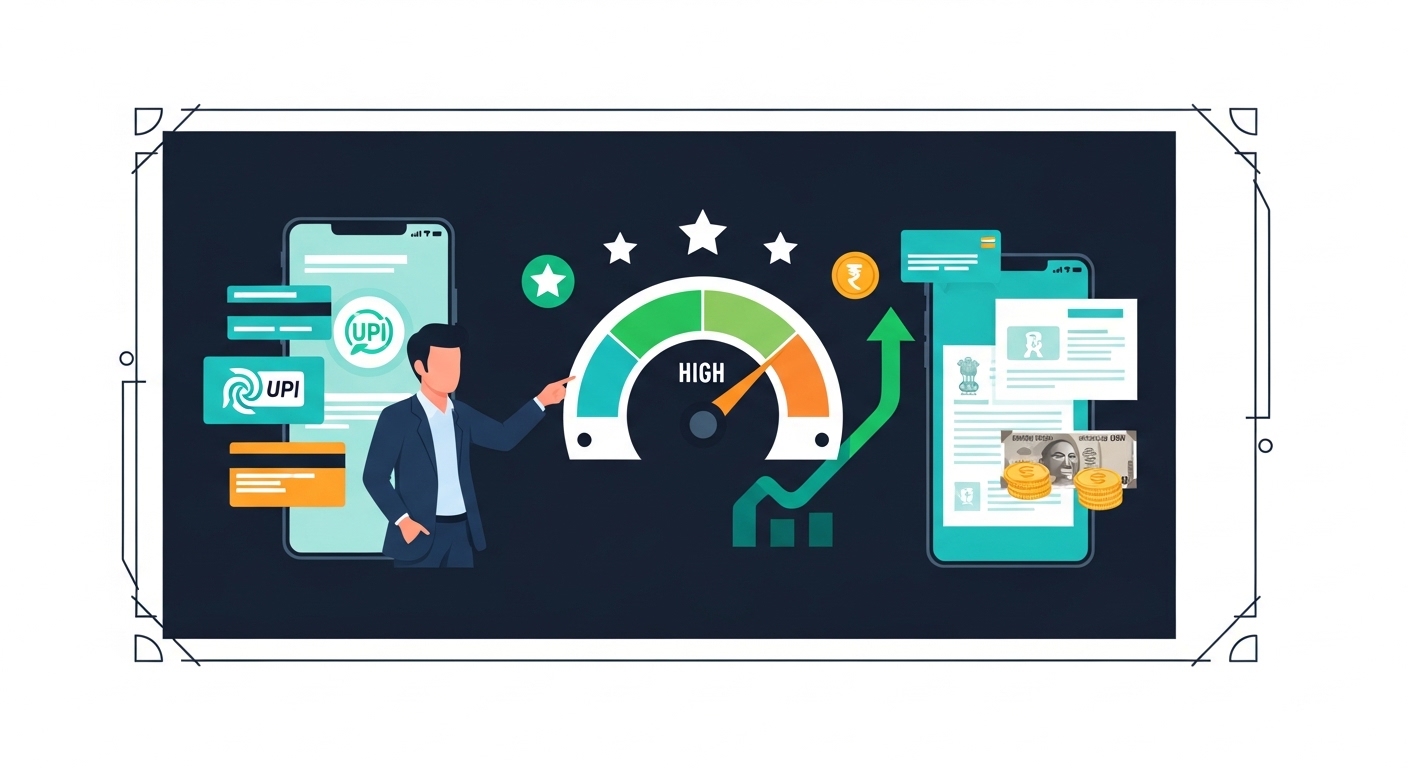
Your irregular income can often feel like a hurdle when you’re trying to secure a loan or apply for credit. Missing a payment or not understanding how lenders view your financial habits can lead to frustrating rejections or much higher interest rates. This situation can significantly slow down your personal growth or even your business expansion.
Understanding how your CIBIL score is calculated provides a clear roadmap to financial stability, even with fluctuating earnings. This guide will demystify the algorithm, showing you precisely which factors matter most and how you can proactively manage them to build a strong credit profile. You’ll gain the knowledge to confidently approach lenders and secure the best terms available.
Table of Contents
What Is Your CIBIL Score?
Your CIBIL score is a three-digit number, ranging from 300 to 900, which acts as a of your creditworthiness, managed by TransUnion CIBIL Limited and regulated by the Reserve Bank of India (RBI). It’s generated from the credit information reports that banks and other lending institutions submit to credit bureaus.
This score tells lenders, at a glance, how likely you are to repay your debts based on your past behaviour. If you don’t maintain a healthy score, you could find it difficult to obtain loans, credit cards, or even certain business financing, often facing higher interest rates or outright rejections.
You can open your official CIBIL score and report directly from the TransUnion CIBIL website or through various banks and financial institutions that partner with CIBIL.
For a self-employed individual, your CIBIL score is essentially your financial report card, a critical assessment of your borrowing and repayment behaviour. It’s a numerical representation that summarises your entire credit history, giving lenders a quick insight into how responsibly you’ve managed money in the past. This score is particularly important for you because your income might not be as predictable as someone on a fixed salary.
Lenders look at your CIBIL score to gauge the risk involved in lending you money. A high score suggests you’re a dependable borrower, even if your monthly earnings fluctuate, while a low score indicates potential risk. It helps them decide whether to approve your loan application, the amount they’re willing to lend, and the interest rate you’ll be offered.
Quick Context: CIBIL’s Role
CIBIL, or Credit Information Bureau (India) Limited, is India’s oldest credit information company. It collects and maintains credit records of individuals and companies, providing these to lenders in the form of credit reports and scores. This system helps ensure fair lending practices and informs financial decisions across the country.
Why Your CIBIL Score Matters
Your CIBIL score plays a pivotal role in your financial life, especially when you’re self-employed and seeking funding. A strong score significantly improves your chances of getting approved for loans, such as business loans, home loans, or even a simple credit card, which can be crucial for managing cash flow during lean periods. It acts as a testament to your financial discipline, helping to bridge any perceived gaps due to irregular income.
Beyond approval, a good CIBIL score can unlock better interest rates on your borrowings. Lenders view you as a lower risk, making them more willing to offer competitive rates, which can save you a substantial amount of money over the loan’s tenure.
This translates into lower monthly repayments, freeing up capital that you can reinvest into your business or personal savings. Ultimately, a healthy CIBIL score builds a foundation for your financial future, proving your reliability to the financial system.
Common Confusion: CIBIL Score Myth
A widespread myth is that your CIBIL score only matters if you’re applying for a big loan.
The truth is, your CIBIL score impacts almost every financial interaction requiring credit, from getting a new mobile phone plan to securing a rental agreement, making it relevant for everyday financial health, not large borrowings.
| CIBIL Score Range | Lender’s Perception | Impact on Self-Employed |
| 750-900 | Excellent, Low Risk | Easy open to credit, best interest rates, flexible terms for business growth. |
| 650-749 | Good, Moderate Risk | open to credit, but rates might be slightly higher; may require more documentation. |
| 550-649 | Average, Higher Risk | Limited credit options, higher interest rates; could hinder business expansion. |
| 300-549 | Poor, Very High Risk | Very difficult to get credit; often leads to loan rejections or demands for collateral. |
What Factors Influence Your Score?
Your CIBIL score isn’t a random number; it’s carefully calculated based on five key areas of your credit report. Each area contributes a different weight to your overall score, making some factors more influential than others. Understanding these components allows you to focus your efforts where they’ll have the biggest positive impact.
These factors combine to form a comprehensive picture of your financial behaviour, which is then translated into your three-digit score. For self-employed individuals, knowing how these areas add up is crucial for presenting a strong financial profile, even with fluctuating earnings. By managing each of these elements strategically, you can proactively build and maintain an excellent CIBIL score.
Pro Tip: Income Proof for Self-Employed
Even with a great CIBIL score, self-employed individuals often need to provide strong income proof. Keep your Income Tax Returns (ITR) filed on time, maintain clear bank statements, and have audited financial statements ready, as these further validate your creditworthiness to lenders.
- Your Payment History: Whether you pay your EMIs and credit card bills on time.
- Credit Utilisation: How much credit you’re using compared to your total available credit limit.
- Types of Credit: The mix of secured loans (like home or car loans) and unsecured loans (like personal loans or credit cards) you hold.
- Length of Credit History: How long you’ve had credit accounts open and active.
- New Credit Applications: The number of recent credit applications and enquiries made on your report.
Your Payment History And Its Weight
Your payment history is by far the most significant factor in your CIBIL score, accounting for about as per the latest official guidelines to as per the latest official guidelines of the total. Paying your EMIs and credit card bills on time demonstrates financial discipline and reliability to lenders. For self-employed individuals with irregular income, consistent on-time payments are particularly vital as they offset the perceived risk of fluctuating earnings.
Missing payments, even by a few days, can severely damage your score and stay on your report for several years. Each missed payment signals to lenders that you might struggle with repayment, making them hesitant to offer you new credit. Settling outstanding debts through a “settlement” rather than full repayment also negatively impacts your score, as it indicates you couldn’t meet your original obligations.
Quick Context: Impact of Late Payments
A single missed payment can drop your CIBIL score by a significant margin, potentially making it harder to get approved for loans or credit for up to seven years. It’s far better to communicate with your lender if you anticipate difficulty rather than missing a payment.
Here’s how you can manage your payment history effectively, especially with irregular income:
Step 1: Set up automatic payments for your fixed EMIs and minimum credit card dues. This ensures that even if your cash flow fluctuates, the essential payments are made on time, preventing late payment penalties and negative marks on your credit report.
Step 2: Prioritise essential debt payments over other expenses when your income is lower. Always cover your loan EMIs and credit card minimums first to protect your CIBIL score, which is your gateway to future financing.
Step 3: Communicate proactively with your lenders if you foresee payment difficulties. Many banks offer options like temporary deferrals or restructuring for genuine cases, which is much better for your score than defaulting on a payment.
Understanding Your Credit Utilisation
Credit utilisation refers to the percentage of your total available credit that you’re currently using. For instance, if you have a credit card with a as per the latest official guidelines limit and you’ve spent as per the latest official guidelines, your utilisation is as per the latest official guidelines. This factor typically accounts for around as per the latest official guidelines to as per the latest official guidelines of your CIBIL score.
Lenders prefer to see a low credit utilisation ratio, ideally below as per the latest official guidelines, as it suggests you’re not overly reliant on borrowed money. Keeping your utilisation low shows that you can manage your finances responsibly and aren’t maxing out your credit, which can be a red flag for lenders. For self-employed individuals, this is crucial, as high utilisation can signal financial stress, especially if your income isn’t steady.
Common Confusion: Credit Limit Myth
The misunderstanding here is that having a high credit limit and using it all shows you’re managing a lot of credit.
In reality, maxing out your credit limit, even if it’s high, signals to lenders that you are credit-hungry and potentially over-leveraged, which can negatively affect your CIBIL score.
- Pay down balances regularly, even if you can’t pay them off entirely, to keep your reported utilisation low.
- Request a credit limit increase from your bank if you consistently use a high percentage of your current limit, but only if you don’t plan to spend more.
- Avoid opening too many new credit accounts to increase your total available credit, as this can trigger multiple hard enquiries and shorten your average credit age.
- Use your credit card for routine expenses you can immediately repay, helping to build positive payment history without increasing your utilisation significantly.
The Types Of Credit You Use
The mix of credit accounts you hold also influences your CIBIL score, typically contributing about as per the latest official guidelines to as per the latest official guidelines. Lenders like to see a healthy blend of both secured and unsecured credit in your profile. This shows that you can responsibly manage different kinds of debt.
Secured credit includes loans backed by collateral, such as a home loan or a car loan, which are generally considered less risky by lenders. Unsecured credit, like personal loans and credit cards, has no collateral and is seen as higher risk.
A good mix indicates that you’re capable of handling various financial commitments, which can be particularly advantageous for self-employed individuals seeking diverse financing options for their business. Diversifying your borrowing demonstrates a well-rounded financial management approach.
Pro Tip: Strategic Use of Credit Cards
For self-employed individuals, a credit card can be a valuable tool for managing business expenses and cash flow. Use it for purchases you can pay off quickly, and ensure you clear the full balance each month to avoid interest and build a strong payment history without affecting your credit utilisation negatively.
| Credit Type | Description | CIBIL Impact |
| Secured Loans | Backed by collateral (e.g., home loan, car loan). | Positive, shows responsible long-term borrowing. |
| Unsecured Loans | No collateral (e.g., personal loan, credit card). | Can be positive if managed well; too many can be negative. |
| Retail Loans | Small loans for consumer goods. | Minor impact, but consistent repayment is good. |
| Overdraft Facilities | Short-term credit line, often linked to current accounts. | Can be neutral to positive if used judiciously and repaid promptly. |
Length Of Your Credit History
The length of your credit history, or how long you’ve been using credit, makes up about as per the latest official guidelines of your CIBIL score. A longer history with consistently good repayment behaviour is highly valued by lenders. It provides a more extensive track record for them to assess your financial reliability.
Older accounts, especially those with perfect payment records, are beneficial for your score, so it’s generally advisable not to close them unless necessary. Closing an old credit card, for example, can shorten your average credit age and reduce your total available credit, which might inadvertently increase your credit utilisation ratio. For those who are self-employed, building a solid credit history early, even with small, manageable credit lines, is a strategic move to establish credibility over time.
Quick Context: The Power of Time
A long credit history with responsible behaviour is a powerful indicator of trustworthiness. It shows lenders a consistent pattern of managing debt, which is particularly reassuring when assessing applicants with less predictable income streams.
- Start building credit early, even if it’s with a small secured credit card or a low-limit credit card that you use responsibly.
- Keep your oldest credit accounts open and active, as they contribute significantly to your average credit age.
- Avoid closing credit cards that you no longer use, especially if they have a long history and good payment records, unless you have specific financial reasons.
- Consistently use your credit products and make on-time payments to continuously add positive data to your credit history over the years.
New Credit Applications And Enquiries
Each time you apply for new credit, a “hard enquiry” is made on your CIBIL report, and this factor contributes about as per the latest official guidelines to your score. While a single application won’t significantly impact your score, applying for too many new credit accounts within a short period can raise a red flag for lenders. They might interpret this as you being desperate for credit or taking on more debt than you can handle.
It’s important to differentiate between hard and soft enquiries. A hard enquiry happens when a lender pulls your credit report because you’ve applied for credit, and it can slightly lower your score for a short time.
A soft enquiry, like checking your own CIBIL score, doesn’t affect your score at all. For self-employed individuals, strategic borrowing means applying for credit only when truly needed and spacing out applications to avoid appearing credit-hungry.
Common Confusion: New Credit Application Belief
The belief is that checking your CIBIL score frequently will harm it – but this is incorrect.
Checking your own score is a ‘soft enquiry’ and has no impact on your CIBIL score, allowing you to monitor your credit health regularly without worry.
Here’s how to check your own CIBIL score, which is a soft enquiry:
Step 1: Visit the official TransUnion CIBIL website or a trusted financial portal that offers CIBIL score checks. Ensure you’re on a secure site to protect your personal information.
Step 2: Provide your personal details, such as your name, date of birth, PAN card number, and address, as requested. These details are used to identify your unique credit profile.
Step 3: Complete any verification steps, which might include answering security questions related to your credit history or using an OTP sent to your registered mobile number or email. This confirms your identity.
Step 4: View your CIBIL score and credit report. Take time to review all sections for accuracy and understand the factors contributing to your score.
How To Improve Your CIBIL Score
Improving your CIBIL score is a continuous process that requires discipline and strategic financial management, especially with irregular income. The most impactful step is to consistently pay all your bills promptly, including EMIs, credit card dues, and utility bills. Setting up reminders or automatic payments can prevent accidental misses, which are particularly damaging.
Secondly, focus on reducing your overall debt, especially unsecured debt like credit card balances. Aim to keep your credit utilisation below as per the latest official guidelines by making larger payments whenever your income allows.
Thirdly, avoid applying for new credit unnecessarily, as multiple hard enquiries can temporarily lower your score. Finally, regularly check your CIBIL report for errors; correcting inaccuracies can instantly boost your score.
Pro Tip: Automated Bill Payments
use digital payment platforms like Paytm to set up automatic payments for your recurring bills, such as electricity, water, and mobile recharges. This ensures timely payments, contributes positively to your overall financial discipline, and helps avoid late fees, which can indirectly affect your credit health.
- Consolidate your debts if possible, making it easier to manage payments and potentially securing a lower interest rate, helping you pay off balances faster.
- Resist the urge to close old credit accounts, even if unused, as they contribute positively to the length of your credit history.
- Diversify your credit mix by showing you can handle both secured and unsecured loans responsibly, but only take on new loans if you genuinely need them and can afford the repayments.
- Maintain a low credit utilisation ratio by making consistent payments and not maxing out your credit limits.
Checking Your CIBIL Score
Regularly checking your CIBIL score and report is a crucial part of maintaining good financial health. You can open your report directly from the TransUnion CIBIL website, and many banks also offer free CIBIL score checks to their customers. When you view your report, you’ll see a detailed breakdown of all your credit accounts, payment history, and enquiries.
Understanding the details within your report means reviewing each section carefully for accuracy. Look for any discrepancies, such as loans you didn’t take, incorrect payment statuses, or outdated information.
Correcting any errors is vital; even a small mistake can negatively impact your score. The process for disputing errors is usually outlined on the CIBIL website, requiring you to submit evidence to support your claim.
Here’s how to effectively check and understand your CIBIL report:
Step 1: Obtain your credit report from the official CIBIL website by purchasing it or through a bank that offers free annual reports. This ensures you’re getting the most accurate and up-to-date information directly from the source.
Step 2: Review the personal information section for any inaccuracies, such as misspelled names, incorrect addresses, or mismatched PAN details. Even small errors here can cause issues with lenders.
Step 3: Examine the account information section, which lists all your loans and credit cards. Verify the loan amounts, payment statuses, and opening/closing dates for each account.
Step 4: Check the enquiries section for any hard enquiries you don’t recognise. If you find an enquiry from a lender you never applied to, it could indicate fraudulent activity.
Step 5: Initiate a dispute directly with CIBIL through their online portal if you find any errors. You’ll need to provide details of the inaccuracy and any supporting documents.
Conclusion
Understanding how your CIBIL score is calculated is an invaluable asset for any self-employed individual navigating fluctuating income. By focusing on consistent, on-time payments and prudent credit utilisation, you can build a strong financial profile that speaks volumes to lenders.
Regularly checking your CIBIL report and correcting any errors ensures your financial story is always accurate and strong. This proactive approach will help you secure better loan terms and confidently pursue your entrepreneurial goals.
How to Check Free Credit Score on Paytm
How does irregular income specifically impact my CIBIL score, and what can I do to manage it effectively?
What does a CIBIL score of 650-749 mean for my ability to secure loans in India?
Can checking my own CIBIL score frequently harm it, and how often should I review my credit report?
Why is my payment history considered the most critical factor in determining my CIBIL score, and how can I ensure consistent timely payments?
What are the benefits of maintaining a diverse credit mix, and which types of credit are most advantageous for my CIBIL score?
What are the potential risks of making multiple new credit applications within a short period, and how does this affect my CIBIL score?
What should I do if I anticipate difficulty making a loan or credit card payment on time to avoid damaging my CIBIL score?
Is it better for my CIBIL score to close an old, unused credit card or keep it active, and why?
Author

