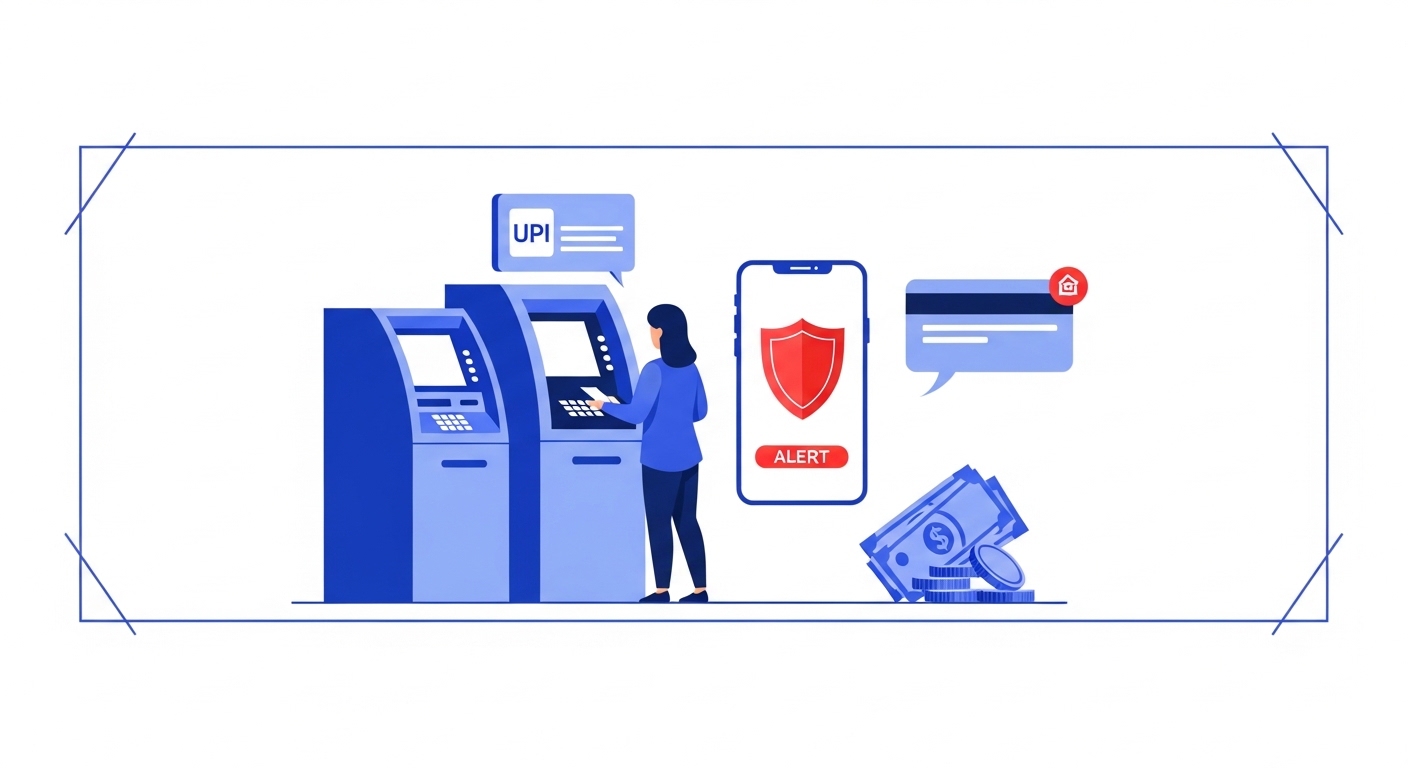
Many people believe that using an ATM deposit machine is unreliable, especially if they’ve had a transaction fail in the past. Actually, with a little preparation and careful steps, these machines are highly efficient and a secure way to add cash to your account without visiting a teller. You’ll find that most issues arise from simple errors in preparation, not from the machine itself.
This guide is designed to help you understand exactly how to use your bank’s ATM deposit machine effectively, even if you’ve faced difficulties before. You’ll learn the precise steps, what to do if things go wrong, and how to ensure your deposits are always smooth and successful. It’s time to transform your banking experience and make ATM deposits a convenient part of your routine.
Table of Contents
What Is an ATM Deposit Machine?
An ATM deposit machine is an automated terminal provided by your bank that allows you to deposit cash or cheques directly into your account without human assistance. These machines operate under the general banking guidelines set by the Reserve Bank of India, ensuring secure and regulated transactions.
When you deposit cash, the machine counts it and provides an instant receipt, with funds typically reflecting in your account within minutes or hours, depending on your bank’s processing times. Failing to retrieve your receipt or note down the transaction ID could make it harder to resolve any discrepancies later, so always keep your records.
For any issues, your first step should always be to contact your bank’s customer service, whose details are usually found on the ATM itself or your bank’s official website.
An ATM deposit machine is essentially a self-service banking point where you can add money to your account at any time, often 24 hours a day. It’s different from a regular cash withdrawal ATM because it has a special slot designed to accept and count currency notes. This means you don’t have to wait in a queue inside the bank branch, saving you valuable time.
These machines are a modern convenience, designed to make your banking simpler and more accessible. They handle the counting and verification of your cash, providing you with a digital record and a physical receipt for your peace of mind. For many, it’s become the preferred method for depositing cash, especially outside of standard banking hours.
Quick Context: The “Smart” ATM
Many modern ATMs are multi-functional, meaning they can handle both withdrawals and deposits. Look for clear labels like “Cash Deposit” or “Deposit ATM” to confirm its capabilities before you start.
Preparing for Your ATM Deposit
Proper preparation is the most important step to avoid issues, especially if you’ve had a failed deposit in the past. Taking a few moments to get ready can prevent jams, miscounts, and transaction delays. This careful approach ensures your money goes into your account smoothly and without hassle.
You’ll find that most ATM deposit problems stem from how cash is presented to the machine, rather than the machine itself. By following these simple preparation steps, you’re setting yourself up for a successful transaction every time. It’s about giving the machine the best possible chance to process your deposit accurately.
Step 1: Gather your cash and count it accurately before leaving home.
Step 2: Sort your bank notes by denomination and straighten them.
Step 3: Have your debit card ready and easily accessible.
Step 4: Know your Personal Identification Number (PIN) by heart.
Common Confusion: Damaged Notes
It is commonly assumed that slightly torn or very old notes are accepted by ATM deposit machines.
ATM deposit machines are designed to accept clean, uncreased, and undamaged currency notes. Heavily soiled, torn, or taped notes may be rejected, causing transaction delays or jams.
| Note Condition | Machine Acceptance | Best Practice |
| Clean, crisp notes | High acceptance | Always preferred for smooth deposits |
| Slightly creased notes | Moderate acceptance | Try to straighten before inserting |
| Heavily folded/wrinkled | Low acceptance, potential jam | Avoid, straighten thoroughly or exchange at branch |
| Torn or taped notes | Very low acceptance, almost certain rejection | Exchange at a bank branch counter only |
Finding Your Nearest ATM Deposit Machine
Not all ATMs can accept cash deposits, so finding the right one is key to avoiding a wasted trip. Identifying a deposit-enabled ATM beforehand will save you time and frustration, especially if you’re in a hurry. You’ll want to ensure the machine you visit supports this specific function.
This step is particularly important if you’re trying to deposit cash outside of your usual banking area or in a new locality. Knowing how to locate these specialised machines ensures that your effort leads to a successful deposit. It also helps you plan your banking tasks more efficiently.
Step 1: Use your bank’s official website to locate deposit-enabled ATMs.
Step 2: Check your bank’s mobile application for ATM services.
Step 3: Identify the right machine by looking for specific labels.
Pro Tip: Call Ahead for Confirmation
If you’re unsure whether a specific branch’s ATM offers deposit services, call your bank’s customer service number. They can confirm the availability and even provide directions to the nearest suitable machine.
How to Make a Cash Deposit
Once you’ve prepared your cash and located the correct machine, the actual deposit process is quite simple. Following these steps carefully, one by one, will ensure your transaction is completed without any hitches. Remember, patience and precision are your best allies here.
You’ll notice that the machine guides you through each stage with on-screen prompts. Pay close attention to these instructions, as they are designed to your bank’s specific system. Taking your time with each step significantly reduces the chance of errors, leading to a successful deposit.
Step 1: Insert your debit card into the designated slot.
Step 2: Enter your PIN carefully and discreetly.
Step 3: Choose the “Deposit” option from the main menu.
Step 4: Select “Cash Deposit” from the deposit options.
Step 5: Place your prepared cash into the cash deposit slot.
Step 6: Confirm the deposit amount displayed on the screen.
Step 7: Receive your transaction receipt and keep it safe.
Common Confusion: Daily Deposit Limits
The misunderstanding here is that all ATM deposit machines have a universal daily cash deposit limit.
Daily cash deposit limits can vary significantly between banks and even account types. Always check with your specific bank for their current limits, as per the latest official guidelines, to avoid exceeding them.
What Happens After Your Deposit?
Completing the deposit at the ATM is the first part; understanding what happens next is crucial for peace of mind. Knowing when your funds will appear in your account and how to verify it helps you manage your finances effectively. You’ll want to ensure your transaction was fully successful.
This post-deposit phase is where many previous failures might have led to confusion or worry. By knowing what to expect and how to check, you can quickly confirm your money is safe and accessible. It’s all about closing the loop and gaining confidence in the process.
- Checking your receipt details immediately: Your receipt is your primary proof of transaction. Verify that the date, time, deposit amount, and account number are all correct. If anything seems off, note it down immediately.
- When funds appear in your account: For most banks, cash deposited via an ATM deposit machine is credited to your account almost instantly or within a few minutes. However, some banks might have a processing time of up to a few hours, especially for deposits made late in the evening or on holidays.
- Keeping your deposit records: Store your ATM deposit receipts in a safe place for at least a few weeks, or until you’ve fully reconciled your bank statement. These records are vital if any discrepancy arises and you need to raise a query with your bank.
Quick Context: Instant SMS Alerts
After a successful ATM cash deposit, your bank will typically send an SMS alert to your registered mobile number confirming the credit. This is an excellent way to get immediate confirmation that your funds have reached your account.
Important Tips for Smooth Deposits
Even with careful preparation, a few extra tips can make your ATM deposit experience even smoother, especially if you’re trying to overcome a past negative experience. These small actions can prevent common issues and ensure your transaction is always successful. You’ll appreciate the extra peace of mind.
These tips address the nuances of machine interaction and cash handling that often lead to minor glitches. By incorporating them into your routine, you’re not making a deposit; you’re mastering the art of efficient ATM banking. It’s about building a strong and reliable process.
- Count cash accurately one last time at the machine: Before inserting the cash, quickly count it again. This double-check ensures you’re depositing the exact amount you intend, matching the figure you’ll confirm on screen.
- Straighten crumpled notes thoroughly: Machines struggle with folded or crinkled notes. Take an extra moment to smooth out any notes that might have become creased in your wallet or pocket. Flat notes are less likely to cause a jam.
- Avoid damaged or excessively worn notes: If you have notes that are torn, heavily taped, or very brittle, it’s best to exchange them at a bank branch counter. ATM machines are likely to reject them, causing delays.
- Check machine instructions for specific requirements: Some ATMs have specific instructions for how to insert notes (e.g., maximum number per stack, specific orientation). Always glance at these instructions on the machine’s screen or panel.
- Use correct currency and avoid foreign notes: Ensure you are only depositing Indian Rupee notes. ATM deposit machines are programmed to recognise specific currency and will reject foreign notes, leading to a failed transaction.
Pro Tip: Handle Mixed Denominations
If you’re depositing a mix of ₹100, ₹200, ₹500, and ₹2000 notes, sort them into separate, neat stacks. Insert one denomination at a time if the machine allows, or ensure the overall stack is very tidy, as this aids the machine’s counting accuracy.
Read More
Which bank supports BHIM?Benefits of Using ATM Deposits
Beyond convenience, using ATM deposit machines offers several significant advantages that streamline your banking life. For someone who might be hesitant after a previous issue, understanding these benefits can rebuild trust in the system. You’ll discover how much easier managing your cash can be.
These benefits extend beyond simple time-saving, touching on aspects like accessibility and security. Embracing this method means gaining more control over your finances and reducing reliance on traditional banking hours. It’s a smart way to bank in 2026.
- Saving your valuable time: ATM deposits eliminate the need to wait in long queues at bank counters during peak hours. You can complete your transaction quickly and get on with your day.
- Depositing money anytime: Most ATM deposit machines operate 24/7, allowing you to deposit cash at your convenience, even late at night, on weekends, or during public holidays. This flexibility is a huge advantage.
- Avoiding long bank queues: Skipping the teller line means a faster, less stressful banking experience. This is especially useful when you only need to deposit cash and don’t require other branch services.
- Secure transaction process: ATM deposits are highly secure. The machines are equipped with advanced technology to count and verify currency, and you receive an immediate receipt as proof. Your funds are protected by the bank and, broadly, by the Deposit Insurance and Credit Guarantee Corporation (DICGC) up to ₹5 lakh per depositor, per bank, as per DICGC (2026).
Common Confusion: ATM Deposit Security
The belief is that depositing cash at an ATM is less secure than a bank counter.
ATM deposit machines are equipped with surveillance cameras and strong encryption. Your transaction is digitally recorded, and the receipt serves as verifiable proof, making it a very secure method.
Addressing Common Concerns
Even with the best preparation, sometimes things don’t go as planned, and it’s essential to know what to do. If you’ve had a failed attempt before, these solutions will directly address your worries and guide you through resolving potential issues. You’re not alone if you encounter a problem.
Knowing these steps will help you to handle any situation confidently, turning a potential frustration into a manageable task. It’s about being prepared for the unexpected and understanding your rights as a customer. This knowledge is key to a stress-free banking experience.
Step 1: What if the machine jams or rejects your cash?
Step 2: If your receipt is missing or the machine doesn’t print one?
Step 3: What if there’s a discrepancy in the deposit amount?
Step 4: Contacting your bank for help with any issue.
Pro Tip: Escalating a Complaint
If your bank doesn’t resolve your ATM deposit issue within 30 days, you can escalate your complaint to the Banking Ombudsman. This service, overseen by the Reserve Bank of India, helps resolve customer grievances against banks.
Conclusion
Maximising efficiency with your bank’s ATM deposit machine is entirely within your control, even if a past experience left you feeling doubtful. By meticulously preparing your cash, carefully following each step, and knowing how to address common concerns, you transform a potentially stressful task into a smooth one. This approach not only saves you precious time but also offers the flexibility of 24/7 open, making your banking truly efficient.
How do I deposit cash using my bank's ATM machine?
Can I deposit damaged or old currency notes at an ATM deposit machine?
What is the difference between a regular ATM and an ATM deposit machine?
Why should I choose an ATM deposit machine instead of visiting a bank teller for cash deposits?
What are the key preparations I must make to ensure a successful cash deposit at an ATM?
Is it safe and secure to deposit cash using an ATM deposit machine?
What should I do if the ATM machine jams, rejects my cash, or doesn't print a receipt during a deposit?
How can I find the nearest ATM machine that accepts cash deposits for my bank?
Author