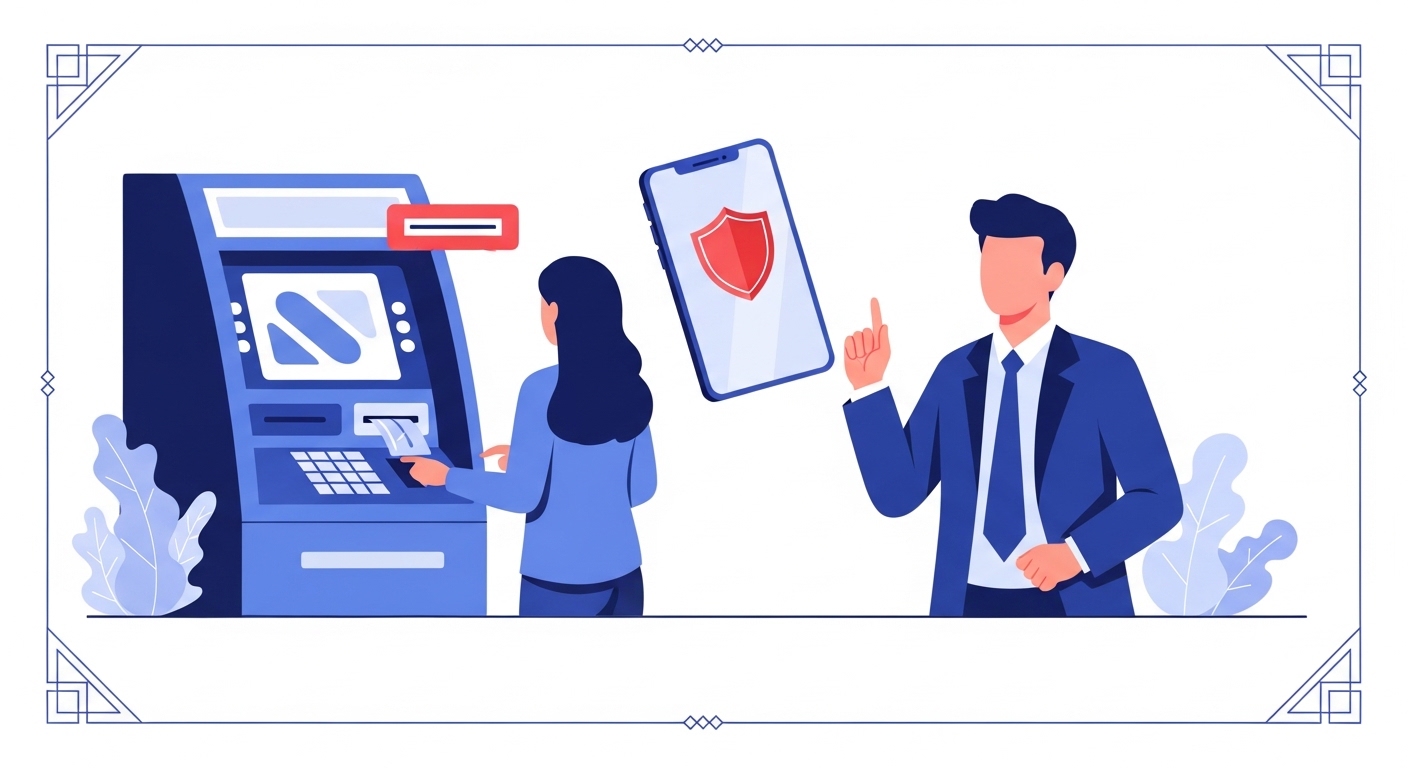
‘Is my card working?’ ‘It looks fine, but the machine feels a bit off.’ This quick doubt, often dismissed, could be your first warning sign at an ATM. Ignoring that gut feeling might leave your bank account vulnerable to clever criminals.
This guide explains exactly what ATM skimming is and how these hidden devices work to steal your money. You’ll learn simple, effective ways to check any ATM before you use it and what steps to take if you ever suspect something is wrong. Protecting your hard-earned savings starts with knowing what to look for.
Table of Contents
What Is ATM Skimming?
ATM skimming involves criminals secretly installing devices on Automated Teller Machines to steal your card details and Personal Identification Number (PIN). These devices are designed to look like parts of the ATM itself, making them hard to spot.
If your card data is stolen this way, criminals can create duplicate cards and withdraw money from your account, leading to significant financial loss. You must report any suspected fraud immediately to your bank and file a complaint on the official Cyber Crime Portal, as delays can make recovery more difficult.
Prompt reporting is crucial for investigating the crime and potentially recovering your funds.
What is ATM Skimming?
ATM skimming is a sneaky type of fraud where criminals use hidden electronic devices to steal your debit or credit card information. These devices are designed to look like normal parts of an ATM, so you might not even notice they’re there. The goal is to capture your card number, expiry date, and PIN when you use the machine.
This type of crime can happen anywhere, from busy city ATMs to those in quieter, less-monitored areas. Being aware of how these scams work is your first line of defence against losing your money. It’s about staying one step ahead of those who want to trick you.
Understanding the Threat
The threat of ATM skimming is very real and constantly evolving. Criminals are always finding new ways to make their devices more discreet and harder to detect. They target ATMs because these machines handle sensitive financial transactions every day.
You might think your bank’s security is enough, but personal vigilance adds an extra layer of protection. Understanding the common tactics used by skimmers helps you become a more informed and secure ATM user.
How Criminals Steal Data
Criminals typically use two main pieces of equipment to steal your data. First, a skimmer device is attached over the ATM’s card slot to read your card’s magnetic stripe information. This device captures your account number and other crucial details.
Second, they often install a tiny camera hidden somewhere on the ATM, or a fake keypad overlay, to record your PIN as you type it. Once they have both your card data and your PIN, they can create a cloned card and empty your bank account.
Common Confusion: ATM Skimming Locations Misconception
It is commonly assumed that ATM skimming only happens at old or poorly maintained machines.
Skimming can happen at any ATM, including those in high-security bank branches, as criminals are very sophisticated in their methods.
Impact on Your Finances
The impact of ATM skimming on your finances can be devastating. Once criminals clone your card, they can quickly drain your bank account, leaving you with unexpected losses. Reclaiming these funds can be a lengthy and stressful process.
Beyond direct financial loss, you might also face issues like identity theft if your personal information is compromised. This can lead to further fraudulent activities under your name, affecting your credit score and peace of mind for a long time.
How Skimming Devices Work
Skimming devices are cleverly designed to blend in with the ATM’s appearance, making them almost invisible to the average user. They are usually placed over the existing card reader or keypad. These devices work by intercepting your card information and PIN without you realising it.
The technology behind these scams is surprisingly simple yet effective. Knowing what these devices look like and how they operate is essential for spotting them before you become a victim.
Hidden Card Readers
Hidden card readers, or skimmers, are designed to fit perfectly over the ATM’s actual card slot. When you insert your card, it passes through the skimmer first, which secretly reads and stores your card’s magnetic stripe data. This data includes your account number and other vital details.
These skimmers often look like a slightly bulkier version of the original card slot, or they might have a slightly different colour or texture. Always be suspicious of anything that looks out of place around the card reader.
Fake Keypads Explained
Criminals sometimes place fake keypads directly over the ATM’s real keypad. When you enter your PIN, this fake overlay records your keystrokes. This allows them to capture your PIN without needing a camera.
These fake keypads might feel spongy or slightly raised compared to the original, or they might not align perfectly with the screen. Always press the keys firmly and pay attention to how they feel.
Tiny Cameras Used
To capture your PIN, criminals often use tiny cameras hidden in various spots around the ATM. These cameras can be disguised as part of the machine’s casing, a brochure holder, or even a small hole in a panel. Their sole purpose is to record your fingers as you type your PIN.
These cameras are incredibly small and can be hard to spot. Always cover your hand when entering your PIN, regardless of whether you suspect a camera is present.
Pro Tip: Check for a slightly different colour or texture around the card slot.
Skimmers are often made from different plastic than the ATM, so a subtle mismatch in colour or feel can be a giveaway.
Why ATM Security Matters to You
Your financial security is directly linked to how safely you use ATMs. Every transaction you make involves your sensitive banking information, which criminals are always trying to get their hands on. Taking simple precautions can make a huge difference in protecting your money and your identity.
It’s not just about avoiding immediate loss; it’s about safeguarding your long-term financial well-being. A breach can have lasting consequences, so proactive security is always the best approach.
Protecting Your Savings
The most immediate reason to care about ATM security is to protect your savings. If your card is skimmed, criminals can quickly empty your account, leaving you in a difficult financial situation. Recovering these funds can take time, during which you might face hardship.
Your vigilance at the ATM directly reduces the risk of such an event. Every step you take to secure your transaction helps keep your hard-earned money safe in your bank account.
Preventing Identity Theft
ATM skimming isn’t just about losing money; it can also lead to identity theft. With your card details and PIN, criminals can access more of your personal information, potentially opening new accounts or making purchases in your name. This can severely damage your credit history and reputation.
Preventing skimming helps protect your entire financial identity, not just the balance in your bank account. It’s a crucial step in maintaining your overall financial health and security.
Quick Context: The Cost of Complacency
Ignoring ATM security can lead to more than just losing money; it can result in a compromised identity and significant stress for you and your family.
Your Peace of Mind
Knowing that your money and identity are safe brings immense peace of mind. Constantly worrying about fraud can be stressful and distracting. By adopting good ATM security habits, you can feel more confident and secure every time you make a withdrawal.
This sense of security allows you to focus on your life without the added burden of financial anxiety. It’s a small investment of time for a significant return in personal well-being.
Checking the ATM Before You Start
Before you even insert your card, take a moment to carefully inspect the ATM. This simple habit can save you from becoming a victim of skimming. Criminals rely on you being in a hurry or distracted, so a quick check is your best defence.
Look for anything that seems out of place, loose, or different from how a normal ATM should look or feel. Your intuition is a powerful tool in spotting suspicious devices.
Step 1: Inspect the card slot by gently wiggling it and checking for any attachments that look like they don’t belong. A real card reader should be flush with the machine and feel solid, not loose or like an added piece.
Step 2: Wobble the keypad by pressing firmly on the corners and edges to see if it moves or feels spongy. A legitimate keypad will be firm and securely attached, while a fake overlay might lift or shift slightly.
Step 3: Look for hidden cameras by scanning the area above the screen, around the receipt dispenser, and any panels nearby. Criminals often hide tiny cameras in these locations to record your PIN.
Step 4: Check for loose parts on the ATM’s body, especially around the card reader, keypad, and screen. Skimming devices are often attached with adhesive or tape and might leave slight gaps or feel flimsy.
Step 5: Trust your instincts if something about the ATM feels off, even if you can’t pinpoint exactly what it is. If you have any doubt, it’s always better to find another ATM to use.
Protecting Your Personal Identification Number (PIN)
Your PIN is the secret code that protects your bank account, and it’s just as important as your physical card. Even if criminals get your card details, they can’t access your money without your PIN. Protecting it is a critical step in preventing fraud.
Always treat your PIN as strictly confidential and never share it with anyone, not even bank officials. Banks will never ask for your PIN over the phone or email.
Cover Your Hand
Always cover your hand when you’re typing your PIN at an ATM. Use your free hand, a wallet, or any object to block the view of anyone standing nearby or any hidden cameras. This simple action makes it much harder for criminals to capture your PIN.
It’s a habit that takes seconds to develop but provides a significant layer of security. Make it a routine every time you use an ATM.
Do Not Share Your PIN
Your PIN is for your eyes only. Never share it with family members, friends, or anyone else, no matter how much you trust them. Sharing your PIN compromises your account’s security and could invalidate your bank’s fraud protection policies.
Remember, your bank will never ask you for your PIN. Any request for your PIN is a red flag for a scam.
Memorise Your PIN
It’s best to memorise your PIN and avoid writing it down anywhere. If you write it on your card or keep it in your wallet, and your wallet is stolen, criminals will have both your card and your PIN. This makes it incredibly easy for them to access your funds.
If you struggle to remember multiple PINs, consider using a secure method like a password manager, but ideally, commit them to memory.
Change PIN Regularly
Changing your PIN regularly adds another layer of security to your account. This practice helps to mitigate the risk if your PIN is somehow compromised without your knowledge. Most banks allow you to change your PIN easily through an ATM or net banking portal.
As per official RBI guidelines, periodically updating your PIN is a recommended security practice. It’s a small effort for enhanced protection.
- Always shield your PIN with your hand or body when entering it.
- Never tell your PIN to anyone, including bank staff or family.
- Memorise your PIN and avoid writing it down on paper or your card.
- Change your PIN every few months to enhance your account’s security.
Using Your Debit or Credit Card Safely
Beyond checking the ATM itself, your behaviour while using the machine also plays a crucial role in your security. Making smart choices about which ATMs you use and how you conduct your transactions can significantly reduce your risk of falling victim to skimming.
Think of it as being a smart consumer, not just a cautious one. Your actions are your best defence.
Use Trusted ATMs
Always try to use ATMs located inside bank branches, shopping malls, or other well-lit, busy areas. These locations are generally more secure and are regularly monitored by bank staff or security personnel. ATMs in isolated or poorly lit areas are more vulnerable to tampering.
Choosing a trusted location reduces the chances of encountering a compromised machine. It’s a simple choice that offers greater peace of mind.
Avoid Suspicious Machines
If an ATM looks neglected, poorly maintained, or has visible damage, it’s best to avoid it. These could be signs that the machine has been tampered with or is not regularly serviced. A suspicious-looking ATM is never worth the risk.
Your safety and financial security should always be your top priority. Don’t hesitate to walk away if something feels wrong.
Quickly Complete Transactions
Try to complete your ATM transactions as quickly and efficiently as possible. Lingering at the machine increases your exposure time and makes you more vulnerable to observation by criminals. Have your card ready and know what you want to do before you approach the ATM.
This isn’t about rushing, but about being prepared and minimising unnecessary time spent at the machine. Focus on your transaction and then move away.
Take Your Receipt
Always take your transaction receipt, even if you don’t think you need it. This receipt provides a record of your transaction, including the date, time, and amount. It can be crucial evidence if you ever need to dispute a fraudulent charge.
It’s a small piece of paper that holds important information for your financial records. Keep it safe until you can reconcile it with your bank statement.
| Safe ATM Characteristics | Risky ATM Characteristics |
| Located inside a bank or busy area | In isolated or poorly lit locations |
| Well-maintained and clean | Looks neglected, damaged, or has loose parts |
| Security cameras visible | No visible security, or cameras seem broken |
| Card slot and keypad feel solid | Card slot wiggles, keypad feels spongy or raised |
What to Do If You Suspect Skimming
Even with all your precautions, you might still encounter a suspicious ATM. Knowing exactly what to do in such a situation is crucial to protect yourself and others. Your immediate actions can prevent further harm and help authorities catch criminals.
Don’t panic, but act swiftly and methodically. Every minute counts in these situations.
Step 1: Stop your transaction immediately if you notice anything suspicious about the ATM, such as a loose card reader or a strange keypad. Do not proceed with your transaction or try to remove any suspected device yourself.
Step 2: Inform the bank staff if the ATM is located inside a bank branch or an area with bank personnel. Explain your concerns and point out what you found suspicious. They can then inspect the machine and take appropriate action.
Step 3: Report to the police by calling the local police helpline or visiting the nearest police station to file a First Information Report (FIR). You should also file a complaint on the official Cyber Crime Portal as soon as possible. This creates an official record of the incident.
Step 4: Monitor bank statements closely for any unauthorised transactions in the days and weeks following the incident. If you spot any suspicious activity, report it to your bank immediately.
General Safety Tips for ATM Usage
Using an ATM safely goes beyond just checking for skimmers; it involves being aware of your surroundings and making smart choices about when and where you conduct your transactions. These general safety tips can significantly reduce your vulnerability to various types of crime, not just skimming.
Always prioritise your personal safety over convenience. A few extra minutes of caution are always worth it.
Choose Well-Lit Areas
Always use ATMs in well-lit areas, especially after dark. Good lighting reduces hiding spots for criminals and makes it easier for you to see your surroundings. Avoid dimly lit or secluded ATMs that might make you an easy target.
Visibility is a key deterrent for criminals. Choose locations where you feel safe and can clearly see what’s around you.
Be Aware of Surroundings
Before approaching an ATM, take a moment to scan the area around you. Look for anyone loitering, sitting in parked cars, or acting suspiciously. If you feel uncomfortable or sense danger, leave the area and find another ATM.
Your personal safety is paramount. Don’t hesitate to trust your gut feeling and walk away from a potentially risky situation.
Avoid Distractions
When you’re at an ATM, avoid distractions like talking on your phone, listening to music with headphones, or looking through your bag. These distractions can make you less aware of your surroundings and more vulnerable to criminals. Focus entirely on your transaction.
Being present and alert is your best defence against opportunist thieves. Keep your attention on the task at hand.
Do Not Accept Help
Never accept help from strangers at an ATM, even if they seem friendly or offer assistance. Criminals sometimes pretend to be helpful to distract you or trick you into revealing your PIN. If you need help, contact your bank directly.
Your bank provides customer support for a reason. Always rely on official channels for assistance, not unsolicited help from strangers.
- Opt for ATMs in busy, well-lit locations, especially during evening hours.
- Always be alert to your surroundings; look for suspicious individuals or vehicles.
- Avoid distractions like mobile phones while at the ATM to stay focused.
- Decline any offers of help from strangers at the ATM, even if they seem genuine.
Staying Alert and Protecting Your Money
Protecting your money from skimming and other fraud is an ongoing process, not a one-time check. By staying vigilant and adopting smart financial habits, you can significantly enhance your security. Continuous awareness is your strongest shield against financial crime.
It’s about making security a part of your routine, ensuring your finances remain safe in 2026 and beyond.
Review Bank Statements
Regularly review your bank and credit card statements. Check for any transactions you don’t recognise, even small ones. Fraudsters sometimes make small test transactions to see if an account is active before making larger withdrawals.
As per official RBI guidelines, promptly reporting any unauthorised transactions to your bank is crucial. Many banks offer a limited window for disputing fraudulent charges.
Set Up Transaction Alerts
Most banks offer free SMS or email alerts for every transaction made on your debit or credit card. Set these up immediately. Real-time alerts notify you instantly of any activity, allowing you to spot and report fraudulent transactions within moments.
This immediate notification is one of the most effective ways to catch fraud early, often before significant damage occurs. It’s a simple, yet powerful, security tool.
Pro Tip: Use your bank’s official app to set up transaction alerts.
Most major banks provide mobile apps where you can easily configure real-time SMS or email alerts for all your card transactions.
Report Suspicious Activity
If you notice any suspicious activity on your bank statements or receive an alert for a transaction you didn’t make, report it to your bank immediately. The quicker you report, the better your chances of recovering lost funds and preventing further fraud. You should also file a complaint on the Cyber Crime Portal.
According to CERT-In (2026) guidelines, prompt reporting of cyber incidents is vital for effective response and mitigation.
Keep Yourself Informed
Stay updated on the latest fraud techniques and security recommendations from your bank and official government sources like CERT-In. Criminals constantly evolve their methods, so staying informed helps you recognise new threats. Many banks regularly publish security tips and warnings on their websites.
Knowledge is power when it comes to financial security. Dedicate a little time to staying aware of current threats.
Conclusion
Protecting yourself from ATM skimming requires a combination of vigilance and smart habits every time you use a cash machine. By taking a few seconds to inspect the ATM, shield your PIN, and choose secure locations, you significantly reduce your risk. These simple actions ensure your hard-earned money stays safe and offers you greater peace of mind.
Author