

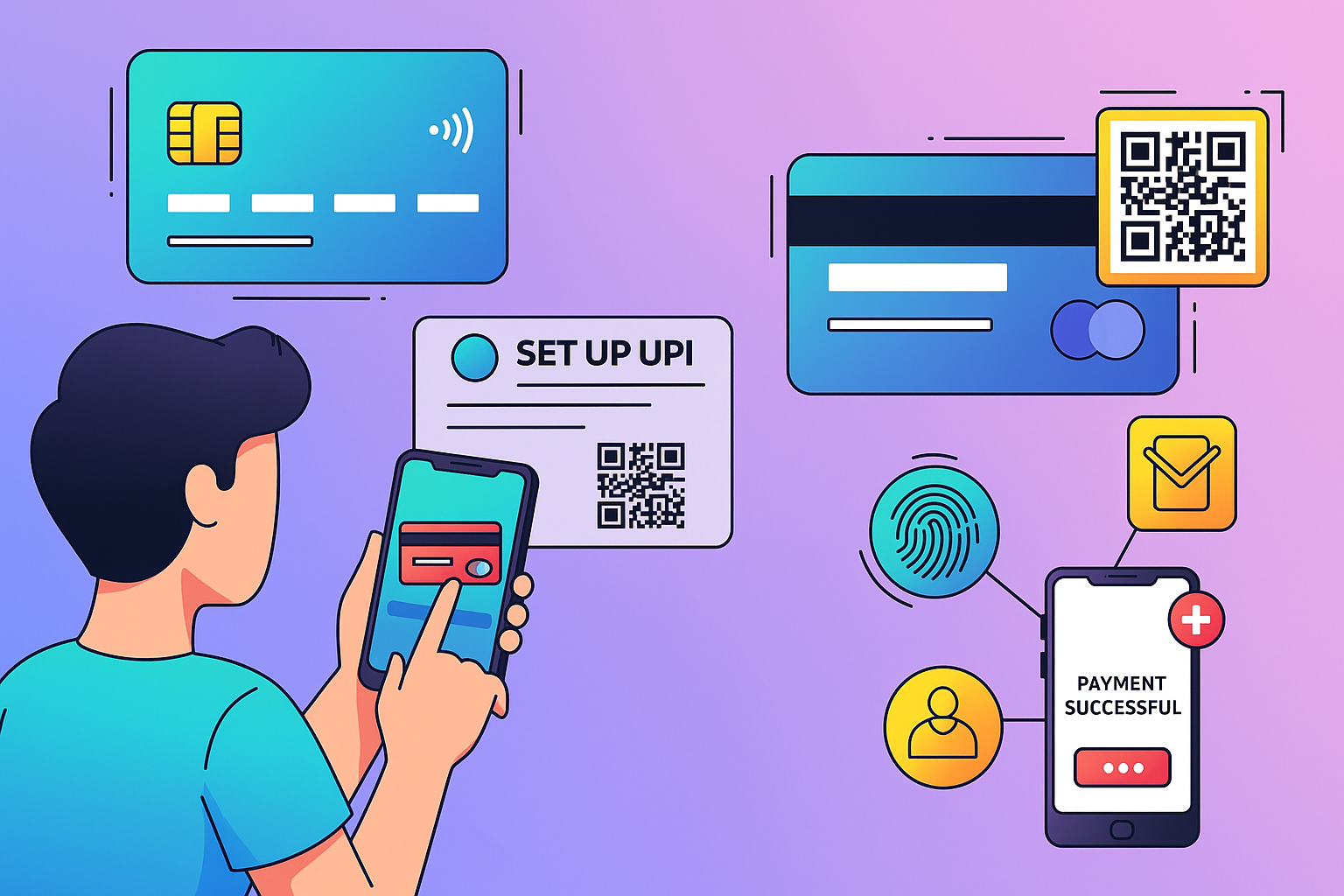
According to NPCI data for March 2026, UPI transactions in India surpassed 13 billion, highlighting its widespread adoption for daily payments. This incredible growth has been further enhanced by the recent integration of credit cards, offering users more flexibility and convenience.
This article will guide you through the process of setting up your credit card for UPI payments, explaining the necessary steps and important considerations. You will learn how to link your card, understand the benefits, and troubleshoot common issues, ensuring a smooth digital payment experience.
Table of Contents
Understanding UPI and Credit Card Integration
UPI, or Unified Payments Interface, is a real-time payment system developed by NPCI that allows instant money transfers between bank accounts. It has revolutionised digital payments in India, making transactions quick and accessible for millions. Traditionally, UPI payments drew funds directly from a linked bank account.
The Reserve Bank of India (RBI) and NPCI have introduced a significant enhancement, enabling users to link their credit cards to UPI. This integration means you can now use your credit card as a funding source for UPI payments, extending the convenience of UPI to your credit card benefits. This development offers a new way to manage your expenses and earn rewards.
Quick Context: What is MDR?
Merchant Discount Rate (MDR) is a fee a merchant pays to their bank for processing credit card transactions. While often absorbed by the merchant, it can sometimes be passed on to the customer for certain payment types.
Benefits of Linking Your Credit Card to UPI
Linking your credit card to UPI offers several compelling advantages, enhancing your financial flexibility and payment experience. This integration combines the speed of UPI with the various perks associated with your credit card. You can enjoy a more versatile approach to your daily spending.
- Earn rewards and cashback: Many credit cards offer points, cashback, or discounts on purchases, which you can continue to accumulate through UPI transactions.
- Build credit history: Responsible use of your credit card via UPI, including timely repayments, can positively contribute to your credit score.
- Enhanced convenience: Make quick, instant payments by scanning QR codes or using UPI IDs without needing your physical card or entering card details repeatedly.
- Increased security: UPI transactions with credit cards benefit from robust encryption and security protocols mandated by RBI and NPCI, protecting your financial data.
Eligibility and Requirements for Linking
Before you can link your credit card to UPI, you need to ensure both your card and your chosen payment application meet specific criteria. Not all credit cards are immediately compatible, and certain conditions must be fulfilled. Checking these requirements beforehand saves you time and effort.
Currently, only RuPay credit cards issued by participating banks are eligible for linking with UPI applications. According to NPCI (2026), this phased rollout ensures a controlled and secure integration process. Other card networks like Visa and Mastercard are expected to be included in future phases.
Common Confusion: All Credit Cards Work with UPI
Misconception: Many people believe any credit card can be linked to UPI instantly. Correction: As of 2026, only RuPay credit cards from specific banks are supported for UPI linkage. Visa and Mastercard are not yet integrated.
Essential Documents and Information
To successfully link your credit card, you will need to have certain documents and information readily available. This ensures that the verification process is smooth and your identity is confirmed. Having everything prepared will streamline the setup.
- Your 16-digit RuPay credit card number.
- The expiry date (month and year) of your credit card.
- The CVV (Card Verification Value) number, typically a 3 or 4-digit code on the back of your card.
- Your mobile number registered with your bank for the credit card, as an OTP will be sent for verification.
- Access to a UPI-enabled mobile payment application that supports credit card linking.
Step-by-Step Guide to Linking Your Credit Card
Linking your eligible credit card to a UPI application is a straightforward process that involves a few key steps. Following these instructions carefully will help you set up your card for seamless digital payments. Srinivas, a freelance graphic designer in Agra, found this guide helpful when setting up his card.
Pro Tip: Update Your App
Actionable tip: Always ensure your UPI payment application is updated to its latest version. New features, including credit card linking, are often rolled out with app updates.
Step 1: Choose a UPI-Compatible App
First, download and open a mobile payment application that supports RuPay credit card linking for UPI transactions. Most major bank apps and popular payment platforms have integrated this feature. Ensure the app is from a trusted provider.
Step 2: Navigate to Payment Methods
Once logged in, look for a section like “Payment Methods,” “Bank Accounts,” or “Link Credit Card” within the app’s menu or profile settings. This is where you manage your financial connections. Tap on this option to proceed.
Step 3: Select ‘Add Credit Card’
Within the payment methods section, you will find an option to “Add Credit Card” or “Link RuPay Credit Card.” Select this to initiate the linking process. The app will then guide you through the necessary details.
Step 4: Enter Credit Card Details
You will be prompted to enter your 16-digit RuPay credit card number, the expiry date (MM/YY), and the CVV. Double-check all the details for accuracy before proceeding. Incorrect information will lead to errors.
Step 5: Verify Your Card
For security, the app will send a One-Time Password (OTP) to the mobile number registered with your bank for that specific credit card. Enter this OTP into the app to verify your ownership. This step is crucial for protecting your account.
Step 6: Set Up a UPI PIN
The final step involves setting a unique UPI PIN specifically for transactions made using your linked credit card. This PIN is separate from your credit card’s ATM PIN. Choose a PIN that is easy for you to remember but difficult for others to guess.
Transaction Limits and Fees
When using your credit card for UPI payments, it is important to be aware of the transaction limits and potential fees. These can vary depending on your bank, the card issuer, and the type of transaction. Understanding these aspects helps you manage your spending effectively.
According to NPCI guidelines (2026), the general daily transaction limit for UPI is INR 1,00,000, though this can be lower for certain categories or specific banks. For credit card-linked UPI payments, your available credit limit also applies, so you cannot exceed what your card allows. Always check your specific card limits.
| Transaction Type | UPI Bank Account | UPI Credit Card (RuPay) |
| Daily Limit (General) | INR 1,00,000 | INR 1,00,000 (subject to credit limit) |
| Per Transaction Limit | INR 1,00,000 | INR 1,00,000 |
| Merchant Discount Rate (MDR) | Typically 0% | Varies (can be passed to customer for some transactions) |
Troubleshooting Common Issues
Even with a straightforward process, you might encounter some minor hurdles when linking or using your credit card with UPI. Knowing how to address these common problems can help you resolve them quickly and efficiently. Srinivas once faced an issue where his card wouldn’t link, but he resolved it by checking his app version.
Common Confusion: UPI PIN is My Credit Card PIN
Misconception: Some users believe their credit card’s existing PIN works for UPI transactions. Correction: You must set a separate, unique UPI PIN specifically for your credit card-linked UPI payments.
Issues During Card Linking
If you are having trouble linking your credit card, consider these points to diagnose the problem. The issue often lies with compatibility, incorrect details, or an outdated application. Addressing these can quickly resolve the linking failure.
- Card Not Supported: Ensure your credit card is a RuPay card and issued by a participating bank. Other card networks are not yet supported.
- Incorrect Details: Double-check that the 16-digit card number, expiry date, and CVV are entered precisely. Even a single digit error will prevent linking.
- Outdated App: Make sure your UPI payment application is updated to its latest version from your app store. Older versions might not support credit card linking.
- Network Issues: A stable internet connection is essential for the linking process. Try again when your network is strong.
Problems During Transactions
Sometimes, a transaction might fail even after your credit card is successfully linked. This can be frustrating, but common causes are usually easy to identify and fix. Check these factors if your payment does not go through.
- Incorrect UPI PIN: Verify that you are entering the correct UPI PIN specifically set for your linked credit card, not your bank account’s UPI PIN or credit card ATM PIN.
- Insufficient Credit Limit: Ensure you have enough available credit on your card to cover the transaction amount. Transactions will fail if you exceed your limit.
- Merchant Acceptance: Not all merchants might accept credit card payments via UPI yet. Confirm with the merchant if they support this payment method.
- Technical Glitch: Occasionally, a temporary technical issue with the app or bank network can cause failures. Try again after a few minutes or use an alternative payment method.
Pro Tip: Monitor Transactions
Actionable tip: Regularly check your credit card statement and UPI transaction history for any unfamiliar activity. Report suspicious transactions to your bank immediately.
Security Best Practices for UPI Credit Card Use
Maintaining robust security practices is paramount when using your credit card with UPI. While the systems themselves are highly secure, your personal vigilance plays a crucial role in protecting your financial information. Adopting these habits ensures a safer payment experience.
Always keep your UPI PIN confidential and never share it with anyone, including bank representatives or app support. Banks and official payment apps will never ask for your PIN or OTP over the phone or email. Treat your PIN like cash.
Quick Context: Phishing Scams
Phishing scams often involve fraudulent messages or calls pretending to be from your bank or a payment app, asking for sensitive details like PINs or OTPs. Always verify the source before sharing any information.
Protecting Your Account
Protecting your linked credit card and UPI account involves several layers of security, from your device to your personal habits. Implementing these measures will significantly reduce your risk of fraud or unauthorised access. Be proactive in safeguarding your digital payments.
- Use strong app passwords: Secure your UPI payment app with a strong, unique password, fingerprint, or facial recognition.
- Enable screen lock: Ensure your smartphone has a robust screen lock (PIN, pattern, fingerprint) to prevent unauthorised access if your phone is lost or stolen.
- Be wary of unsolicited requests: Never respond to requests for your card details, PIN, or OTP from unknown sources, even if they claim to be from official entities.
- Review transaction alerts: Sign up for SMS and email alerts for all credit card and UPI transactions to quickly spot and report any suspicious activity.
- Update software regularly: Keep your phone’s operating system and all apps updated to benefit from the latest security patches and features.
Conclusion
Linking your credit card to UPI offers a powerful combination of speed, convenience, and financial flexibility for your daily transactions. By following the steps outlined and adhering to security best practices, you can confidently leverage this feature to simplify your payments. This integration not only streamlines your spending but also allows you to maximise credit card benefits responsibly.
How do I link my RuPay credit card to a mobile payment application for UPI transactions?
What are the benefits of using my credit card for UPI payments instead of my bank account?
Can I link any credit card to a UPI application in 2026?
Why should I consider linking my credit card to UPI, and what financial advantages does it offer?
What are the key differences in security when using a credit card versus a bank account for UPI payments?
What are the potential extra costs or Merchant Discount Rate (MDR) implications when using a credit card for UPI?
What steps should I take if I am unable to link my RuPay credit card to a UPI application?
What should I do if my credit card-linked UPI transaction fails, even after successful linking?
How do the daily transaction limits for credit card-linked UPI payments compare to those from a bank account?
Author

