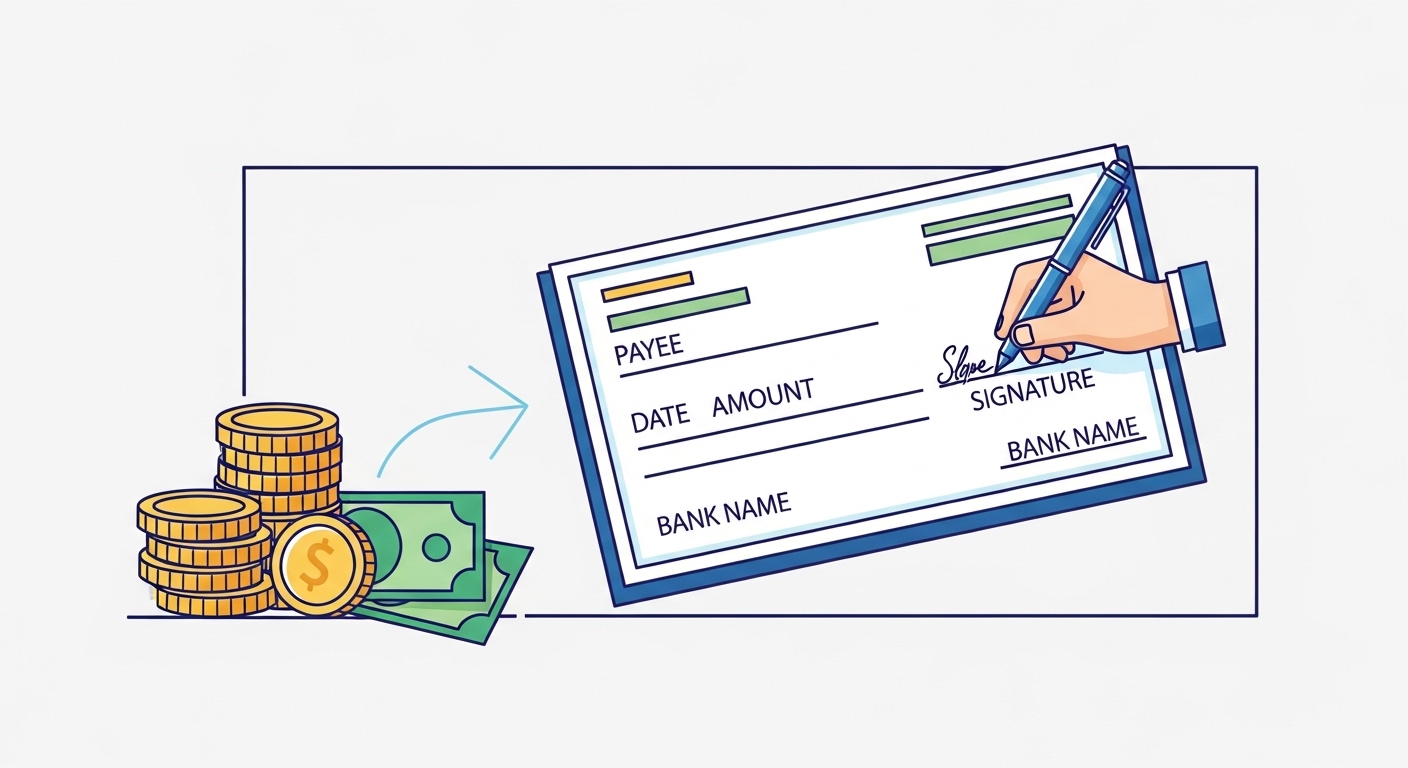
Many people believe that all modern ways of sending money are pretty much the same – fast, easy, and digital. However, this isn’t quite true. While digital payments have certainly made our lives simpler, different methods like cheques, Demand Drafts (DDs), NEFT, and UPI each have their own special features, benefits, and even drawbacks. Knowing these differences is key to making smart choices about how you manage your money.
Understanding these various payment systems isn’t just about convenience; it’s also about security and making sure your money reaches where it needs to go exactly when you expect it to. Whether you’re paying for school fees, sending money to family, or buying something online, picking the right method can save you time, effort, and sometimes even unexpected problems. Let’s explore these options together, so you can become a confident money manager.
Why Do We Need Different Ways To Send Money?
You might wonder why we have so many different ways to send money when a simple bank transfer or a quick digital payment seems to do the trick. The truth is, different situations call for different solutions, much like you wouldn’t use a tiny scooter to move a whole houseful of furniture. Each payment method was created to solve a particular problem or meet a specific need, from sending small amounts instantly to ensuring large, secure transfers.
Basic money transfers
At its heart, sending money is about moving value from one person or organisation to another. Historically, this involved physical cash, but as societies grew, so did the need for safer, more traceable, and more convenient ways to do this. These methods help us pay for goods, services, bills, and even send gifts, all while keeping a record of the transaction.
Choosing the right method
The best way to send money really depends on what you’re trying to do. Are you paying a friend back for lunch? Are you sending a large sum for a house deposit? Is the person you’re paying in another city, or do they need the money immediately? Thinking about these questions will guide you towards the most suitable option, ensuring your payment is both effective and secure.
What Exactly Is A Cheque?
A cheque is like a written instruction you give to your bank. It tells your bank to pay a specific amount of money from your account to another person or company. It’s a traditional way of making payments that involves a physical piece of paper.
How cheques work
When you write a cheque, you fill in the date, the name of the person or organisation you’re paying (called the ‘payee’), the amount in both numbers and words, and then you sign it. The payee then takes this cheque to their own bank, which sends it to your bank for processing. Once your bank confirms you have enough money and the signature is correct, the money is moved from your account to the payee’s account.
When you use a cheque
Cheques are often used for larger payments where a physical record is important, or when you don’t need the money to be transferred instantly. For example, you might use a cheque to pay rent, school fees, or a large bill. They’re also useful when you don’t know the recipient’s bank account details but only their name.
Advantages of cheques
- Physical Record: You have a paper trail of the payment.
- No Bank Details Needed: You only need the payee’s name, not their bank account number.
- Convenience: You can write a cheque anytime, anywhere, and it can be deposited later.
- Security: If a cheque is crossed, it can only be deposited into a bank account, not cashed, which adds a layer of safety.
Disadvantages of cheques
- Slow Processing: It takes a few days for the money to actually move from one account to another.
- Risk of Bouncing: If you don’t have enough money in your account, the cheque can ‘bounce’, leading to fees for both you and the payee.
- Physical Handling: Cheques can be lost or stolen, and you need to physically deliver them.
- Expiry Date: Cheques usually have a validity period, typically three months.
Quick Context: A ‘crossed cheque’ has two parallel lines drawn across its face. This means the money can only be deposited into the payee’s bank account and cannot be cashed directly, offering extra security against theft.
What Is A Demand Draft (DD)?
A Demand Draft, or DD, is a payment instrument issued by a bank on behalf of a customer, instructing another branch of the same bank or another bank to pay a specific amount to a named person or organisation. Unlike a cheque, a DD is ‘pre-paid’, meaning the bank takes the money from you first before issuing the draft. This guarantees the payment will go through.
How to get a DD
To get a DD, you typically go to your bank branch, fill out a form, and provide the amount you want to transfer, along with the name of the payee and the city where the payment needs to be made. You’ll pay the bank the amount of the DD plus a small fee, either in cash or by debiting your account. The bank then issues the DD, which is a secure document.
DD processing explained
Once you have the DD, you give it to the payee. The payee then deposits it into their bank account. Since the bank has already received the money from you, there’s no risk of the DD bouncing. It’s a guaranteed payment, making it a very reliable option for significant transactions.
Benefits of using a DD
- Guaranteed Payment: Since the money is paid upfront, a DD cannot bounce, giving the recipient peace of mind.
- Secure: It’s a safe way to send large sums of money, especially for important payments like university fees or property purchases.
- No Bank Account Needed for Payer: You can get a DD even if you don’t have an account with the issuing bank, by paying in cash (subject to limits).
- Inter-city Transfers: Ideal for sending money across different cities without worrying about bank holidays in the recipient’s location.
Drawbacks of a DD
- Physical Document: Like cheques, DDs are physical documents that can be lost or stolen.
- Time-Consuming to Obtain: You usually have to visit a bank branch during working hours to get one.
- Processing Time: While guaranteed, it still takes a day or two for the money to reflect in the payee’s account after deposit.
- Fees: Banks charge a fee for issuing a DD, which can sometimes be higher than other digital methods.
Real-world scenario: Imagine Rakesh from Bengaluru needs to pay the admission fees for his son, Aryan, who got into a prestigious university in Delhi. The university specifically asks for payment via Demand Draft to ensure the funds are guaranteed. Rakesh visits his bank, pays the fee amount, and gets a DD issued in the university’s name. He then sends the DD securely to Delhi, knowing the payment is assured.
How Does NEFT Work?
NEFT stands for National Electronic Funds Transfer. It’s an electronic system that allows you to transfer money from one bank account to another within India. It’s a popular digital method for sending money between different banks.
NEFT for bank transfers
When you use NEFT, you initiate a transfer through your bank’s online banking portal or by visiting a branch. You’ll need the recipient’s name, bank account number, bank name, and their IFSC code (Indian Financial System Code), which uniquely identifies a bank branch. The money isn’t transferred instantly but in batches, meaning transfers are processed at specific times throughout the day.
NEFT transaction limits
While there’s generally no upper limit set by the Reserve Bank of India (RBI) for NEFT transactions, individual banks might set their own limits, especially for online transfers. For instance, some banks might allow online NEFT transfers up to a certain amount per day, but higher amounts might require a branch visit. There’s no minimum amount for NEFT.
Key features of NEFT
- Nationwide Coverage: You can send money to any NEFT-enabled bank branch in India.
- Secure: It’s a highly secure way to transfer funds, regulated by the RBI.
- Batch Processing: Transactions are processed in hourly batches, so it’s not instant, but fairly quick.
- Available 24/7: While processed in batches, NEFT services are available round-the-clock, every day of the year, including holidays.
NEFT availability
NEFT services are available 24 hours a day, 7 days a week, 365 days a year. This means you can initiate a transfer at any time, even on weekends or public holidays. The transfers will then be processed in the next available hourly batch.
Common Confusion: People often confuse NEFT with RTGS (Real Time Gross Settlement). While both are electronic fund transfer systems, RTGS is for large-value transactions (typically ₹2 lakh and above) and processes payments individually and in real-time, making it faster for very large sums. NEFT is for smaller to medium amounts and processes in batches.
What Is UPI And How Do You Use It?
UPI, or Unified Payments Interface, is a system that powers multiple bank accounts into a single mobile application, merging several banking features, seamless fund routing, and merchant payments into one. It’s designed to make digital payments super fast and easy, right from your phone.
Instant payments with UPI
The biggest advantage of UPI is its instant payment capability. Using a UPI-enabled app, you can send or receive money immediately, 24/7. You link your bank account to a UPI ID (also known as a Virtual Payment Address or VPA), which looks like an email address (e.g., yourname@bankname). This VPA acts as your identifier, so you don’t need to share your bank account number or IFSC code every time.
UPI for everyday use
UPI has become incredibly popular for daily transactions. You can use it to pay for groceries, utility bills, online shopping, sending money to friends, or even paying street vendors. Many merchants display a QR code; you simply scan it with your UPI app, enter the amount, and confirm with your PIN.
Advantages of UPI
- Instant Transfers: Money moves between accounts in real-time, even on holidays.
- Ease of Use: Simple interface on mobile apps, making payments quick and hassle-free.
- 24/7 Availability: You can send and receive money anytime, day or night.
- High Security: Transactions are secured with a UPI PIN, and your bank account details remain private.
- Multiple Accounts: You can link several bank accounts to a single UPI app.
Keeping your UPI safe
While UPI is convenient, it’s crucial to keep it safe. Always protect your UPI PIN and never share it with anyone. Be wary of suspicious links or requests for your PIN. Remember, you only need to enter your PIN when sending money, not when receiving it. Always verify the recipient’s details before confirming a payment.
Real-world scenario: Priya from Mumbai is at her local market, buying vegetables. She doesn’t have enough cash, but the vendor has a QR code displayed. Priya opens her UPI app, scans the QR code, enters the exact amount for her vegetables, and then enters her secure UPI PIN. Within seconds, the payment is confirmed, and the vendor receives the money. It’s quick, easy, and cashless.
Pro Tip: Always enable screen lock on your phone and use a strong, unique UPI PIN. Regularly check your transaction history to spot any unusual activity.
Comparing Cheque, DD, NEFT, And UPI
To help you decide which method is best for different situations, let’s look at how these four options compare across key factors.
| Feature | Cheque | Demand Draft (DD) | NEFT (National Electronic Funds Transfer) | UPI (Unified Payments Interface) |
| Type | Paper-based instruction | Bank-issued guaranteed payment | Electronic batch transfer | Instant mobile payment |
| Speed | 2-5 business days | 1-2 business days | Hourly batches (24/7 availability) | Instant (real-time) |
| Guarantee | No (can bounce) | Yes (pre-paid by bank) | Yes (once processed) | Yes (once processed) |
| Cost | Often free, but bounce charges apply | Small fee charged by bank | Often free for online, small fee at branch | Usually free |
| Required Info | Payee name, amount, your signature | Payee name, amount, city | Payee name, account number, IFSC code | VPA/QR code, amount, UPI PIN |
| Security | Moderate (risk of loss, fraud) | High (guaranteed by bank) | High (RBI regulated) | High (PIN protected, encrypted) |
| Convenience | Low (physical handling, bank visit) | Moderate (bank visit to obtain) | High (online banking, 24/7) | Very High (mobile app, instant, 24/7) |
| Best For | Large payments, physical record needed | Guaranteed large payments (e.g., fees) | Medium to large transfers between banks | Small to medium everyday payments |
Speed of transactions
When it comes to speed, UPI is the clear winner, offering instant transfers. NEFT is next, with transfers happening in hourly batches throughout the day and night. Cheques and Demand Drafts are slower, typically taking one to five business days to clear, as they involve physical documents and manual processing.
Cost involved
UPI is usually free for most transactions, making it very cost-effective for daily use. NEFT often has no charges for online transfers, though banks might charge a small fee for branch-initiated transfers. Demand Drafts always come with a small fee from the issuing bank. Cheques are generally free to write, but if one bounces due to insufficient funds, both the sender and receiver can face significant penalties.
Ease of use
UPI is incredibly easy to use, requiring just a few taps on a smartphone app. NEFT is also simple through online banking, though it requires more details like IFSC codes. Cheques and DDs are less convenient as they involve filling out physical forms and often visiting a bank branch during specific hours.
Security measures
All these methods have security features, but they differ. DDs are very secure because the payment is guaranteed by the bank upfront. NEFT is also highly secure, being regulated by the RBI. UPI uses strong encryption and PIN protection, making it very safe for digital payments. Cheques have a moderate level of security; while they provide a physical record, they can be lost or misused if not handled carefully.
“Choosing the right payment method is like picking the right tool for a job; the most effective choice depends entirely on the specific task at hand.”
Which Payment Method Suits You Best?
Deciding on the best payment method depends on your specific needs: how much money you’re sending, how quickly it needs to arrive, and how important a guaranteed payment or a physical record is to you. There’s no single “best” method; instead, there’s a best method for each situation.
For small, quick payments
If you’re paying a friend back for coffee, buying groceries, or settling a small bill, UPI is almost always your best bet. It’s instant, free, and incredibly convenient, allowing you to pay directly from your mobile phone without needing cash or card machines.
For large, secure payments
When you’re dealing with significant amounts, such as university fees, property payments, or large business transactions, security and guarantee become paramount. A Demand Draft offers the highest guarantee as the money is paid upfront. NEFT is also a strong contender for large sums, especially if you want a digital, traceable transfer that’s processed reliably within bank hours. Cheques can also be used for large payments, particularly when a physical record is preferred, but you must ensure sufficient funds.
When time is critical
If the money absolutely has to reach the recipient immediately, UPI is your go-to option, as transfers are instant, 24/7. NEFT also works well if you need funds to arrive within a few hours, given its continuous batch processing. For urgent, very large transfers (above ₹2 lakh), you might consider RTGS, which offers real-time processing.
Important Tips For Safe Money Transfers
No matter which method you choose, keeping your money safe is always the top priority. Being aware and careful can protect you from fraud and mistakes.
Protecting your PIN
Your Personal Identification Number (PIN) for UPI or debit cards is like the key to your money. Never share your PIN with anyone, not even bank officials or family members. Always enter your PIN privately, making sure no one is watching. Change it regularly and avoid using easily guessable numbers like your birth date.
Spotting online fraud
Be extremely cautious of unexpected messages, emails, or calls asking for your bank details, UPI PIN, or OTP (One-Time Password). Banks and official institutions will never ask for these sensitive details over the phone or email. Always verify the sender’s identity for any payment requests. Look out for poor grammar or unusual links in messages, which are common signs of phishing attempts. If something feels too good to be true, it probably is.
Official sources of help
If you ever suspect fraud, lose your phone, or notice any suspicious activity in your bank account or UPI transactions, act immediately. Contact your bank’s official customer service helpline or block your UPI service through your app. The Reserve Bank of India (RBI) and National Payments Corporation of India (NPCI) also provide guidelines and resources on digital payment safety. Always refer to official government and bank websites for reliable information and assistance.
Conclusion
Understanding Understanding the Difference: Cheque vs UPI, Demand Draft, and NEFT can help you make informed decisions. By following the guidelines outlined above, you can navigate this topic confidently.
Author