

Imagine you’ve written a cheque for someone, but then something unexpected happens, and you realise you need to prevent that money from being taken out of your account. If you don’t act quickly, the money could be debited, leaving you in a difficult spot or causing a financial loss. It’s a common situation many people face, and knowing what to do can save you a lot of worry and potential problems.
Thankfully, there’s a clear process for stopping a cheque payment, giving you control over your finances even after you’ve issued one. Understanding this process, along with any associated costs and time limits, is crucial for managing your money responsibly. This guide will walk you through everything you need to know, ensuring you’re prepared for such situations.
What Is Stopping a Cheque Payment?
Stopping a cheque payment simply means telling your bank that a cheque you’ve issued should not be paid when it’s presented. It’s like putting a hold on a specific payment instruction you’ve already given. This action prevents money from leaving your account, even if the person you gave the cheque to tries to cash it or deposit it.
Understanding a cheque
A cheque is a written instruction telling your bank to pay a specific amount of money from your account to the person or organisation named on the cheque. It’s a traditional way of making payments, and it’s a legally binding document once you’ve signed it. You’re effectively authorising your bank to transfer funds on your behalf.
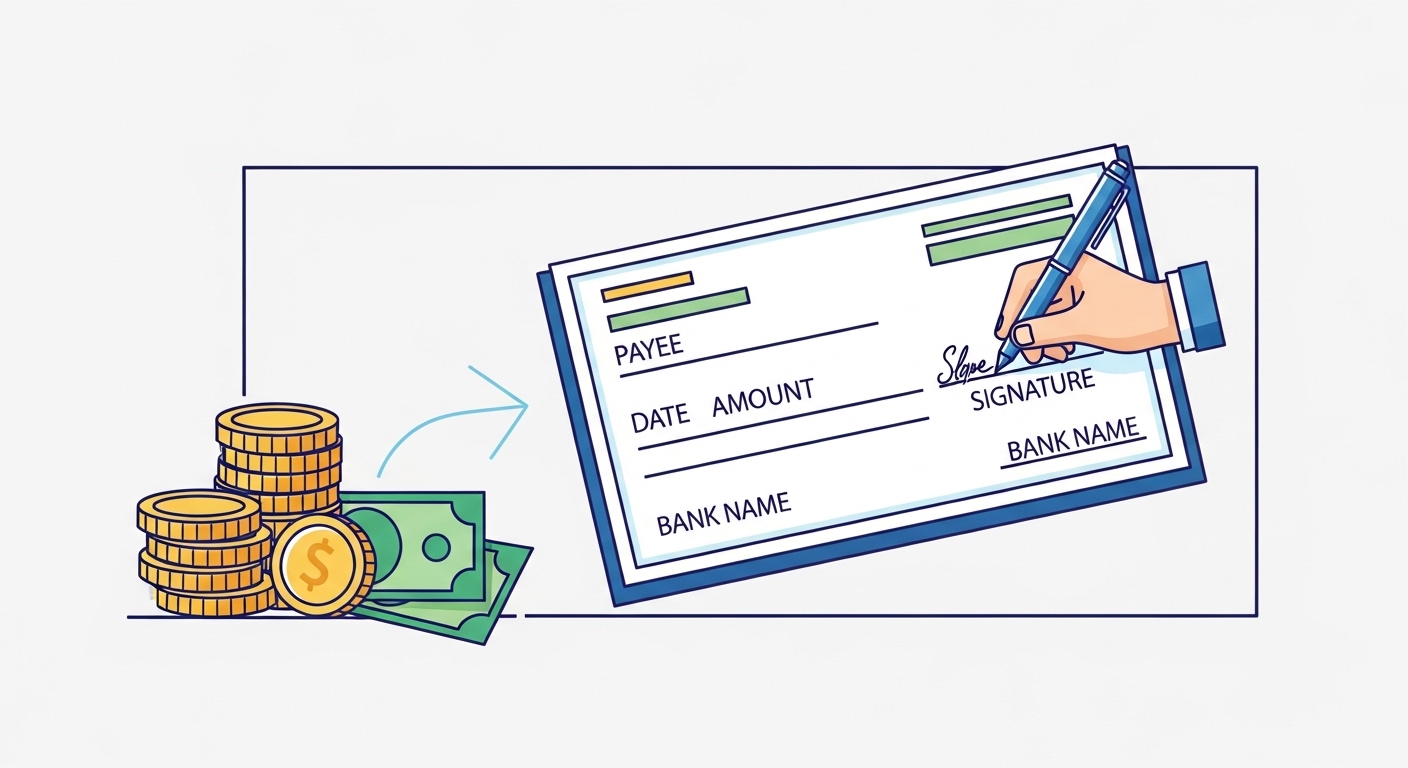
When you write a cheque, you include details like the date, the payee’s name, the amount in words and figures, and your signature. The person receiving the cheque then presents it to their bank, which processes it through a system to get the money from your bank.
Why you might stop one
There are several important reasons why you might need to stop a cheque payment. Sometimes, circumstances change unexpectedly, and you need to protect your funds.
Common reasons include:
- Mistake in the amount: You might have accidentally written the wrong amount on the cheque, either too much or too little.
- Dispute with the payee: Perhaps you’ve paid for a service or goods, but they weren’t delivered as promised, or there’s a disagreement about the quality.
- Loss or theft: If your cheque book, or a specific cheque, gets lost or stolen, you’d want to stop any payments to prevent fraud.
- Change of mind: You might decide not to go ahead with a purchase or service after issuing the cheque.
- Cheque issued in error: You might have written a cheque to the wrong person or for the wrong purpose entirely.
- Duplicate payment: You might have paid someone by another method, like a bank transfer, and then realise a cheque for the same amount was also issued.
Quick Context: A cheque stop payment is a formal instruction to your bank to reject a specific cheque when it’s presented for payment, safeguarding your account balance.
How Can You Stop a Cheque?
Stopping a cheque payment requires you to act quickly and communicate clearly with your bank. The process is designed to be straightforward, but you must provide accurate information.
Contacting your bank
The first and most crucial step is to contact your bank as soon as you realise you need to stop a cheque. You can usually do this through various channels, depending on your bank’s services. Don’t delay, as the sooner you act, the greater the chance of successfully stopping the payment before it clears.
You’ll need to clearly state that you wish to place a “stop payment” instruction on a specific cheque. The bank will then guide you through their particular procedure, which might involve filling out a form or confirming details over the phone.
Information you will need
When you contact your bank, they’ll ask for specific details to identify the cheque you want to stop. Having this information ready will make the process much smoother and faster.
You’ll typically need:
- Cheque number: This is a unique number printed on each cheque, usually at the bottom.
- Date of the cheque: The date you wrote on the cheque.
- Amount of the cheque: The exact amount in rupees.
- Payee’s name: The name of the person or organisation you wrote the cheque to.
- Your account number: To identify your bank account from which the payment would be made.
- Reason for stopping payment: While not always strictly required upfront, it’s good to have a clear reason.
Pro Tip: Always keep a record of the cheques you issue, noting the cheque number, date, payee, and amount. This makes stopping a payment much easier if needed.
Different ways to request
Banks offer several ways to request a stop payment, giving you flexibility. You can choose the method that’s most convenient and fastest for you.
Here’s a comparison of common methods:
| Feature | Online Banking/Mobile App | Phone Banking | Branch Visit |
| Convenience | High (anytime, anywhere) | High (quick call) | Moderate (requires travel) |
| Speed | Very fast (instant processing) | Fast (direct instruction) | Moderate (may involve waiting/forms) |
| Confirmation | Instant digital confirmation/SMS | Verbal confirmation, often followed by SMS/email | Written acknowledgement/receipt |
| Documentation | Digital record of request | Call recording, potentially followed by email | Physical form submission |
| Availability | 24/7 | During specific hours (often extended) | During bank’s working hours |
| Interaction | Self-service | Direct conversation with a representative | Face-to-face with bank staff |
Online Banking/Mobile App: Many banks now allow you to stop a cheque payment directly through their secure online banking portal or mobile application. This is often the quickest way, as you can enter the details yourself and receive instant confirmation.
Phone Banking: You can call your bank’s customer service helpline. A representative will take down the necessary details and process your request. Make sure to note down the reference number they provide.
Branch Visit: You can visit your nearest bank branch in person. You’ll typically need to fill out a “Stop Payment Request” form, providing all the cheque details. This method offers a physical record and direct interaction with bank staff.
When Can You Stop a Cheque?
The timing of your stop payment request is critical. There’s a window of opportunity during which your instruction can be effective.
Before it is paid
You can successfully stop a cheque payment as long as the cheque has not yet been “paid” by your bank. This means the money hasn’t been debited from your account and credited to the payee’s account. Once the funds have been transferred, it’s generally too late to stop the payment.
The processing time for cheques can vary, but generally, once a cheque is deposited, it goes through a clearing cycle. This cycle can take a few business days. Your stop payment instruction must be received and processed by your bank before the cheque enters the final stage of this clearing process.
What if it’s presented?
If the cheque has already been presented to your bank and the funds have been debited from your account, then a stop payment instruction will not work. At that point, the transaction is complete.
Scenario: Consider Mr. Ajay Sharma from Jaipur. He wrote a cheque for ₹5,000 to a carpenter, Mr. Rajeev, for some repair work. A day later, Ajay realised Rajeev hadn’t completed the work as agreed. Ajay immediately called his bank to stop the cheque. Luckily, Rajeev hadn’t deposited the cheque yet, so Ajay’s bank was able to successfully place the stop payment, preventing the money from being paid out.
However, if Ajay had waited a few days and Rajeev had already deposited the cheque, and the funds had been transferred to Rajeev’s account, then Ajay wouldn’t have been able to stop the payment. In such a situation, Ajay would need to resolve the matter directly with Rajeev, possibly through legal channels if an agreement couldn’t be reached.
Common Confusion: Stopping a cheque is different from a cheque “bouncing.” A stop payment is an instruction from you to prevent payment. A cheque bounces (or dishonours) if there isn’t enough money in your account, or if there’s a signature mismatch, or other technical issues, without you specifically asking to stop it.
Are There Charges for Stopping a Cheque?
Yes, most banks levy a charge for stopping a cheque payment. This is a service fee for the administrative work involved in processing your request and ensuring the cheque isn’t paid.
Bank fees explained
The charges for stopping a cheque can vary significantly from one bank to another. These fees are usually a fixed amount per cheque. It’s important to be aware of these costs, especially if you frequently issue cheques or anticipate needing to stop payments.
Banks impose these fees because stopping a cheque involves manual processing and a potential risk to the bank if the instruction isn’t carried out correctly. The fee covers these operational costs. Some banks might charge a higher fee if you request an urgent stop payment or if it’s a very old cheque.
How to check costs
Before you request a stop payment, it’s a good idea to check your bank’s current schedule of charges. You can usually find this information in several places:
- Bank’s website: Most banks publish their service charges under a “Fees and Charges,” “Service Charges,” or “Schedule of Charges” section.
- Your account terms and conditions: When you opened your account, you would have received a document outlining all applicable fees.
- Phone banking: You can simply call your bank’s customer service number and ask about the specific fee for stopping a cheque.
- Branch visit: Bank staff at any branch can provide you with the current charges.
Example: Ms. Priya Singh from Bengaluru realised she had accidentally issued a cheque for ₹10,000 instead of ₹1,000. She immediately checked her bank’s website and found that the charge for stopping a cheque was ₹150 plus GST. Knowing this, she proceeded with the stop payment request, understanding the small fee was worth avoiding a much larger incorrect payment.
Always clarify the exact fee, including any applicable taxes, so you’re not surprised by the deduction from your account.
What Happens After Stopping a Cheque?
Once you’ve successfully placed a stop payment instruction, there are a few things you should know about what happens next and your ongoing responsibilities.
Post-cancellation validity
After your bank processes the stop payment request, the specific cheque number you provided becomes invalid for payment from your account. This instruction usually remains in effect for a certain period, often for several months or even up to a year, depending on your bank’s policy. This means that even if the payee tries to present the cheque much later, it still won’t be paid.
However, a stop payment instruction is specific to that one cheque number. If you’ve issued multiple cheques to the same person and only stopped one, the others remain valid. If you need to stop an entire series of cheques, you’ll need to provide separate instructions for each cheque number.
If the cheque is presented
If the cheque you’ve stopped is presented for payment by the payee, your bank will reject it. The cheque will be returned to the payee’s bank with a reason code indicating “Payment Stopped by Drawer.” This means the payee will not receive the funds.
When a cheque is returned unpaid due to a stop payment instruction, the payee might be informed of the reason. This could potentially lead to a dispute, especially if they were unaware of your intention to stop the payment. It’s generally a good practice to inform the payee yourself, if possible and appropriate, to avoid misunderstandings.
Your ongoing responsibilities
Even after stopping a cheque, you still have some responsibilities.
- Inform the payee: If it’s appropriate and safe to do so, inform the person or organisation you issued the cheque to that you’ve stopped the payment and why. This can help prevent further issues or legal disputes.
- Resolve the underlying issue: The stop payment only addresses the financial transaction. You still need to resolve the reason why you stopped the cheque, whether it’s a dispute over services, an accidental error, or something else.
- Monitor your account: Keep an eye on your bank statements to ensure the cheque isn’t mistakenly processed and that the stop payment fee is correctly applied.
- Keep records: Retain any confirmation you receive from your bank regarding the stop payment, such as a reference number, email, or a copy of the request form.
“Acting quickly to stop a cheque payment is crucial. Every hour counts in preventing an unwanted financial transaction and securing your funds.” – Financial Advisor
Important Things to Remember
Stopping a cheque is a powerful tool for managing your finances, but it comes with responsibilities and requires careful attention to detail.
Why act quickly?
The speed at which you act is perhaps the most critical factor in successfully stopping a cheque. Once a cheque is deposited and enters the clearing system, there’s a very short window before the funds are transferred. The faster you contact your bank, the higher your chances of preventing the payment. Delays can mean the money is already debited from your account, making it much harder, if not impossible, to retrieve.
Keep records safe
Maintaining meticulous records of all your cheque transactions is incredibly important. This includes:
- The cheque number
- The date it was issued
- The amount
- The payee’s name
- The purpose of the payment
If you need to stop a cheque, having these details readily available will significantly speed up the process. After stopping a cheque, keep all correspondence and reference numbers from your bank in a safe place. These records serve as proof of your instruction if any issues arise later.
Speak to your bank
Don’t hesitate to contact your bank if you’re unsure about any part of the stop payment process. They are there to help you understand your options and guide you through the necessary steps. Whether you have questions about fees, the validity period of a stop payment, or what to do if the cheque has already cleared, your bank’s customer service team is the best resource. They can provide specific advice tailored to your account and the situation you’re facing.
Stopping a cheque payment is a valuable financial safeguard. By understanding the process, knowing what information you need, and acting promptly, you can effectively manage your payments and protect your funds. It’s all about being informed and taking decisive action when circumstances demand it.
Conclusion
Understanding Stopping a Cheque Payment: Process, Charges, and Post-Cancellation Validity can help you make informed decisions. By following the guidelines outlined above, you can navigate this topic confidently.
Author

