

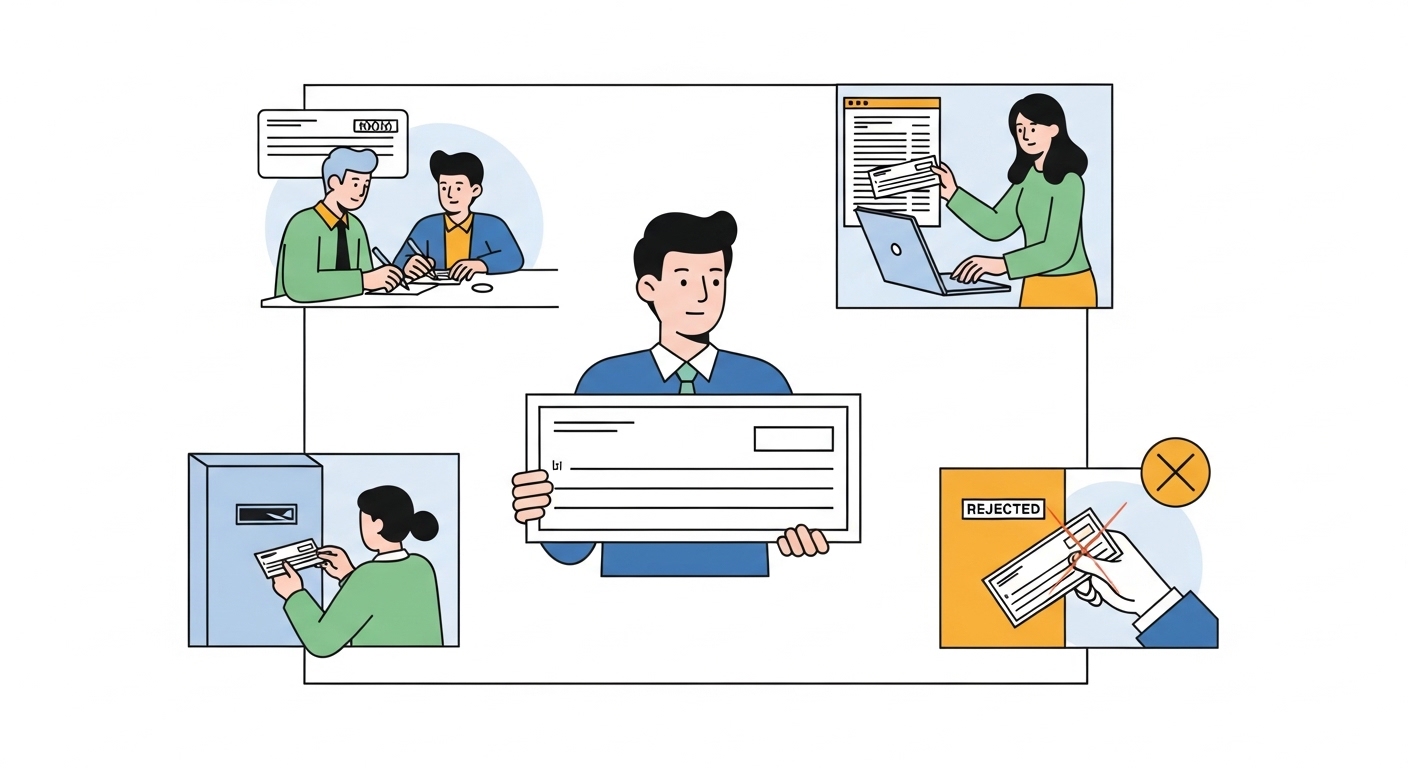
Writing a cheque is a traditional and important way to make payments. Even in today’s digital world, understanding how to write a cheque properly is a valuable skill. This guide will help you learn the correct steps and show you how to avoid common mistakes, ensuring your payments are always secure and processed smoothly.
Understanding What a Cheque Is
Before you start writing, it is helpful to understand what a cheque really is and why we use them.
What is a Cheque?
A cheque is a written instruction from you to your bank. It tells your bank to pay a specific amount of money from your bank account to another person or organisation. Think of it as a paper promise that guarantees payment, as long as you have enough money in your account.
Why Do We Use Cheques?
Cheques have been used for a long time for several good reasons:
- Proof of Payment: A cancelled cheque or a record of a cheque provides clear proof that you have made a payment.
- Security: You do not need to carry large amounts of cash.
- Record Keeping: Cheques help you keep a clear record of your spending, especially when you fill in the cheque stub.
- Formal Payments: They are often preferred for formal transactions, such as paying for services or making large purchases.
What You Need Before Writing a Cheque
To write a cheque correctly, you will need a few essential items and pieces of information.
Your Cheque Book
Your cheque book is provided by your bank. Each cheque in the book is pre-printed with your account number, the bank’s name, and a unique cheque number. Always ensure you have your own cheque book.
A Reliable Pen
It is crucial to use a pen with non-erasable ink, preferably blue or black. This makes it impossible for anyone to alter the details you have written, adding an important layer of security.
The Payee’s Full Details
You must know the exact and full legal name of the person or organisation you are paying. An incorrect name can lead to the cheque being rejected by the bank.
The Exact Amount to Pay
Always confirm the precise amount of money you need to pay. This figure will be written both in words and in numbers on the cheque.
Step-by-Step Guide to Writing a Cheque
Follow these steps carefully to ensure your cheque is written correctly and securely.
Step 1: Write the Date Clearly
Look for the date line, usually in the top right corner of the cheque. Write the current date clearly, using the format Day, Month, Year (e.g., 25th May 2024).
Step 2: Write the Payee’s Name Accurately
On the line that usually starts with “Pay” or “Pay to the order of”, write the full legal name of the person or organisation you are paying. Make sure the spelling is absolutely correct.
Step 3: Write the Amount in Words
Below the payee’s name, there is a long line for the amount in words. Start writing at the very beginning of this line. For example, if you are paying one hundred pounds, you would write “One Hundred Pounds Only”. Ensure you fill the entire line to prevent anyone from adding extra words.
Step 4: Write the Amount in Numbers
In the small box, usually near the right side of the cheque, write the amount in numbers. For example, “£100.00”. This number must exactly match the amount you wrote in words.
Step 5: Sign Your Cheque Correctly
At the bottom right of the cheque, you will find a space for your signature. Sign your name exactly as it appears on your bank’s records. Your signature is your authorisation for the bank to make the payment.
Important Extra Steps for Security
Taking a few extra precautions can significantly improve the security of your payments.
Crossing Your Cheque for Safety
To make a cheque safer, draw two parallel lines across the top left corner of the cheque. You can also write “A/c Payee Only” between the lines. This means the cheque can only be deposited into the bank account of the named payee, and cannot be cashed over the counter.
Filling in the Cheque Stub or Register
Most cheque books come with a stub or a register. After writing each cheque, fill in the date, payee, and amount on the stub. This helps you keep a record of your payments and track your bank balance.
Avoiding Blank Spaces on the Cheque
Always draw a line through any unused space after writing the payee’s name and the amount in words. This prevents anyone from adding extra names or amounts to your cheque.
Using Non-Erasable Ink
As mentioned earlier, always use a pen with non-erasable ink. This simple step makes it much harder for anyone to tamper with the information on your cheque.
Common Mistakes to Avoid When Writing a Cheque
Mistakes on a cheque can lead to delays or even rejection by your bank. Be aware of these common errors:
- Mismatching Amounts in Words and Numbers: If the amount in words does not match the amount in numbers, your bank will not process the cheque.
- Incorrect or Missing Date: An incorrect or missing date can make the cheque invalid or cause problems with its clearance.
- Incorrect Payee Name: The bank needs the exact legal name of the payee to process the payment.
- Missing Your Signature: A cheque without your signature is not authorised and will be rejected.
- Leaving Gaps or Empty Spaces: This creates an opportunity for fraudsters to alter the cheque details.
- Using Erasable Pens: Erasable ink can be easily changed, making your cheque vulnerable to fraud.
- Unsigned Alterations or Overwriting: If you make a mistake, it is generally best to write a new cheque. If you must make a small correction, sign next to the alteration, but banks often prefer a fresh cheque.
What Happens After You Write a Cheque?
Once you have written a cheque, it goes through a process to ensure the money is transferred correctly.
How a Cheque is Presented
The person or organisation you paid will deposit the cheque into their own bank account. Their bank then sends the cheque information to your bank for processing.
Understanding Cheque Clearance Times
In the UK, thanks to the Cheque Imaging System, cheques generally clear much faster than they used to. Funds are usually available by the end of the next business day after the cheque is paid in, though sometimes it can take a little longer. It is always wise to check with your bank if you are unsure.
What if a Cheque Bounces?
A cheque “bounces” if there are not enough funds in your account to cover the payment. If this happens, your bank will return the cheque unpaid, and both you and the payee may be charged fees. It is crucial to always ensure you have sufficient funds before writing a cheque.
Keeping Your Cheque Book Safe
Your cheque book is a valuable item and should be treated with care, just like your debit card or other important documents.
Secure Storage for Your Cheque Book
Always keep your cheque book in a safe and secure place at home. Avoid leaving it in easily accessible areas or carrying it around unnecessarily.
Reporting Lost or Stolen Cheques
If your cheque book is lost or stolen, contact your bank immediately. They can put a stop on any cheques that might be used fraudulently.
Never Signing Blank Cheques
Under no circumstances should you ever sign a blank cheque. A signed blank cheque is like handing over cash and can be used by anyone for any amount.
When Might You Still Use a Cheque Today?
While digital payments are very popular, cheques still have their place in certain situations.
For Large Payments
For very large payments where cash is not practical and digital payment limits might apply, cheques offer a secure way to transfer substantial sums of money.
For Certain Government Transactions
Some government departments or local councils may still accept or even prefer cheques for specific payments, such as certain taxes or official fees.
For Specific Business Payments
Many businesses still use cheques for paying suppliers, contractors, or for payroll, especially when a physical record or a specific audit trail is required.
Author
