

Waiting for a cheque to clear can sometimes feel like watching paint dry, especially when you’re eagerly expecting funds or need to make an urgent payment. This common delay isn’t just a minor inconvenience; it can truly disrupt your financial plans, making it tricky to manage your budget or access money exactly when you need it. Imagine planning a purchase or settling a bill, only to find your funds are still ‘on their way’ days later.
Thankfully, the world of banking has moved on significantly from those slow, traditional methods. Modern systems are now in place to speed up how cheques are processed, ensuring your money moves much more efficiently. Understanding these changes, particularly the Cheque Truncation System (CTS), will help you navigate your finances with greater confidence and get quicker access to your hard-earned money.
What Is a Cheque and Why Do We Use Them?
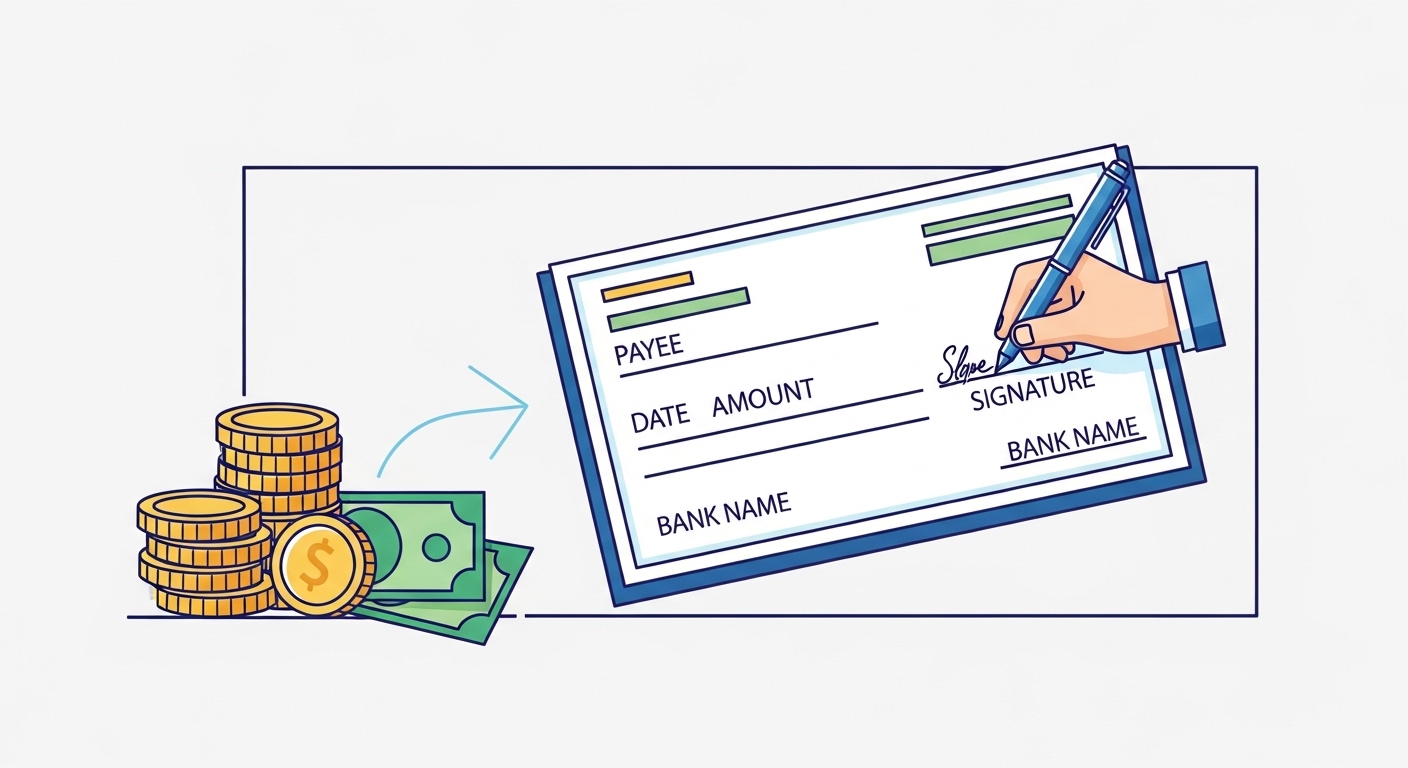
A cheque is essentially a written instruction that tells your bank to pay a specific amount of money from your account to another person or organisation. Think of it as a paper promise, signed by you, that guarantees a payment will be made. Even in today’s digital world, cheques remain a trusted and important way to handle money, especially for certain types of transactions.
Your Instruction to Pay
When you write a cheque, you’re giving a clear command to your bank. You’re instructing them to transfer a precise sum of money from your bank account to the person or company whose name you’ve written on the cheque. It’s a formal way to authorise a payment without needing to handle physical cash.
Written Payment Promise
A cheque acts as a written promise of payment. It shows that you intend to pay a certain amount and that the funds should be available in your account to cover it. This makes cheques a reliable tool for both the person writing it and the person receiving it, as there’s a clear record of the transaction.
Common Uses Today
While digital payments are popular, cheques are still widely used for many important reasons. For instance, you might use a cheque to pay your house rent, deposit money into an investment scheme, or make a large purchase like a car or property down payment. Businesses also use cheques frequently for supplier payments or salary disbursements.
Importance for Large Sums
Cheques are particularly useful when you need to pay or receive large sums of money. Carrying a lot of cash can be risky, and some digital payment methods might have daily limits. A cheque provides a secure and traceable way to transfer substantial amounts, offering peace of mind to everyone involved. It creates a clear paper trail, which is excellent for record-keeping and tax purposes.
The Traditional Cheque Clearing Process
Before modern technology stepped in, clearing a cheque was a much slower and more complicated affair. It involved a lot of physical movement and manual handling, which contributed to longer waiting times for funds to become available. Understanding this old process helps us appreciate how much things have improved.
Physical Cheque Journey
In the traditional system, when you deposited a cheque, it had to physically travel from your bank branch to a central clearing house. From there, it would then be sent to the bank of the person who wrote the cheque. This journey could involve multiple stops and different modes of transport, often taking several days.
Longer Waiting Periods
Because of this physical movement, the clearing process would naturally take longer. It wasn’t uncommon for a cheque to take 3 to 5 working days, or even more, to clear. This meant that even if the money was available in the payer’s account, you wouldn’t be able to access it immediately, leading to delays in your financial plans.
Challenges of Old System
The old system faced several challenges. There was a higher risk of cheques getting lost or damaged during transit. Manual handling also increased the chance of errors. Furthermore, the sheer volume of paper cheques meant that banks had to dedicate significant resources to sorting, transporting, and processing them, making the entire system less efficient and more costly.
Common Confusion: Many people used to think that if a cheque was deposited in the morning, the money would be available by the evening. However, with the traditional system, the physical movement and verification steps meant funds were rarely available on the same day.
What Is Cheque Truncation System (CTS)?
The Cheque Truncation System, or CTS, is a revolutionary change in how cheques are processed. It’s a system that has brought the cheque clearing process into the digital age, making it much faster, safer, and more efficient for everyone involved. The Reserve Bank of India (RBI) introduced CTS to modernise banking operations across the country.
Digital Image Concept
At its heart, CTS works on the principle of ‘truncation’. This means that instead of the physical cheque moving from bank to bank, only its digital image and essential information are transmitted electronically. Once a cheque is presented at a bank, it’s scanned, and this digital image, along with data like the account number and amount, is used for clearing.
No Physical Movement
The biggest advantage of CTS is that it completely eliminates the need for the physical movement of cheques. Once a cheque is scanned at the presenting bank (the bank where it’s deposited), the original paper document is no longer needed for the clearing process. This cuts down on transit time, costs, and the risks associated with transporting paper documents.
Modernising Cheque Processing
CTS has truly modernised cheque processing in India. It’s a step towards a more paperless banking environment, aligning with global best practices. This system has not only sped up transactions but also improved the overall security and reliability of cheque payments, benefiting millions of bank customers.
Quick Context: ‘Truncation’ simply means stopping the flow of the physical cheque at the branch of deposit. From that point onwards, only the electronic image and details travel for clearing.
How Does CTS Make Clearing Faster?
The Cheque Truncation System (CTS) is designed specifically to speed up the cheque clearing process. By moving from a physical paper-based system to a digital one, it tackles the main reasons for delays, ensuring your funds are available much more quickly than before.
Cheque Scanning Process
The speed begins right at the bank branch where you deposit your cheque. Instead of sending the physical cheque away, the bank immediately scans it. This creates a high-quality digital image of both the front and back of the cheque. All the important details, like the cheque number, bank code, account number, and amount, are also captured electronically.
Electronic Data Sharing
Once the cheque is scanned and its data captured, this digital information is then sent electronically to the clearing house. From there, it’s forwarded to the ‘drawee bank’ – the bank of the person who wrote the cheque. This entire process happens almost instantly over secure computer networks, rather than waiting for a physical document to travel.
Bank Verification Steps
Even though the cheque is digital, the banks still carry out all the necessary verification steps. The drawee bank checks the digital image and data against their records to ensure the signature matches, the amount is correct, and there are enough funds in the account. These checks are performed much faster because all the information is readily available digitally, without needing to handle the paper.
Reduced Travel Time
The most significant way CTS makes clearing faster is by completely removing the travel time. A cheque that once took days to move between cities or even within the same city, now has its essential information transferred in mere seconds. This drastically cuts down the overall clearing cycle, making funds accessible to you much sooner.
Understanding Cheque Clearing Times With CTS
With the Cheque Truncation System (CTS) in place, cheque clearing times have become significantly shorter and more predictable. It’s important to understand these timelines so you can better manage your expectations and financial planning. The RBI has set clear guidelines to ensure banks adhere to these faster processing standards.
Typical Timelines Explained
Under CTS, most cheques clear within a T+1 or T+2 framework. This means:
- T+1: If you deposit a cheque on day ‘T’ (e.g., Monday), the funds should generally be available to you by the next working day, day ‘T+1’ (e.g., Tuesday). This is common for cheques drawn on banks within the same clearing zone.
- T+2: For cheques drawn on banks in different clearing zones or for certain types of transactions, it might take up to two working days, ‘T+2’. So, a Monday deposit could see funds available by Wednesday.
Factors Affecting Speed
While CTS has dramatically improved speed, a few factors can still influence the exact timing:
- Time of deposit: Cheques deposited after a bank’s cut-off time (usually late afternoon) will be processed on the next working day.
- Bank holidays: National or regional bank holidays will extend the clearing period as banks are closed.
- Technical issues: Though rare, occasional technical glitches can cause minor delays.
- Cheque type: Some specific types of cheques or high-value transactions might have slightly different processing protocols.
When Your Funds Arrive
Once a cheque clears, the funds are credited to your account and become available for withdrawal or use. You’ll usually receive an SMS notification from your bank confirming the credit. It’s always a good practice to check your bank statement or online banking portal to confirm the funds have arrived before making any commitments.
RBI Guidelines for Banks
The Reserve Bank of India (RBI) has issued strict guidelines to all banks regarding cheque clearing times under CTS. These guidelines ensure uniformity and efficiency across the banking sector. Banks are expected to adhere to the T+1/T+2 timelines and inform customers about any potential delays. This regulatory oversight helps maintain the integrity and speed of the system.
Here’s a quick comparison of traditional vs. CTS clearing times:
| Feature | Traditional Cheque Clearing | Cheque Truncation System (CTS) |
| Physical Movement | Required | Not required (digital image) |
| Typical Clearing Time | 3-5 working days (or more) | 1-2 working days |
| Risk of Loss/Damage | Higher | Very low (digital transfer) |
| Efficiency | Lower (manual processing) | Higher (automated processing) |
| Cost to Banks | Higher (transport, staff) | Lower |
| Traceability | Good (paper trail) | Excellent (digital records) |
Benefits of Faster Fund Access for You
The shift to faster cheque clearing through CTS brings a host of significant benefits directly to you, the bank customer. These advantages go beyond just quicker access to your money, touching upon financial planning, security, and overall convenience.
Quicker Payment Confirmation
One of the most immediate benefits is the much quicker confirmation of payments. When you deposit a cheque, you no longer have to wait for days wondering if it has cleared. With funds often available within one or two days, you get peace of mind sooner, knowing the transaction is complete and successful.
Improved Financial Planning
Faster fund access means you can plan your finances with much greater accuracy. You know almost exactly when a cheque payment will be credited to your account, allowing you to budget better, schedule bill payments, and avoid any unexpected shortfalls. This predictability is invaluable for managing your household or business cash flow.
Let’s consider Mrs. Sharma from Jaipur. She runs a small boutique and often receives payments via cheque from her customers. Before CTS, she’d often delay ordering new stock because she wasn’t sure exactly when her customer cheques would clear. Now, with CTS, she deposits a cheque on Monday, and by Tuesday or Wednesday, she knows the funds are in her account, allowing her to place new orders promptly and keep her business running smoothly. This quick turnaround helps her manage her inventory and cash flow much more effectively.
Enhanced Security Measures
The digital nature of CTS also brings enhanced security. By reducing the physical handling of cheques, the risk of them being tampered with, lost, or stolen during transit is significantly lowered. The electronic transfer of data is encrypted and secure, adding another layer of protection to your financial transactions.
Reduced Fraud Potential
With fewer physical touchpoints and a more streamlined process, CTS helps in reducing the potential for fraud. Digital images are harder to alter undetected, and the system allows for quicker identification of suspicious activities. This makes cheque payments a safer option for both individuals and businesses.
“The move to Cheque Truncation System isn’t just about speed; it’s about building a more resilient, secure, and customer-friendly banking ecosystem for everyone.”
What You Should Know About Your Cheques
Even with modern systems like CTS, it’s still important for you to handle your cheques responsibly and correctly. Knowing a few key things can help prevent issues and ensure your payments go through smoothly every time.
Writing Cheques Correctly
Accuracy is crucial when writing a cheque. Always use clear, legible handwriting. Make sure to:
- Date: Write the current date clearly. A post-dated cheque (future date) will only be processed on or after that date.
- Payee: Write the name of the person or organisation you are paying correctly and fully.
- Amount in figures: Write the numerical amount clearly in the box provided.
- Amount in words: Write the amount in words starting from the beginning of the line, and draw a line through any unused space to prevent alterations.
- Signature: Ensure your signature matches the one registered with your bank.
- No alterations: Avoid making any corrections or overwriting on the cheque. If you make a mistake, it’s best to use a new cheque.
Keeping Cheques Safe
Your chequebook is like a valuable document and should be treated with care. Keep it in a secure place where it cannot be accessed by others. Never pre-sign blank cheques, as this could lead to misuse. If you lose your chequebook or even a single blank cheque, report it to your bank immediately to prevent any fraudulent activity.
Checking Your Statements
Regularly checking your bank statements is a vital habit. This allows you to verify that all cheques you’ve written have been debited correctly and that all cheques you’ve deposited have been credited. It’s your way of keeping track of your money and spotting any errors or unauthorised transactions quickly.
Pro Tip: When you write a cheque, always note down the cheque number, date, payee, and amount in your chequebook register. This helps you keep a personal record and makes reconciling your statements much easier.
Contacting Your Bank
If you ever have a question about a cheque, its clearing status, or if you encounter any issues, don’t hesitate to contact your bank. They are there to help you. You can usually find their customer service number on your bank’s website or on the back of your debit card. It’s always better to clarify doubts quickly rather than waiting.
Consider Mr. Anil Kumar from Bengaluru. He recently wrote a cheque for his landlord but accidentally wrote the wrong year. When he deposited it, his bank informed him that the cheque couldn’t be processed due to the incorrect date. Instead of getting frustrated, Anil contacted his landlord, issued a new, correctly dated cheque, and ensured his rent was paid on time. His quick action and understanding of cheque rules helped him avoid any late payment penalties.
Exploring Other Fast Digital Payment Methods
While CTS has made cheque clearing remarkably fast, it’s also worth remembering that there are many other digital payment methods available today that offer instant or near-instant fund transfers. These options can be incredibly convenient, especially for everyday transactions.
Instant Bank Transfers
For immediate fund transfers directly from one bank account to another, you have excellent options like NEFT (National Electronic Funds Transfer) and RTGS (Real-Time Gross Settlement).
- NEFT: This system processes transactions in batches, meaning funds are usually transferred within a few hours. It’s great for regular transfers and has no minimum or maximum amount limits.
- RTGS: Designed for large-value transactions, RTGS offers real-time settlement, meaning the money is transferred almost instantly. There’s usually a minimum transaction value for RTGS, making it suitable for significant payments.
These methods are widely available through your bank’s internet banking portal or mobile banking apps, allowing you to send money directly from your phone or computer.
Electronic Payment Options
Beyond direct bank transfers, a variety of electronic payment options have simplified transactions:
- Debit Cards: Using your debit card allows you to make instant payments at shops, online, or withdraw cash from ATMs. The money is deducted directly from your bank account.
- Net Banking: Your bank’s online portal provides a secure way to manage your accounts, pay bills, transfer funds, and make various other transactions from the comfort of your home.
- Unified Payments Interface (UPI): This system allows you to link multiple bank accounts to a single mobile application and make instant, secure payments using a virtual payment address (VPA) or QR codes. It’s incredibly popular for small to medium-sized transactions.
Choosing the Right Method
The best payment method depends on your needs. For very large, time-sensitive payments, RTGS might be ideal. For regular, smaller transfers, NEFT or UPI are excellent choices. For instant payments at a store or online, your debit card or UPI are super convenient. While cheques still hold their place for certain formal or large transactions, understanding these digital alternatives gives you more flexibility and control over your money. The world of digital payments is constantly evolving, offering you more power to manage your finances efficiently and securely.
Conclusion
Understanding Cheque Clearing Times Explained: Understanding CTS and Faster Fund Access can help you make informed decisions. By following the guidelines outlined above, you can navigate this topic confidently.
Author

