

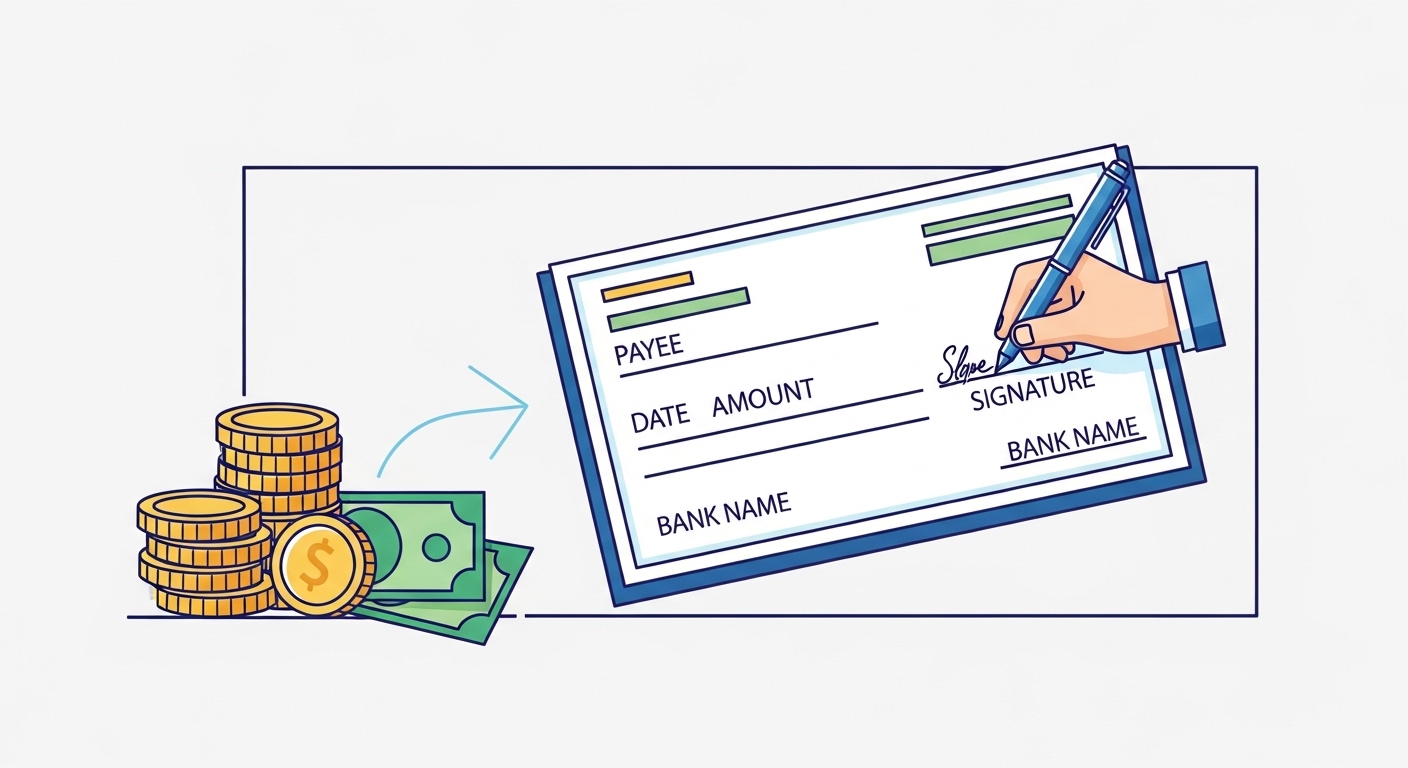
Imagine a small business owner in Bengaluru, waiting for a crucial payment to clear so they could pay their suppliers. A cheque had been deposited, but days passed, and the funds still hadn’t appeared in their account. This delay caused significant stress and impacted their daily operations.
This common scenario highlights the importance of understanding how cheques are processed and why clearing times matter. Fortunately, modern banking systems, like the Cheque Truncation System, have dramatically sped up this vital financial process.
The Cheque Truncation System (CTS) is a cheque clearing system governed by the Reserve Bank of India (RBI), designed to speed up the collection of cheques. This system replaces the physical movement of cheques with the electronic transmission of their images and data.
Instead of sending the actual paper cheque from one bank to another, only its digital image and essential information are exchanged securely. This significantly reduces the time it takes for funds to move between accounts, with most local cheques clearing within T+1 working day, as per RBI guidelines on CTS (2026).
If you don’t use CTS-compliant cheques, your bank might reject them or process them with delays, potentially causing payment issues. You can typically check the real-time status of your deposited or issued cheques through your bank’s online portal or mobile app for quick updates.
Table of Contents
What Is a Cheque and Why Do We Use Them?
A cheque is a written order telling your bank to pay a specific amount of money from your account to another person or organisation. It acts as a secure, traceable method of payment, particularly useful when dealing with larger sums or when a physical record is preferred. Cheques have been a fundamental part of India’s financial system for many years.
Even in 2026, with the rise of digital payments, cheques remain relevant for certain transactions. They provide a clear paper trail, which can be crucial for accounting and legal purposes. Understanding how they work is still an important part of managing your finances effectively.
Your instruction to pay
When you write a cheque, you are essentially giving your bank a direct instruction to transfer funds from your account. You specify the amount, the payee’s name, and sign it, making it a legally binding document. This instruction ensures that the payment is authorised and recorded accurately.
Written payment promise
A cheque represents a written promise of payment, backed by the funds available in your bank account. It serves as a commitment to pay, which is why it’s vital to ensure you have sufficient balance before issuing one. This promise provides assurance to the recipient that they will receive the specified amount.
Common uses today
Today, cheques are still commonly used for various purposes, especially for large payments such as property transactions, business-to-business dealings, or government payments like tax refunds. They are also often used for recurring payments where a fixed amount needs to be paid regularly. Many organisations, including schools and housing societies, continue to accept cheques.
Importance for large sums
For significant financial transactions, cheques offer an added layer of security and documentation that digital transfers might not always provide in the same physical format. They create a tangible record of the transaction, which can be invaluable for audits or dispute resolution. This makes them a preferred choice for high-value exchanges.
Quick Context: What makes a Cheque Valid?
A cheque is valid only if it’s signed by the account holder, dated, includes the payee’s name, and specifies the amount in both figures and words. Ensure no alterations are made without proper authentication.
The Traditional Cheque Clearing Process
Before modern systems, processing a cheque was a lengthy and labour-intensive affair. It involved physically transporting cheques between various bank branches, which naturally led to significant delays. This older method often left individuals and businesses waiting for days, sometimes even weeks, for their funds to become available.
The physical movement of cheques posed several challenges, including the risk of cheques getting lost or damaged during transit. This not only caused financial inconvenience but also increased the potential for fraud and errors. The entire system was slower and less efficient compared to today’s digital methods.
Physical cheque journey
In the traditional system, once you deposited a cheque at your bank, it would embark on a physical journey. The cheque would travel from your bank branch to a clearing house, then to the paying bank’s branch, and finally back to the clearing house for settlement. This multi-stop journey was the primary reason for extended clearing times.
Longer waiting periods
Due to the physical movement and manual verification steps, waiting periods for cheques to clear were considerably longer. It wasn’t uncommon for outstation cheques to take up to 10-15 working days to clear. This uncertainty made financial planning difficult for individuals and businesses alike.
Challenges of old system
The old system faced numerous challenges, including high operational costs associated with logistics and manual handling. There was also a greater risk of errors during manual data entry and reconciliation. These inefficiencies often resulted in customer frustration and increased the workload for bank staff.
Common Confusion: Traditional Clearing Speed
It is commonly assumed that traditional cheque clearing was only a little slower than today’s system
In reality, traditional clearing could take several days for local cheques and up to two weeks for outstation cheques, a significant difference from current speeds.
Step 1: Deposit the cheque at your bank branch, where bank staff would manually verify initial details.
Step 2: Your bank would then physically send the cheque to a central clearing house, often located in a major city.
Step 3: The clearing house would sort the cheques and forward them to the respective paying banks for verification against the account balance.
Step 4: The paying bank would then send the cheque back to the clearing house, which would finally settle the funds between the banks.
Step 5: Your bank would then credit the funds to your account, typically after all these physical movements and verifications were complete.
What Is Cheque Truncation System (CTS)?
The Cheque Truncation System (CTS) represents a significant leap forward in cheque processing, designed to modernise and streamline the entire clearing mechanism. Introduced by the Reserve Bank of India, CTS aims to eliminate the need for physical cheque movement, thereby enhancing efficiency and reducing the time taken for funds to clear. It’s a key initiative in India’s journey towards a more digital and efficient financial ecosystem.
This system relies on capturing and transmitting cheque information electronically, transforming the traditional paper-based process into a digital one. By doing so, CTS addresses many of the drawbacks associated with the older clearing methods, offering a faster and more secure alternative. It has fundamentally changed how cheques are handled across the country.
Digital image concept
The core idea behind CTS is the “truncation” of a cheque, which means stopping the physical movement of the cheque. Instead, an electronic image of the cheque, along with its essential data (like account number, cheque number, and amount), is captured at the presenting bank. This digital image then becomes the basis for processing the payment.
No physical movement
The most significant change introduced by CTS is the complete elimination of physical cheque movement between banks. Once the image and data are captured, they are electronically transmitted to the paying bank through a secure network. This drastically cuts down on the logistical challenges and time delays previously associated with paper cheques.
Modernising cheque processing
CTS has successfully modernised cheque processing in India, making it faster, safer, and more cost-effective. It has standardised the cheque formats, ensuring uniformity and ease of processing across all banks. This modernisation effort supports the broader goal of a less-cash economy and promotes digital financial transactions.
Pro Tip: Identify CTS Cheques
Look for “CTS-2010” printed on the left side of your cheque leaf, usually near the MICR band. This indicates your cheque is compliant with the latest standards for faster clearing.
| Feature | Traditional Clearing | Cheque Truncation System (CTS) |
| Physical Movement | Yes, mandatory | No, only digital images |
| Clearing Time (Local) | 2-5 working days | T+1 working day (approx.) |
| Clearing Time (Outstation) | 10-15 working days | T+1 to T+2 working days (approx.) |
| Risk of Loss/Damage | Higher | Significantly lower |
| Operational Costs | Higher (logistics) | Lower (digital process) |
How Does CTS Make Clearing Faster?
The Cheque Truncation System dramatically speeds up cheque clearing by leveraging technology to replace manual processes. It transforms a physical document into digital data, allowing for rapid transmission and processing across the banking network. This shift to digital means that geographical distances no longer dictate the speed of cheque clearance.
By standardising the process and eliminating physical logistics, CTS ensures that funds can be settled much more quickly between banks. This efficiency benefits everyone involved, from the individual depositing the cheque to the banking institutions managing the transactions. It’s a streamlined approach designed for the digital age.
Cheque scanning process
When you deposit a CTS-compliant cheque, your bank will scan it to create a high-quality digital image. This image captures all the necessary details, including the MICR (Magnetic Ink Character Recognition) code, the cheque number, and the amount. This scanning is usually done at the branch level or at a central processing hub.
Electronic data sharing
Once the cheque is scanned, its digital image and associated data are electronically transmitted to the clearing house. From there, this information is securely forwarded to the paying bank for verification and payment. This electronic sharing is instantaneous, bypassing the delays of physical transport.
Bank verification steps
The paying bank receives the digital image and data, which it then uses to verify the cheque’s authenticity and the availability of funds in the drawer’s account. This verification process is typically automated and much quicker than manual checks. Once verified, the bank authorises the payment.
Reduced travel time
The most obvious way CTS makes clearing faster is by eliminating the physical travel time of cheques. What used to take days or weeks for outstation cheques now takes mere hours or a couple of days at most. This reduction in travel time is the cornerstone of CTS’s efficiency.
Quick Context: Role of the Clearing House
The clearing house acts as an intermediary, facilitating the exchange of cheque images and data between presenting and paying banks, and ensuring the final settlement of funds.
Step 1: You deposit a CTS-compliant cheque at your bank branch, ensuring it’s properly filled out and signed.
Step 2: Your bank scans the cheque, capturing its front and back images along with key data like the MICR code and amount.
Step 3: The scanned images and data are then encrypted and electronically transmitted to the National Clearing House through a secure network.
Step 4: The Clearing House forwards this digital information to the paying bank, which verifies the cheque’s authenticity and checks for sufficient funds in the drawer’s account.
Step 5: Upon successful verification, the paying bank debits the drawer’s account, and the funds are settled with your bank, which then credits your account.
Understanding Cheque Clearing Times with CTS
With the implementation of CTS, cheque clearing times have been significantly reduced, providing much faster access to your funds. However, it’s important to remember that “faster” doesn’t always mean “instant.” There are still specific timelines and factors that influence exactly when your money becomes available. Knowing these details helps you manage your expectations and plan your finances more effectively.
The Reserve Bank of India sets clear guidelines for banks regarding cheque clearing, ensuring consistency and efficiency across the country. These guidelines help to standardise the process and protect consumer interests. You should always be aware of your bank’s specific cut-off times for cheque deposits to ensure the quickest possible processing.
Typical timelines explained
Under CTS, local cheques typically clear within T+1 working day, meaning if you deposit a cheque on day T, the funds should be available by the end of the next working day. For outstation cheques, the clearing time is usually T+1 to T+2 working days, a vast improvement over the traditional system. These timelines are generally followed by most banks, as per the latest official guidelines.
Factors affecting speed
Several factors can still influence the exact speed of cheque clearing. These include the time of day you deposit the cheque (cut-off times vary by bank), whether it’s a working day or a holiday, and the specific policies of the banks involved. Deposits made after cut-off times will be processed on the next working day.
When your funds arrive
Once a cheque has cleared, the funds will be credited to your account and become available for withdrawal or use. You can monitor your bank account statement or use your bank’s online banking portal or mobile app to check the status of your deposited cheques. Most banks provide real-time updates on transaction statuses.
RBI guidelines for banks
The RBI regularly issues guidelines to banks regarding cheque clearing, including maximum permissible clearing times and grievance redressal mechanisms. According to RBI guidelines on CTS (2026), banks are mandated to ensure transparent and efficient clearing services. These regulations ensure that banks adhere to specified service levels and provide timely information to customers.
Common Confusion: All Cheques Clear Instantly
A widespread myth is that with CTS, all cheques clear instantly like digital payments
While much faster, cheques still require bank processing and verification, typically clearing within T+1 or T+2 working days, not immediately.
- Bank’s Cut-off Time: Cheques deposited after a specific time (e.g., 2 PM) are processed on the next working day.
- Working Days vs. Holidays: Clearing only occurs on banking working days; weekends and public holidays extend the timeline.
- Location of Banks: While CTS reduces impact, very remote branches might have slightly different logistics.
- Technical Issues: Rare system glitches or network problems can occasionally cause minor delays.
Benefits of Faster Fund Access for You
Faster fund access, thanks to systems like CTS, offers numerous advantages for individuals and businesses alike. It means your money becomes available sooner, allowing for better financial management and reducing the stress associated with waiting for payments. This efficiency supports a more dynamic and responsive financial environment.
The quicker movement of funds also contributes to enhanced security and a reduced potential for fraud. By minimising the physical handling of cheques and speeding up the verification process, the risks associated with traditional cheque clearing are significantly mitigated. You can feel more confident about your transactions.
Quicker payment confirmation
With CTS, you receive confirmation that your cheque has cleared and funds are available much more quickly. This speed is especially beneficial for businesses that rely on timely payments to manage their cash flow and pay their own suppliers. You’ll know exactly when your money is ready to use.
Improved financial planning
Knowing that cheques will clear within a predictable and short timeframe allows for much better financial planning. You can accurately forecast when funds will be available, helping you make timely payments, invest, or manage your daily expenses without unexpected delays. This certainty brings peace of mind.
Enhanced security measures
The digital nature of CTS inherently offers enhanced security. Cheque images and data are transmitted through secure, encrypted networks, reducing the risk of tampering or fraud associated with physical documents. This digital safeguard protects your financial information during transit.
Reduced fraud potential
By eliminating the physical movement of cheques and standardising the verification process, CTS significantly reduces opportunities for fraud. It’s harder for fraudulent cheques to pass through the system undetected when banks are working with high-quality digital images and automated checks. This makes your transactions safer.
Pro Tip: Monitor Your Account Regularly
Always check your bank statements and online banking portal for cheque clearing status. This helps you confirm payments and quickly identify any discrepancies or issues.
Read More
Which bank supports BHIM?- Better Cash Flow: Businesses can manage their working capital more effectively with predictable incoming funds.
- Reduced Stress: Less waiting means less anxiety about when an important payment will be processed.
- Efficient Operations: Faster clearing supports smoother business operations and quicker decision-making.
- Environmental Benefit: Less paper movement contributes to a greener banking system.
What You Should Know About Your Cheques
Even with the efficiencies of CTS, it’s crucial for you to handle your cheques responsibly and correctly. Proper cheque management ensures your payments are processed smoothly and protects you from potential financial issues. A little attention to detail can prevent significant headaches down the line.
Understanding the best practices for writing, securing, and monitoring your cheques empowers you to use this payment method confidently. Your bank provides various tools and services to help you manage your cheques, so make sure you utilise them. Always remember that you are responsible for the cheques you issue.
Writing cheques correctly
Always write your cheques clearly and precisely, using indelible ink. Ensure the date, payee’s name, amount in figures, and amount in words match exactly.
Signatures should be consistent with your bank records. Any mismatch or overwriting can lead to your cheque being rejected, causing delays and potential bank charges.
Keeping cheques safe
Your cheque book should be treated like cash – keep it in a secure place where it cannot be accessed by others. Never pre-sign blank cheques, and always cross out unused cheque leaves.
Report any lost or stolen cheque leaves to your bank immediately to prevent misuse. Security is your responsibility.
Checking your statements
Regularly reconcile your bank statements with the cheques you’ve issued and deposited. This helps you track the status of all your transactions and quickly identify any unauthorised or incorrect entries. Promptly address any discrepancies with your bank to resolve issues efficiently.
Contacting your bank
If you have any concerns about a cheque’s status, believe there’s an error, or need to stop payment on a cheque you’ve issued, contact your bank immediately. They can provide accurate information and guide you through the necessary steps. Don’t hesitate to reach out for assistance.
Common Confusion: Unsigned Cheques
The misunderstanding here is that an unsigned cheque might still be processed if other details are correct
An unsigned cheque is incomplete and invalid; banks are legally obligated to reject it, regardless of other information.
Step 1: Always use a pen with indelible ink to fill out all cheque details clearly and legibly.
Step 2: Ensure the date is current or a future date, the payee’s name is accurate, and the amount in words and figures matches perfectly.
Step 3: Sign the cheque exactly as your signature appears in your bank records; an inconsistent signature can lead to rejection.
Step 4: Keep your cheque book in a secure location and never leave blank cheques signed or accessible to others.
Step 5: Regularly review your bank statements to verify that all issued and deposited cheques have cleared correctly and to spot any unusual activity.
Exploring Other Fast Digital Payment Methods
While CTS has significantly improved cheque clearing, India’s financial landscape offers a wide array of instant digital payment methods that provide immediate fund transfers. These options are often preferred for their speed, convenience, and real-time transaction capabilities. Understanding these alternatives can help you choose the most suitable method for your needs.
Digital payments have become increasingly popular for everyday transactions, small transfers, and urgent payments. They offer flexibility and accessibility, often available 24/7, even on holidays. Exploring these options ensures you’re always equipped to make or receive payments efficiently in 2026.
Instant bank transfers
For immediate bank-to-bank transfers, you have options like Immediate Payment Service (IMPS) and Real-Time Gross Settlement (RTGS). IMPS allows for instant, 24/7 interbank electronic fund transfers, perfect for urgent payments. RTGS is designed for large-value transactions, providing real-time settlement for amounts typically above ₹2 lakh.
Electronic payment options
Unified Payments Interface is another revolutionary digital payment system that allows you to link multiple bank accounts to a single mobile application. You can make instant payments to individuals or merchants using a Virtual Payment Address (VPA) or QR codes. Unified Payments Interface has become a cornerstone of India’s digital economy for its ease of use, developed by NPCI.
Choosing the right method
The best payment method depends on your specific needs. For large, time-sensitive business transactions, RTGS might be ideal.
For everyday payments, instant transfers, or merchant payments, Unified Payments Interface is generally the most convenient. Cheques, while faster with CTS, are still suited for situations requiring a physical record or post-dated payments.
Quick Context: What is this system?
It is an instant real-time payment system developed by NPCI, allowing inter-bank peer-to-peer and person-to-merchant transactions through a single mobile application.
| Payment Method | Speed | Best Use Case | Key Feature |
| Cheque (CTS) | T+1 to T+2 working days | Large sums, physical record, post-dated | Digital image processing |
| IMPS | Instant (24/7) | Urgent, small to medium transfers | Immediate interbank transfer |
| RTGS | Real-time (business hours) | Large-value, time-critical transfers | Gross settlement for high amounts |
| Digital System | Instant (24/7) | Everyday payments, merchant transactions | Single app for multiple accounts |
Conclusion
Understanding the Cheque Truncation System and its impact on clearing times is essential for managing your finances effectively in 2026. This modern system has made cheque transactions significantly faster and more secure, allowing you quicker access to your funds.
You should always ensure your cheques are CTS-compliant and filled out correctly to avoid any processing delays. By embracing CTS, you benefit from improved financial planning and reduced uncertainty in your payment cycles.
Author

