Recent reports indicate a significant rise in the deployment of non-bank operated ATMs across India, commonly known as White Label ATMs. This expansion means you’re now more likely to encounter these machines, often in smaller towns and semi-urban areas, changing how many people access their cash. It raises important questions about trust and reliability compared to the familiar bank-branded machines.
This shift has prompted many to wonder about the safety and service quality of these newer options. With more choices available for cash withdrawal in 2026, understanding the differences between White Label and traditional Brown Label ATMs is crucial. You need to know which type offers the best experience for your financial needs.
Why Do We Still Need Cash?
Even in 2026, with digital payments booming, cash remains a fundamental part of India’s economy. For millions, especially in rural areas, it’s the primary method of transaction, offering a sense of control and immediate liquidity that digital options sometimes can’t match. Many small businesses and vendors still prefer cash, and for daily expenses, it often feels simpler and more direct.
While technologies like UPI have revolutionised payments, there are still situations where physical currency is indispensable. You might find yourself in an area with poor network connectivity, or dealing with a vendor who doesn’t accept digital payments. Cash also offers a level of anonymity that some transactions require, making it a preferred choice for certain personal dealings.
ATMs play a vital role in bridging the gap between your bank account and your need for physical cash. They provide round-the-clock access to your funds, allowing you to withdraw money whenever you need it, without having to visit a bank branch during working hours. This convenience is crucial for managing your finances effectively.
Quick Context: Cash in India
Despite the rapid growth of digital payments, cash transactions still account for a significant portion of daily commerce in India, especially for small-value purchases and in non-urban settings.
Here are some reasons why cash remains important for many:
- Universal Acceptance: Cash is accepted everywhere, regardless of technology or network availability.
- Budgeting Control: For some, handling physical cash helps in better managing daily expenses and avoiding overspending.
- Emergency Use: In unforeseen circumstances, having cash on hand can be a lifesaver when digital systems are down.
- Informal Economy: A large part of India’s informal economy relies solely on cash for transactions.
Understanding White Label ATMs
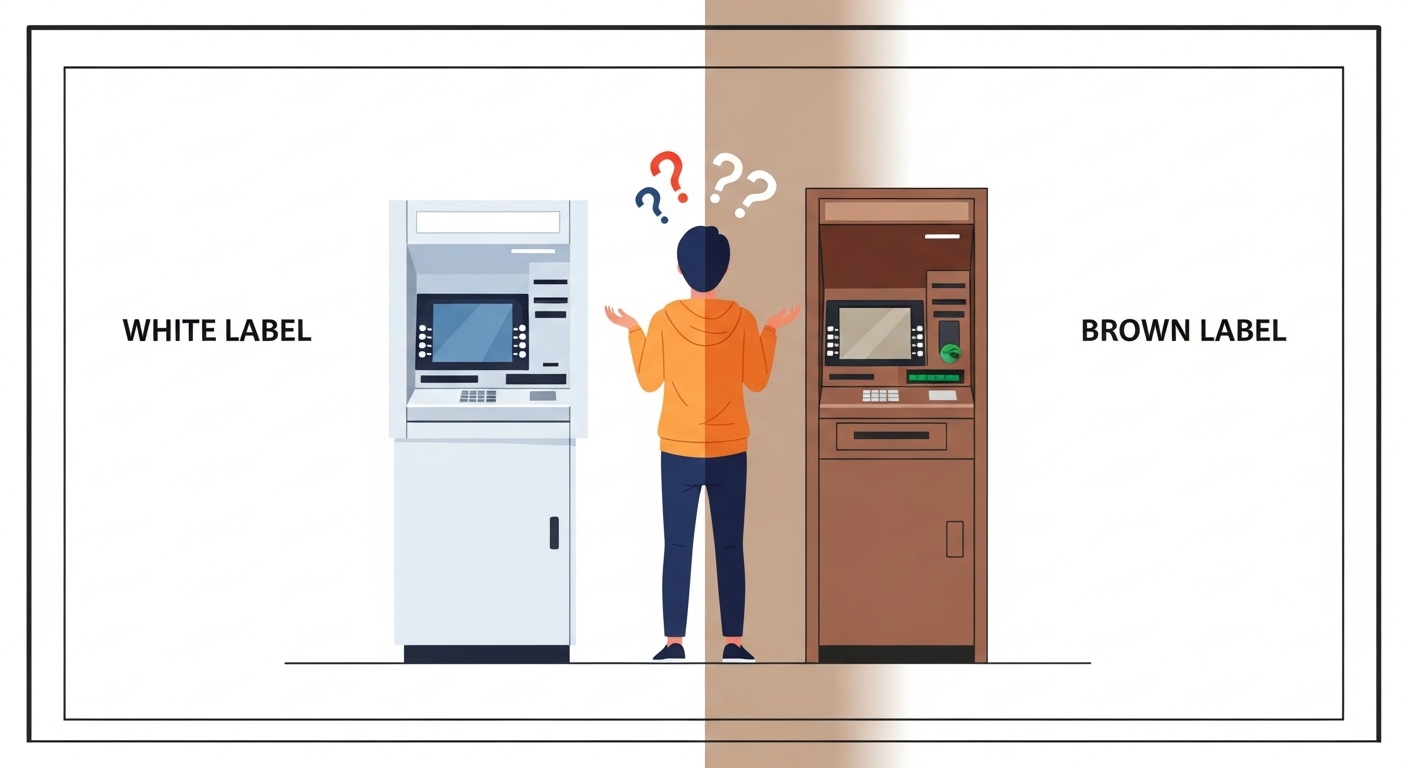
White Label ATMs (WLAs) are ATMs that are owned and operated by non-bank entities, but they provide banking services to customers of all banks. These companies get authorisation from the Reserve Bank of India (RBI) to set up and run these machines. Their main goal is to expand the reach of ATM services, especially in areas where traditional bank ATMs might be scarce.
You’ll often find these ATMs in railway stations, shopping malls, and even smaller towns where banks don’t have a strong presence. The company operating the WLA earns revenue through interchange fees, which are charges paid by your bank for using their ATM network. This model encourages wider deployment of ATMs, benefiting customers across the country.
One key characteristic of White Label ATMs is their branding. They don’t display the logo or name of any specific bank. Instead, they typically carry the logo of the non-bank entity that owns and operates them. For example, you might see brands like Tata Indicash or Muthoot Finance ATM. This distinct appearance helps you identify them as non-bank ATMs, though they offer similar services to bank-owned ones.
Pro Tip: Identifying WLAs
Look for ATMs that don’t have a specific bank’s logo (like SBI, HDFC, ICICI). Instead, they’ll show the name of a non-bank operator such as BTI Payments, Indicash, or Hitachi Money Spot.
These ATMs offer a range of services beyond just cash withdrawal. You can often check your account balance, get a mini statement, or even change your PIN. The services provided are generally consistent with what you’d expect from any ATM, ensuring that you can manage your basic banking needs conveniently.
| Feature | White Label ATM | Brown Label ATM |
| Ownership | Non-bank entity | Bank |
| Branding | Operator’s logo (e.g., Indicash) | Bank’s logo (e.g., SBI, HDFC) |
| Primary Goal | Expand ATM reach | Serve bank’s customers |
| Regulatory Body | RBI | RBI |
What Are Brown Label ATMs?
Brown Label ATMs are a more traditional type of ATM that you’re probably very familiar with. These machines are owned by a specific bank, which means the bank holds the licence and is ultimately responsible for the ATM. However, the day-to-day operations, such as cash loading, security, and maintenance, are often outsourced to a third-party service provider.
Despite being managed by an external company, the ATM prominently displays the branding of the owning bank. You’ll see the bank’s logo, colours, and name clearly visible on the machine and its surroundings. For instance, an ATM managed by a third party but showing the State Bank of India logo is a Brown Label ATM. This strong branding helps customers easily identify their bank’s machines.
The primary focus of a Brown Label ATM is to serve the customers of the owning bank. While you can use any bank’s ATM with your debit card, these machines are strategically placed to cater to the bank’s account holders. They often offer a broader range of services specific to that bank, though the core functions like cash withdrawal and balance inquiry are universal.
Common Confusion: Ownership vs. Management
A common misconception is that if a third party manages an ATM, it’s not bank-owned. Brown Label ATMs are bank-owned but managed by a third party, maintaining the bank’s branding.
Here are some typical characteristics of Brown Label ATMs:
- Bank Ownership: The ATM machine and its infrastructure are owned by a specific commercial bank.
- Bank Branding: The ATM is clearly branded with the bank’s name and logo, making it easily recognisable.
- Third-Party Management: Operations like cash replenishment, security, and technical support are often handled by specialised service providers.
- Customer Focus: Primarily designed to serve the owning bank’s customers, though accessible to all cardholders.
Key Differences You Should Know
Understanding the core distinctions between White Label and Brown Label ATMs can help you make a more informed choice when you need cash. The differences aren’t just about who owns the machine; they also impact the services offered, how they look, and even the charges you might incur. These factors are important for your everyday banking convenience.
One of the most significant differences lies in the ownership and branding. A Brown Label ATM will always have a bank’s logo, giving you an immediate sense of familiarity and direct association with a financial institution. White Label ATMs, on the other hand, carry the branding of their non-bank operator, which might be less familiar to you at first glance. This visual cue often influences initial trust.
Transaction charges are another crucial point of distinction. According to the RBI guidelines for 2026, you generally get a certain number of free transactions at other bank ATMs (including White Label ones) each month. Beyond these free limits, you’ll incur a charge, which is usually a fixed amount per transaction. While these charges are standard across both types of “other bank” ATMs, it’s always wise to be aware of how many free transactions you have left.
Quick Context: Free ATM Transactions
As of 2026, the RBI permits banks to charge you for ATM transactions beyond a certain limit each month. Typically, you get 5 free transactions at your own bank’s ATMs and 3-5 free transactions at other bank ATMs (including WLAs) in metro cities, and 5 free transactions in non-metro cities.
Here’s how you can check for potential charges before you complete a transaction:
Step 1: When you insert your card and enter your PIN, the ATM screen often displays a message about applicable charges for transactions exceeding your free limit. You should read this carefully.
Step 2: Before confirming your withdrawal amount, the ATM will usually show you a screen. This screen will often include a note if a charge is being applied, allowing you to cancel the transaction if you wish.
Step 3: After completing the transaction, check your transaction receipt. It should clearly state if any service charges were deducted. If you didn’t receive a receipt, you can check your bank statement later for confirmation.
Are Both ATM Types Safe?
A common concern for many people is the safety and security of using ATMs, especially those not directly branded by their bank. You’ll be relieved to know that both White Label and Brown Label ATMs operate under the strict regulatory framework set by the Reserve Bank of India (RBI). This means they are subject to the same rules and standards for security, transaction processing, and customer protection.
The RBI mandates specific security measures for all ATMs in India. These include physical security features like CCTV surveillance, secure enclosures, and sometimes even security guards, particularly in high-traffic areas. Digitally, all transactions are encrypted, protecting your PIN and account details from being intercepted. Regular audits ensure that these standards are maintained across the network.
While both types are regulated, your vigilance plays a crucial role in ensuring a safe experience. Always be aware of your surroundings, cover the keypad when entering your PIN, and check for any suspicious devices attached to the ATM. These simple steps can significantly reduce the risk of fraud, regardless of the ATM type you’re using.
Pro Tip: Essential Security Check
Before using any ATM, gently tug at the card reader and keypad. If anything feels loose or looks like an attachment, do not use that ATM. Report it immediately to the operating company or local law enforcement.
Here are some key safety tips to always follow:
- Shield Your PIN: Always use your hand to cover the keypad when entering your Personal Identification Number (PIN) to prevent ‘shoulder surfing’.
- Check for Skimmers: Before inserting your card, visually inspect the card slot for any unusual attachments or devices that could be card skimmers.
- Beware of Strangers: Don’t accept help from strangers at an ATM. If you encounter an issue, contact your bank or the ATM operator directly.
- Review Transactions: Always check your transaction receipt and regularly review your bank statements for any unauthorised activity.
- Report Immediately: If your card is swallowed or you suspect fraud, block your card immediately through your bank’s helpline and report the incident.
How to Choose Your ATM
When you need to withdraw cash, deciding which ATM to use can seem straightforward, but a few considerations can help you make the best choice. Your primary bank’s ATM might offer more free transactions, but convenience and location often play a larger role in your decision. It’s about balancing these factors for your specific needs.
Consider your bank’s network first. If you’re near an ATM of your own bank, it’s usually the most cost-effective option, as you typically get more free transactions there each month. However, if your bank’s ATM isn’t nearby, you’ll need to decide between another bank’s ATM (Brown Label) or a White Label ATM. Both fall under the ‘other bank ATM’ category for transaction fee purposes.
Location and convenience are often the biggest drivers. If you’re in a hurry, you’ll likely choose the nearest available ATM, regardless of its type. However, it’s always prudent to quickly check for clear signs indicating the ATM operator and any displayed information about charges. A well-maintained, clearly branded ATM, whether White or Brown Label, usually instils more confidence.
Common Confusion: Universal Acceptance
While all ATMs accept cards from any bank, the charges for using an ATM that isn’t your own bank’s can differ. It’s not about acceptance, but about the fees incurred after your free transaction limit.
Here’s a quick guide to help you choose:
| Factor | Priority | Action |
| Your Bank’s ATM | High | Locate nearest branch/ATM using your bank’s app or website. |
| Location & Urgency | High | Choose the closest ATM if you need cash immediately, but stay alert. |
| Transaction Charges | Medium | Be aware of your monthly free transaction limits at other bank ATMs. |
| ATM Appearance | Medium | Opt for well-lit, clean ATMs with clear branding and no suspicious attachments. |
| Services Needed | Low | Most ATMs offer basic withdrawals, but complex services might require your own bank’s ATM. |
Making an Informed Choice
Ultimately, choosing between a White Label and a Brown Label ATM comes down to your personal comfort, awareness, and immediate needs. Both types are essential components of India’s financial infrastructure, ensuring that you have access to cash whenever required. The key is to remember that both are regulated by the Reserve Bank of India, meaning they adhere to specific safety and operational standards.
Your trust in an ATM shouldn’t solely depend on whether it carries a bank’s logo. Instead, it should be built on your awareness of security best practices and a quick visual check of the machine itself. A well-maintained White Label ATM can be just as reliable as a Brown Label one, provided you exercise caution and vigilance during your transaction.
Staying alert and informed about your transaction limits and security measures is your strongest defence against any potential issues. Don’t hesitate to use any ATM that appears safe and functional, but always keep an eye out for anything suspicious. Your proactive approach ensures a secure cash withdrawal experience every time.
Pro Tip: Check for Updates
Regularly check your bank’s website or the RBI’s official portal for any updates on ATM transaction limits or fee structures, as these can change annually.
Here’s how you can make an informed choice and stay secure:
Step 1: Before you leave home, consider if you’ll need cash. If so, plan to visit an ATM in a safe, well-lit area, ideally during daylight hours.
Step 2: When you arrive at the ATM, take a moment to observe your surroundings. Look for any unusual activity or suspicious individuals loitering nearby.
Step 3: Inspect the ATM itself for any signs of tampering, such as loose parts, strange devices on the card reader or keypad, or obscured cameras. If anything seems off, find another ATM.
Step 4: After a successful transaction, always take your receipt, card, and cash. Never leave any of these behind.
Conclusion
Understanding the distinctions between White Label and Brown Label ATMs is vital for making confident cash withdrawals in 2026. Both types serve a crucial purpose in India’s financial ecosystem, offering regulated and secure access to your funds. You should always prioritise your safety by performing quick visual checks and shielding your PIN, ensuring a secure transaction regardless of the ATM’s branding. This awareness helps you confidently use any ATM, leveraging the convenience they provide across the country.
Author